






















|
Getting your Trinity Audio player ready...
|
Mamdani Heckled at Passover Seder in NYC Amid Rising Antisemitism Tensions
By: Max Schleifer
In a city renowned for its pluralism yet increasingly strained by ideological fault lines, a Passover gathering intended to celebrate tradition and communal unity devolved into a moment of sharp public discord, reflecting the deepening tensions surrounding antisemitism, political rhetoric, and the boundaries of civic leadership. As reported on Wednesday in The New York Post, New York City Mayor Zohran Mamdani faced pointed heckling during his appearance at a prominent seder event, exposing fractures within segments of the Jewish community and reigniting scrutiny of his political positions.
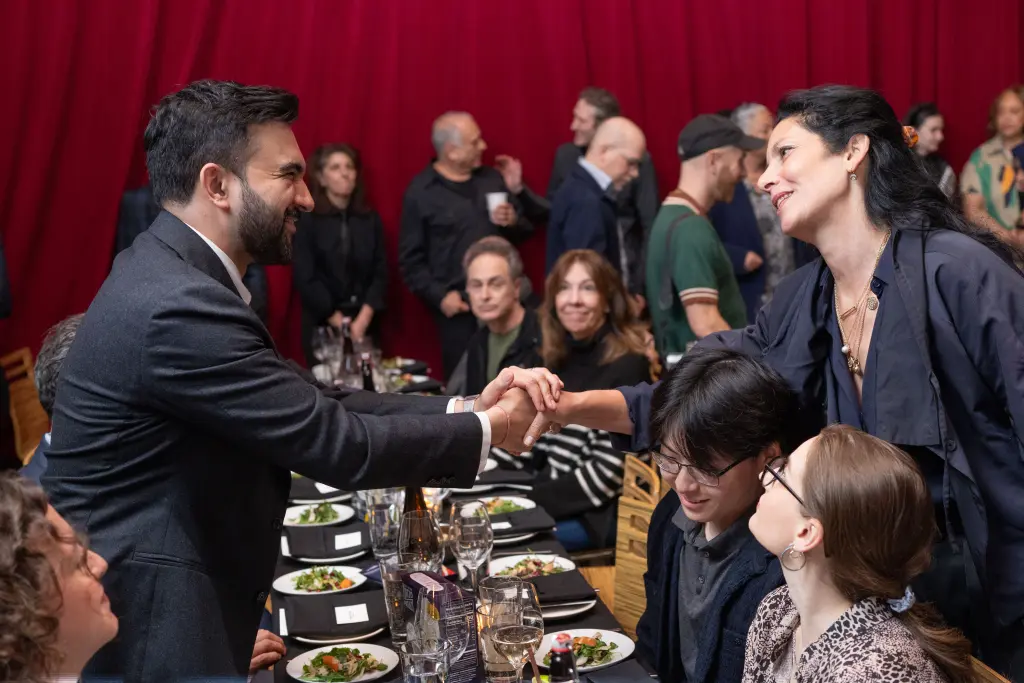
Michael Appleton/Mayoral Photography Office
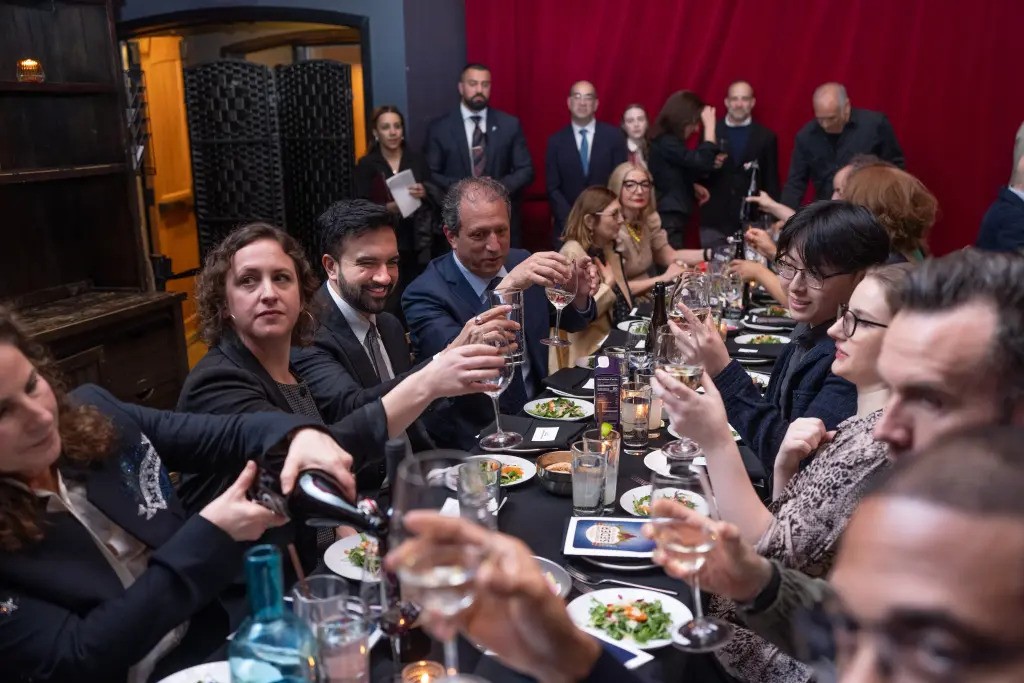
The incident unfolded at the 33rd annual “Downtown Seder,” hosted by entrepreneur Michael Dorf at the City Winery in Manhattan. The event, traditionally characterized by reflection, storytelling, and a spirit of inclusivity, drew approximately 370 attendees, including civic figures, cultural personalities, and members of New York’s diverse Jewish community.
Yet, as The New York Post report detailed, the evening’s atmosphere shifted markedly when Mayor Mamdani took the stage. While addressing what he described as a troubling rise in antisemitism affecting Jewish New Yorkers, an unidentified attendee interrupted with a stark and unsettling declaration: “Every Jewish organization is a target.”
The outburst, brief but jarring, reverberated through the venue. Attendees quickly attempted to restore order, with some urging the speaker to continue and others calling for restraint. One voice rose in response, “Stop the xenophobia, let him speak,” capturing the competing impulses present in the room—defense of open discourse on one hand, and palpable unease on the other.
According to accounts compiled by The New York Post, the disruption was not an isolated moment but rather the culmination of simmering discontent. Witnesses described an undercurrent of dissatisfaction even before Mamdani began speaking. One attendee recalled that a woman shouted “Shame, shame, shame” upon his introduction, while others noted persistent murmuring and visible discomfort among segments of the audience.
“It was wild,” one source told The New York Post. “It’s never like that.”
Such reactions suggest that the controversy surrounding the mayor’s appearance had already taken hold prior to the event itself. Indeed, the decision to include Mamdani in the program had drawn criticism in advance, most notably from Israeli American comedian Modi Rosenfeld, who withdrew from the benefit upon learning of the mayor’s participation.
“We were not told Mamdani was participating in this event until today,” read a statement posted on Rosenfeld’s social media account, as cited by The New York Post. His manager described the situation as inappropriate, emphasizing the lack of transparency surrounding the lineup.
Despite the interruptions, Mayor Mamdani continued his remarks, ultimately receiving applause from portions of the audience. In addressing the disruption, he adopted a tone that sought to contextualize the moment within the broader character of New York City itself.
“This is New York City, and we love to be here,” he said, according to reports referenced by The New York Post. “If there was complete decorum everywhere we were, we would have to ask ourselves if we had left the city that we love.”
His comments appeared to frame the incident not as a breakdown of civility but as an expression of the city’s vibrant, if sometimes contentious, democratic culture. For some observers, this interpretation underscored a commitment to open dialogue; for others, it risked minimizing the gravity of the sentiments expressed during the disruption.
At the center of the controversy lies Mayor Mamdani’s political record, particularly his positions on Israel and his associations with figures who have themselves drawn criticism for inflammatory rhetoric. As noted repeatedly by The New York Post, Mamdani has faced sustained backlash for statements suggesting that Israel should not exist as a Jewish state—a stance that many within the Jewish community view as fundamentally incompatible with their historical and cultural identity.
Further scrutiny has arisen from his connections to individuals such as Hasan Piker and Linda Sarsour, both of whom have been accused by critics of promoting narratives perceived as hostile to Jewish concerns. While Mamdani and his supporters argue that such criticisms mischaracterize his views, the cumulative effect has been to position him as a polarizing figure within an already fraught discourse.
Michael Dorf, the event’s host, sought to downplay the severity of the disruption, describing the heckling as “very minor” in an interview with The New York Post. He credited the mayor for handling the situation with composure and emphasized that the overwhelming majority of attendees responded positively.
“Out of 370 people, 365 loved it,” Dorf said, adding that the event’s spirit remained intact despite the controversy.
At the same time, Dorf acknowledged receiving a significant volume of hostile communications in response to Mamdani’s inclusion. Nevertheless, he defended the decision on the grounds of civic engagement, noting that previous mayors had also been invited to participate in similar gatherings.
“He’s the mayor of our city,” Dorf remarked, underscoring a belief that public officials should be afforded opportunities to engage with diverse constituencies—even in the face of disagreement.
The incident at the Downtown Seder cannot be understood in isolation. It is, rather, emblematic of broader dynamics shaping contemporary public life in New York and beyond. The intersection of rising antisemitism, contentious debates over Israel, and the evolving role of political leadership has created a landscape in which moments of cultural celebration can quickly become arenas for ideological confrontation.
The heckler’s statement—asserting that Jewish organizations are targets—resonates within a context marked by increasing concern over antisemitic incidents. For many attendees, the remark likely carried a chilling implication, transforming what might otherwise have been a routine disruption into a moment of profound red alert.
At the same time, the varied responses within the room—ranging from condemnation of the outburst to calls for continued dialogue—highlight the diversity of perspectives within the community itself.
For Mayor Mamdani, the episode presents both a challenge and an opportunity. As a public figure navigating a complex and often polarized environment, he must reconcile competing expectations: to engage openly with constituents, to address legitimate concerns about antisemitism, and to articulate positions that resonate across diverse communities.
The scrutiny he faces is unlikely to diminish. If anything, incidents such as this one may intensify the focus on his rhetoric and associations, particularly as debates over Israel and antisemitism continue to occupy a central place in public discourse.
New York City has long prided itself on its capacity to accommodate difference—to serve as a forum in which diverse voices can be heard, contested, and, at times, reconciled. The events at the Downtown Seder, as chronicled by The New York Post, reveal both the strength and the fragility of that tradition.
On one hand, the willingness of individuals to speak out—even in disruptive ways—reflects a deeply ingrained culture of engagement. On the other, the intensity of the reactions underscores the challenges inherent in sustaining constructive dialogue amid profound disagreement.
As the city continues to grapple with these tensions, the question remains whether its leaders—and its citizens—can find a path that preserves both the openness and the mutual respect upon which its identity depends.



