












|
Getting your Trinity Audio player ready...
|
Mamdani Changes Tone After Park East Synagogue Furor, But Jewish Leaders Remain Skeptical Amid Rising Antisemitism
By: Fern Sidman – Jewish Voice News
In the aftermath of a deeply unsettling protest outside Manhattan’s Park East Synagogue, New York City Mayor-elect Zohran Mamdani has issued a sharpened public statement, attempting to quell mounting criticism from Jewish leaders who viewed his initial response as dangerously equivocal. As Israel National News reported on Wednesday, the controversy has rapidly become a defining early test for the incoming mayor, whose longstanding hostility toward Israel and tepid condemnations of antisemitism have cast doubt on his commitment to safeguarding the city’s Jewish communities.
The demonstration in question, organized by pro-Hamas activists, unfolded last Wednesday night on the Upper East Side and was marked by overtly violent and inflammatory rhetoric. Protesters chanted “death to the IDF” and “globalize the intifada” just steps from the historic sanctuary, one of New York’s most venerable Jewish institutions. Inside, the synagogue had rented space to Nefesh B’Nefesh, the nonprofit that facilitates aliyah — Jewish immigration to Israel — an activity that Israel National News notes has long been both legal and widely celebrated within American Jewish communal life.
It was precisely against this backdrop that Mamdani’s initial reaction ignited a political firestorm.
Mamdani’s first public statement, delivered through a spokeswoman shortly after the protest, struck many observers as disturbingly unbalanced. While the mayor-elect said he “discouraged the language” used by demonstrators, he quickly pivoted to chastising the synagogue itself, asserting: “these sacred spaces should not be used to promote activities in violation of international law.”
Neither Mamdani nor his spokesperson offered any explanation of what purported “international law violations” were being referenced. Given that Nefesh B’Nefesh assists Jews with immigration paperwork, financial guidance, and community placement in Israel, Jewish leaders sharply interpreted the criticism as a thinly veiled accusation that merely facilitating aliyah — the foundational aspiration of modern Zionism — was somehow illicit.
According to the information provided in the Israel National News report, the reaction within Jewish communal circles was swift and ferocious. Prominent rabbis, elected officials, and advocacy organizations accused Mamdani of deflecting responsibility away from the agitators and toward the Jewish community itself.
“It’s appalling to condemn the victims rather than the aggressors,” one communal leader told Israel National News, noting that the mayor-elect’s framing risked legitimizing radical activists’ claims that Jewish religious institutions should be punished for even tangential associations with Israel.
This sentiment echoed widely: Mamdani’s remarks were seen not simply as a misstep, but as a dangerous manifestation of an ideological worldview that consistently casts suspicion on Jewish institutions for their ties to the Jewish state.
Under unusually intense scrutiny, Mamdani shifted course on Monday, issuing a markedly firmer statement to The New York Times — a recalibration that Israel National News reported was prompted by direct appeals from Jewish leaders.
“We will protect New Yorkers’ First Amendment rights while making clear that nothing can justify language calling for ‘death to’ anyone,” Mamdani said. “It is unacceptable, full stop.”
His spokeswoman added that Mamdani had spoken personally with Park East’s senior rabbi, Arthur Schneier, and his son, Rabbi Marc Schneier — a gesture meant to convey goodwill and defuse tensions.
Notably absent from the revised statement was any criticism of the synagogue. Gone, too, was the insinuation that aliyah support was tantamount to violating international law. Instead, Mamdani’s message emphasized a general commitment to safeguarding Jewish institutions amid what Israel National News calls a “concerning surge in antisemitic activity across New York City.”
For many observers, however, the new language felt less like a change of heart and more like political necessity.
Mamdani’s credibility on matters of Jewish safety and antisemitism has long been in question — a dynamic Israel National News has chronicled exhaustively over the past two years.
On October 8, 2023 — just one day after Hamas carried out the deadliest massacre of Jews since the Holocaust — Mamdani publicly condemned Israel rather than the terrorist group responsible for the slaughter. He has repeatedly refused to denounce the phrase “globalize the intifada,” despite its widespread interpretation as a call for violence against Jews worldwide. Those same words were chanted outside Park East Synagogue last week.
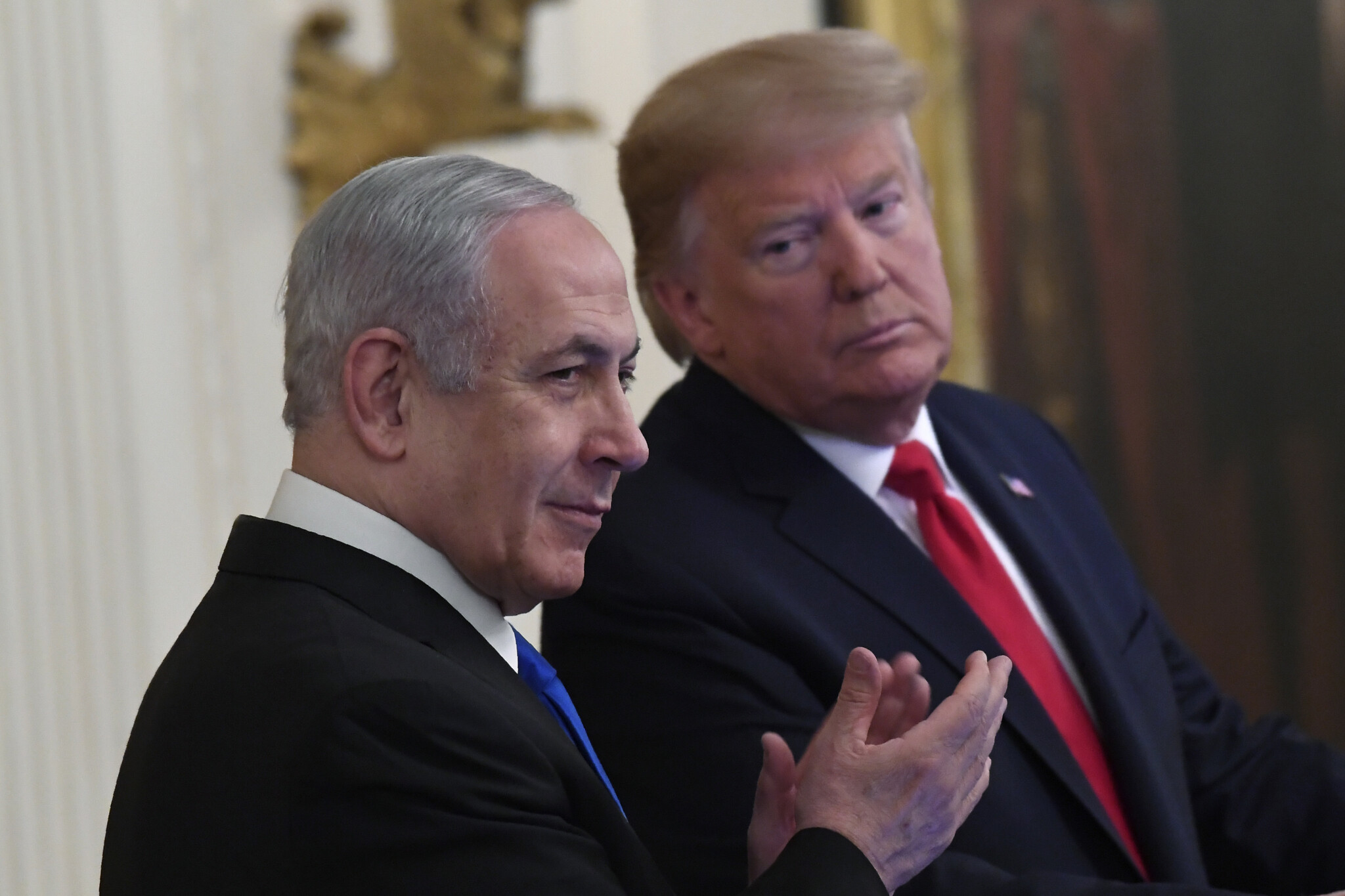
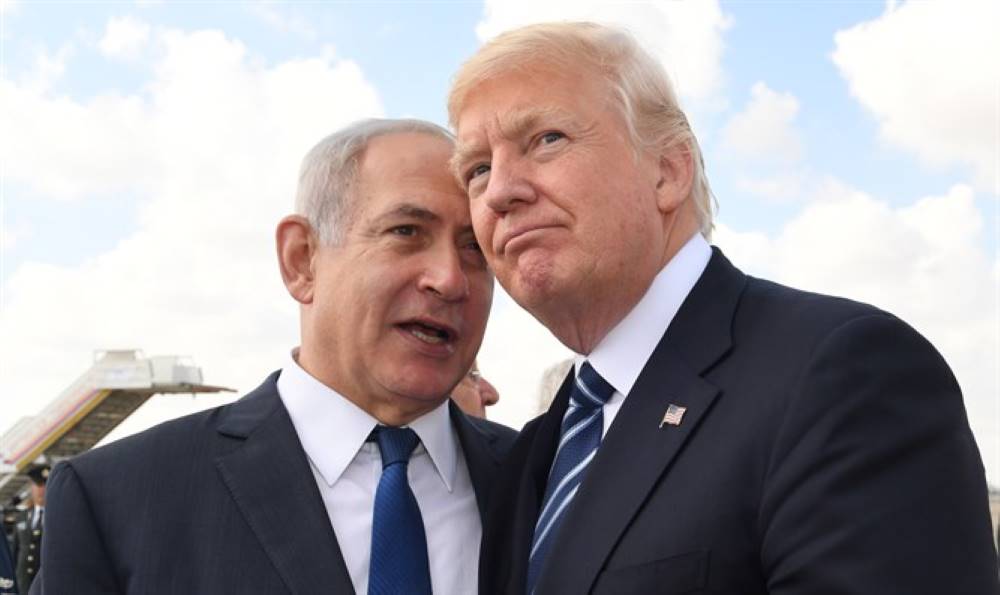
Furthermore, Mamdani has accused Israel of war crimes throughout its military campaign against Hamas in Gaza, comparing the Jewish state to colonial oppressors and asserting that its very existence as a Jewish nation-state is illegitimate. He has even vowed to arrest Israeli Prime Minister Benjamin Netanyahu should he visit New York — a threat that Israel National News notes remains unprecedented among modern American elected officials.
Against this backdrop, many Jewish leaders were unsurprised by Mamdani’s initial framing of the Park East demonstration. The mayor-elect, after all, has positioned himself at the ideological epicenter of the Democratic Socialists of America (DSA), whose New York chapter has promoted “intifada solidarity” campaigns and who routinely accuse Israel of genocide.
For critics, Mamdani’s revised statement, though stronger than the first, was insufficient. “He condemned the words, but he couldn’t bring himself to condemn the movement behind those words,” one rabbi told Israel National News. “That’s not courage. That’s triangulation.”
The uproar surrounding Mamdani’s statements comes amid an alarming escalation of antisemitic incidents throughout New York City. According to data released by the NYPD just one day before the mayoral election — and reported prominently by Israel National News — Jews were targeted in 62% of all hate crimes reported last month, with 29 antisemitic incidents out of a total of 47.
And while the mayor-elect was celebrating his victory on Election Day, Jewish families in Brooklyn awoke to find swastikas sprayed onto the walls of Magen David Yeshiva, a flagship Orthodox institution.
Only days later, residents of Cobble Hill discovered fresh graffiti scrawled across a public sidewalk reading, “F**k Jews” — a profane and unmistakable affront to the safety and dignity of local Jewish families.
As the Israel National News report emphasized, these incidents are not isolated. They form part of a pattern of normalized antisemitism across New York — fueled by social media radicalization, campus extremism, and increasingly in some cases, permissive political rhetoric that casts Israel as the world’s singular pariah state.
For many Jewish residents, Mamdani’s rise to the mayoralty has therefore deepened anxieties already heightened by a volatile atmosphere. His association with activists who demonize Israel, combined with his reluctance to denounce incendiary anti-Zionist slogans, has created a sense that a political firewall protecting New York’s Jewish community may be eroding.
In interviews with Israel National News, numerous Jewish leaders expressed guarded relief that Mamdani strengthened his condemnation of the Park East protest — but stressed that words alone will not suffice.
“What we need is not just statements, but enforcement and accountability,” one communal security official said. “We need to know that the mayor-elect will treat threats against Jews the same way he would treat threats against any other minority group.”
Another leader noted that Mamdani must now face a singular test: whether he will stand up to anti-Israel factions within his political coalition — or whether he will remain beholden to them.
“He has surrounded himself for years with people who believe Zionism is racism and Israel is a crime against humanity,” the leader told Israel National News. “If he continues on that path as mayor, the consequences for our community could be severe.”
The controversy surrounding Mamdani’s Park East comments represents far more than a single political misstep. It has become a symbolic struggle over whether the incoming mayor will meaningfully confront rising antisemitism — or whether ideological hostility toward Israel will continue to cloud his judgment and erode trust with the city’s Jewish population.
As the Israel National News report indicated, New York’s Jews are entering a period of profound uncertainty, with hate incidents climbing, political rhetoric intensifying, and the city’s first openly anti-Zionist mayor preparing to take office.
Mamdani’s revised statement may have quieted the immediate uproar. But it has not resolved the deeper question: Can he be relied upon to protect a community that has every reason to feel endangered?
Only his actions in the coming months — not his words — will answer that.



