



























|
Getting your Trinity Audio player ready...
|
By: Logan Wrightcart
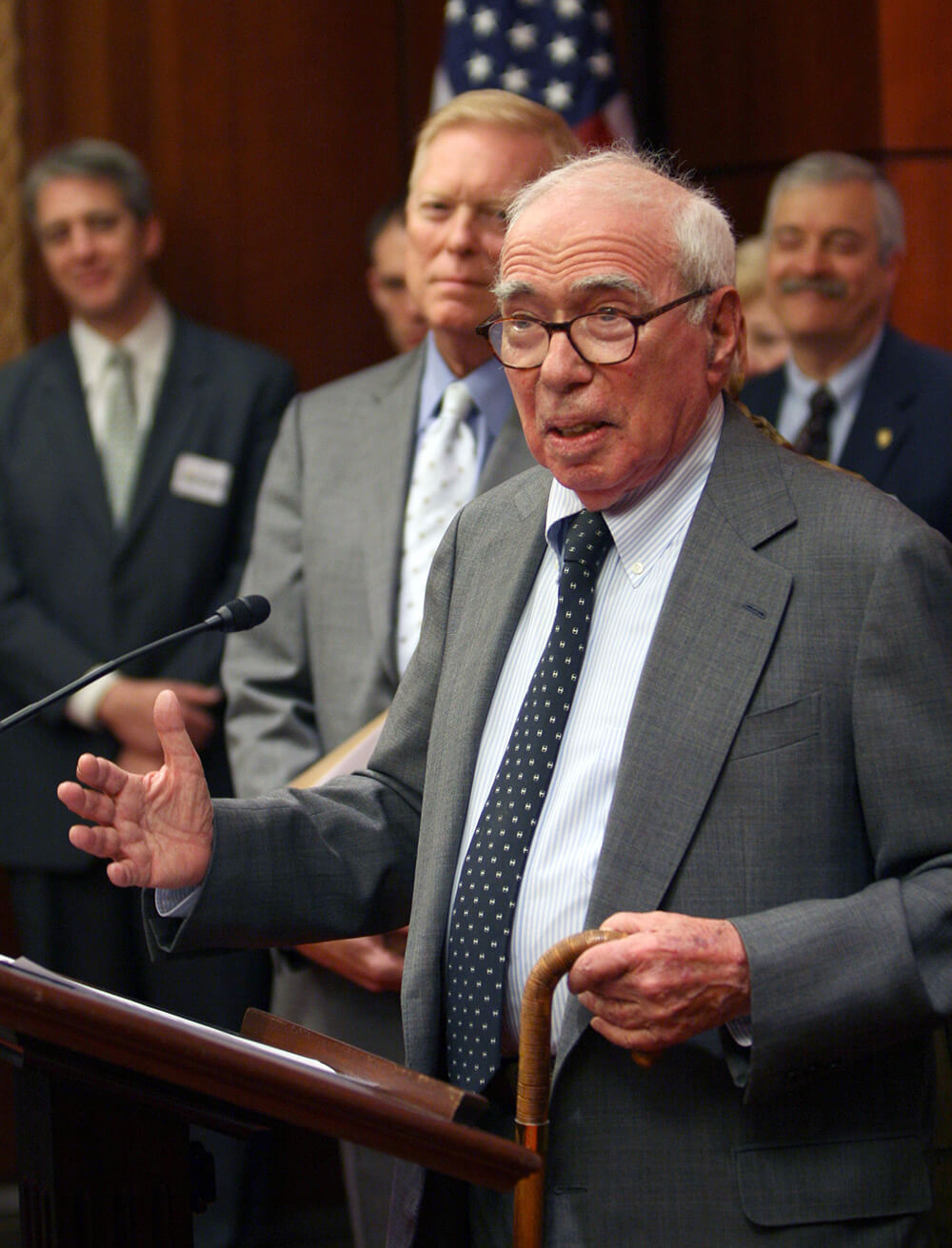
Felix Rohatyn, the financier and government adviser who was credited with helping to save New York City from ruin during the 1970s as chairman of the agency that oversaw the city’s finances, died last Saturday, according to AP.
When the City of New York ran out of money in mid-April 1975, Governor of New York Hugh Carey advanced state funds to the city to allow it to pay its bills, on the condition that the city turn over the management of its finances to the State of New York. Carey appointed Rohatyn to head a blue-ribbon advisory committee to look for a long-term solution to the city’s fiscal problems. The advisory committee recommended the creation of the Municipal Assistance Corporation (MAC), an independent corporation which was authorized to sell bonds to meet the borrowing needs of the city. While the deficit increased to $750 million, the MAC was established on June 10, 1975, with Rohatyn as chairman, and a board of nine prominent citizens, according to Overview of New York City’s Fiscal Crisis by Roger Dunstan
The MAC, led by Rohatyn, insisted that the city make major reforms, including a wage freeze, a major layoff, a subway fare hike, and charging tuition at the City University of New York. A state law converted the city sales tax and stock transfer tax into state taxes, which when collected were then used as security for the MAC bonds. Because the MAC did not create enough profit fast enough, the city created an Emergency Financial Control Board to monitor the city’s finances. But even with all of these measures, the value of the MAC bonds dropped in price, and the city struggled to find the money to pay its employees and stay in operation.
In November 1975 the federal government stepped in, with Congress extending $2.3 billion in short-term loans in return for more stringent measures. Rohatyn and the MAC directors persuaded the banks to defer the maturity of the bonds they held and to accept less interest, and convinced banks to buy MAC bonds to pay off the city’s debts. The confidence in MAC bonds was restored, and under Rohatyn’s chairmanship, the MAC successfully sold $10 billion in bonds By 1977–1978, New York City had eliminated its short-term debt. By 1985, the city no longer needed the support of the Municipal Assistance Corporation, and it voted itself out of existence, according to Dunstan’s research.
Born in Vienna in 1928, Rohatyn fled Nazi-occupied France with his family in 1940 and arrived in the United States in 1942, according to A.P
After rising to prominence with the banking firm Lazard, Rohatyn was named chairman of the state-appointed Municipal Assistance Corporation in 1975. The position, which he held until 1993, gave him power over taxes and spending in the nation’s largest city that was unusual for someone who did not hold elected office, Associated Press explained.
Rohatyn died of natural causes.



