

























|
Getting your Trinity Audio player ready...
|
By: Jerome Brookshire
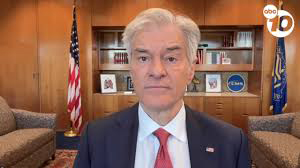
New York’s vast Medicaid system, long celebrated by advocates as a bulwark of social protection for the state’s most vulnerable residents, has been thrust into an unforgiving spotlight. The New York Post reported Sunday that Dr. Mehmet Oz, the head of the US Centers for Medicare and Medicaid Services, has leveled sweeping accusations of fraud and waste against the state’s $124 billion taxpayer-funded Medicaid program, suggesting that illegitimate providers and systemic dishonesty are siphoning away funds intended for those most in need.
In remarks delivered on 77 WABC’s “Cats Roundtable” with host John Catsimatidis, Oz described a landscape of suspected abuse so pervasive that it threatens not only public finances but the integrity of care delivered to millions of New Yorkers who rely on the program for their health and well-being.
“In the beautiful city of New York and surrounding New York state, we know that there are a lot of people who are providing services that we don’t think are legitimate, that are costing the taxpayers a lot of money,” Oz said, according to The New York Post’s account of the interview. His language, at once diplomatic and damning, framed the issue as both fiscal and moral.
The consequences of fraud, he argued, reverberate beyond balance sheets. “That ends up not only hurting taxpayers, but it hurts the actual people who are vulnerable… who need these services,” he told Catsimatidis. The New York Post report underscored Oz’s contention that dishonesty within Medicaid has “stripped the guts out of the affordability of these systems,” eroding the very foundation upon which public healthcare programs depend.
While Oz did not enumerate specific cases on air, The New York Post reported that his office has begun probing aspects of New York’s sprawling Medicaid apparatus. An insider familiar with the investigation told the paper that federal scrutiny is underway, signaling a potential confrontation between Washington regulators and Albany administrators over the stewardship of one of the nation’s most generous—and expensive—public health insurance programs.
Medicaid, which provides coverage for hospital care, nursing homes, and an expanding array of home-based services, has grown in scale and complexity alongside New York’s aging population. More than 6.8 million residents, roughly 34 percent of the state’s population, are currently enrolled, making the program not merely a safety net but a central pillar of New York’s healthcare ecosystem.
The scale of Medicaid in New York has long made it a magnet for both legitimate providers and unscrupulous actors. The New York Post has, in recent years, chronicled a series of audits and investigations that suggest vulnerabilities across multiple programmatic veins. A 2022 federal audit, cited by The New York Post, accused New York drivers and transport providers of improperly billing up to $196 million through the Non-Emergency Medical Transportation program, which reimburses rides for Medicaid recipients traveling to medical appointments.
According to the audit, many of these rides “did not meet or may not have met Medicaid requirements,” raising alarms about oversight in a program designed to remove logistical barriers to care but vulnerable to exploitation.
Beyond transportation, The New York Post has reported on alleged abuses within the Consumer Directed Personal Assistance Program, a sprawling initiative that allows Medicaid recipients to hire personal caregivers, often family members, to assist with daily living. The paper recently uncovered claims that the state may have lost as much as $1.2 billion to scammers through this program, a figure that, if borne out, would represent one of the most significant episodes of alleged waste in the history of New York’s Medicaid system.
Compounding these concerns is the state’s reported expenditure of up to $400 million annually on Social Adult Day Care centers, which The New York Post report contends largely duplicate services already provided by senior centers. The duplication of services, critics argue, exemplifies a system whose generosity has outpaced its capacity for efficient management.
These programs, including NEMT and CDPAP, were introduced or expanded during the administration of former Governor Andrew Cuomo as part of sweeping Medicaid overhauls intended to modernize care delivery and respond to demographic shifts. These reforms, while ambitious in scope, created a lattice of intermediaries and billing mechanisms that proved difficult to police. Governor Kathy Hochul, Cuomo’s successor, inherited both the infrastructure of these programs and the scrutiny that has since intensified around them.
Hochul’s administration has defended its management of Medicaid, emphasizing reforms enacted in 2024 that purportedly dismantled hundreds of “wasteful Medicaid middlemen” within CDPAP and generated more than $2 billion in savings for state and federal taxpayers in the past year alone.
A spokesperson for Hochul, responding to Oz’s criticisms, framed the state’s actions as evidence of proactive stewardship rather than complacency. “Before this federal administration even took office, Governor Hochul took action in 2024 with sweeping CDPAP reforms,” the spokesperson said, according to The New York Post report.
The statement went on to assert that the governor is “laser focused on cutting out waste, fraud and abuse,” while pivoting to a broader political critique: if Oz is truly concerned about affordability, the spokesperson argued, he should urge Washington Republicans to refrain from policies that would “rip healthcare away from everyday New Yorkers.” The New York Post report highlighted this exchange as emblematic of the political crosscurrents that now swirl around Medicaid, where questions of governance are inextricably entwined with partisan disputes over the future of public healthcare.
At stake in this debate is not merely the allocation of billions of taxpayer dollars but the credibility of a program upon which more than one-third of New Yorkers depend. The New York Post has repeatedly emphasized the paradox at the heart of New York’s Medicaid system: its generosity, often cited as a hallmark of the state’s commitment to social welfare, simultaneously renders it vulnerable to exploitation.
The expansion of home-care services, for example, reflects a humane response to an aging population’s desire to remain in familiar surroundings. Yet the proliferation of intermediaries and the sheer volume of claims have strained oversight mechanisms, creating openings for fraudulent billing and duplicative services.
Dr. Oz’s intervention, as reported by The New York Post, thus arrives at a moment when the architecture of Medicaid is under pressure from multiple directions: rising costs, demographic change, and intensifying scrutiny from federal regulators. His assertion that dishonesty within the system has hollowed out its affordability resonates with longstanding concerns among fiscal watchdogs, even as advocates caution against rhetoric that could be marshaled to justify cuts that would harm vulnerable populations.
The tension between rooting out waste and preserving access to care has long bedeviled Medicaid policy, and The New York Post’s coverage suggests that New York’s experience epitomizes this national dilemma in particularly stark terms.
The federal investigation now underway may illuminate the extent to which alleged abuses are systemic rather than episodic. If substantiated, the figures cited in audits and media reports point to a pattern of vulnerabilities that cannot be addressed through piecemeal reforms alone. Meaningful accountability will require not only the pruning of fraudulent providers but a structural rethinking of how Medicaid programs are designed, monitored, and audited in a state whose scale amplifies both the benefits and the risks of expansive public healthcare.
As federal investigators delve into the labyrinthine finances of New York’s Medicaid system, the political and moral stakes of their findings will reverberate far beyond Albany. For taxpayers, the promise of stewardship demands assurance that billions of dollars are not being siphoned into illegitimate channels. For beneficiaries, the integrity of Medicaid is inseparable from the continuity of care that sustains their health and dignity.