

























|
Getting your Trinity Audio player ready...
|
Remembering the “Jewish Nakba” – The Mass Displacement of Nearly 1,000,000 Jews from Arab & Muslim Lands
By: Fern Sidman
In the sweeping narrative of 20th-century upheaval that accompanied the birth of the modern Middle East, one profound and often underexamined chapter continues to demand renewed attention: the mass displacement of Jewish communities from Arab and Muslim lands following the establishment of the State of Israel in 1948. Referred to by some scholars and historians as the “Jewish Nakba,” this episode encompasses the forced migration, expulsion, and flight of an estimated 850,000 to 1,000,000 Jews from regions where their presence had endured for centuries, if not millennia.
From the bustling intellectual centers of Baghdad to the cosmopolitan avenues of Cairo, from the historic quarters of Damascus to the ancient synagogues of Sana’a, Jewish life had long been interwoven into the social, economic, and cultural fabric of the Middle East and North Africa. These communities were not recent arrivals but indigenous populations, deeply rooted in their respective societies, contributing to commerce, scholarship, and civic life.
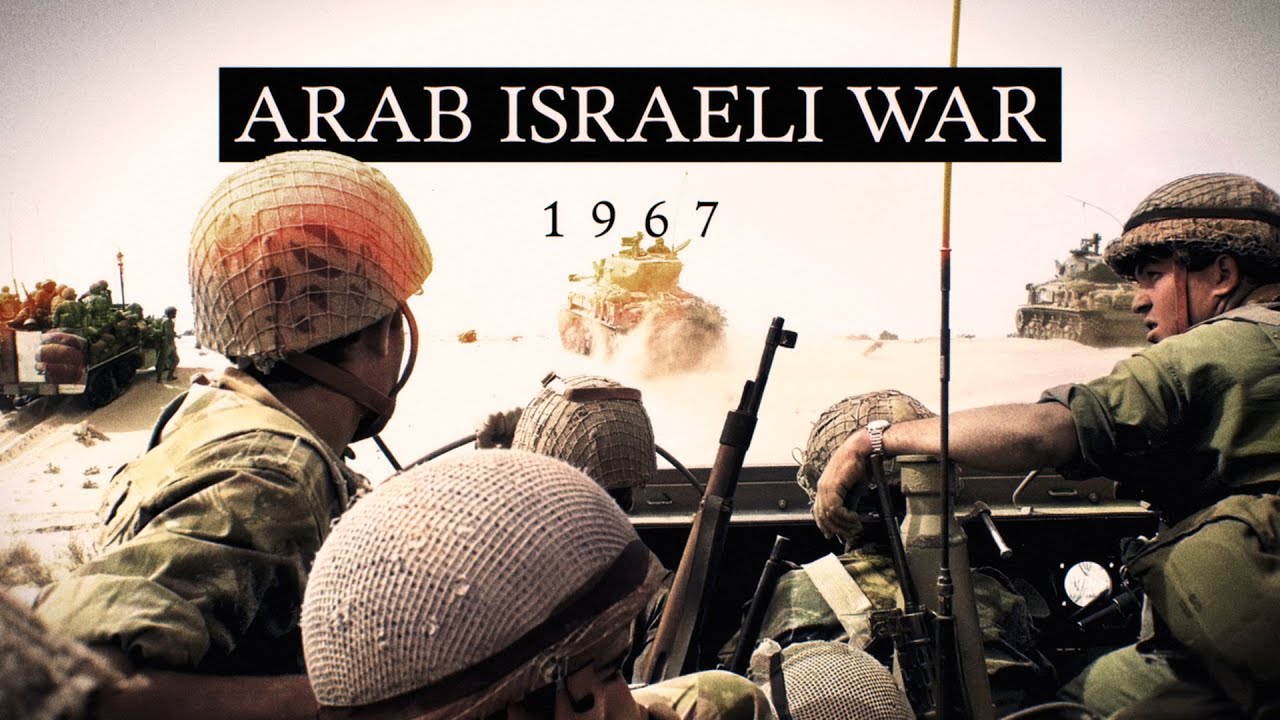
Yet, within the span of a single generation, this enduring presence was effectively erased. The geopolitical shockwaves that followed the creation of Israel and the outbreak of the Arab-Israeli war in 1948 precipitated a cascade of events that would fundamentally alter the demographic and cultural landscape of the region.
For centuries, Jewish communities flourished across a vast geographic arc extending from North Africa through the Levant and into the Persian Gulf. In cities such as Baghdad, Jews constituted a significant portion of the population, playing central roles in trade, finance, and intellectual life. In Morocco, Tunisia, and Algeria, Jewish traditions blended with local customs, producing rich cultural expressions that endured for generations.
These communities were characterized by resilience and adaptability, having survived periods of both coexistence and hardship. However, the mid-20th century introduced a new and more destabilizing set of pressures.
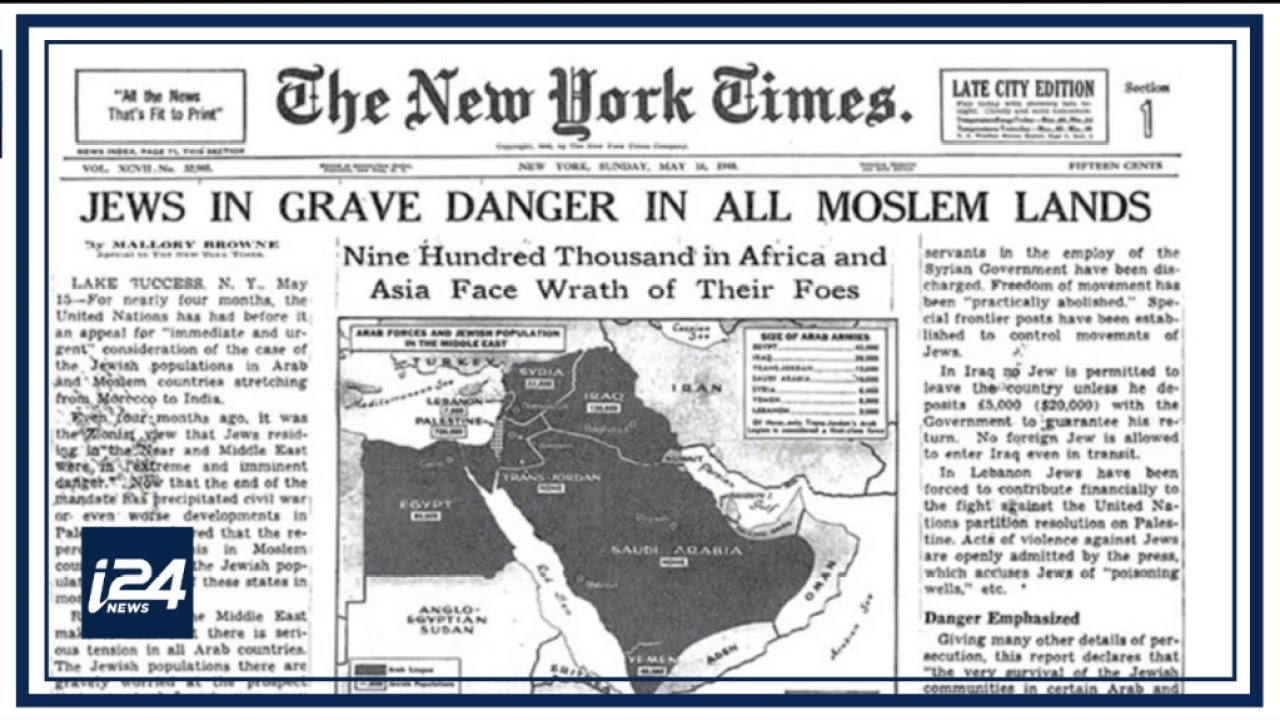
In the years surrounding 1948, Jews in many Arab and Muslim-majority countries began to face escalating hostility. This hostility manifested in a variety of forms, including discriminatory legislation, restrictions on employment and movement, and, in many cases, outright violence.
Eyewitness accounts and historical records describe a climate in which Jewish citizens were increasingly viewed with suspicion, often accused of dual loyalty or treated as proxies for the newly established State of Israel. As tensions mounted, the situation for many families became untenable.
The displacement of Jewish populations was not a singular event but rather a series of interconnected developments that unfolded across multiple countries. In some instances, governments enacted policies that systematically marginalized Jewish communities.
Property confiscations were a recurring feature of this process. Homes, businesses, and communal assets were seized or abandoned under duress, leaving families with little more than what they could carry. Citizenship rights were curtailed or revoked, effectively rendering many individuals stateless.
In addition to legal measures, outbreaks of violence further accelerated the exodus. Riots, attacks on synagogues, and targeted assaults created an atmosphere of fear and insecurity. For many, departure was not a matter of choice but of survival.
The cumulative effect of these pressures was the near-total dissolution of Jewish life in regions where it had once been deeply entrenched. Within a few decades, communities that had existed for hundreds or even thousands of years were reduced to remnants, their members dispersed across the globe.
Between 1948 and the early 1970s, an estimated 850,000 to 1,000,000 Jews left Arab and Muslim-majority countries. This mass movement represents one of the most significant population shifts in modern Middle Eastern history.
Of these individuals, more than 600,000 ultimately resettled in Israel, where they played a pivotal role in shaping the young state’s development. Arriving often with limited resources, these refugees faced the daunting task of rebuilding their lives in a new and unfamiliar environment.
Their contributions to Israeli society were substantial and enduring. They helped to populate new towns, contributed to the economy, and enriched the cultural landscape with diverse traditions, languages, and customs. Their experiences also influenced the nation’s political and social dynamics, adding layers of complexity to its identity.
Others from this displaced population found refuge in Europe, North America, and elsewhere, forming diaspora communities that continue to preserve elements of their heritage.
Despite the scale and significance of this exodus, it has often received comparatively limited attention in broader discussions of Middle Eastern history. The narratives surrounding regional conflict have frequently focused on other dimensions, leaving the experiences of these Jewish communities underrepresented.
This relative absence from public discourse has prompted calls for greater recognition and acknowledgment. Advocates argue that understanding the full scope of historical displacement in the region requires a comprehensive examination of all affected populations.
The term “Jewish Nakba,” while not universally adopted, reflects an effort to frame this history within a broader context of loss and displacement. It seeks to draw attention to the shared human dimensions of forced migration, including the loss of home, community, and cultural continuity.
Today, the descendants of those who fled or were expelled from Arab and Muslim lands continue to grapple with the legacy of that upheaval. For many, the memory of their ancestral homes remains a powerful and defining element of their identity.
Cultural preservation has become an essential endeavor. Through music, cuisine, language, and religious practice, these communities maintain connections to their heritage, ensuring that the traditions of Baghdad, Casablanca, Cairo, and Sana’a are not forgotten.
At the same time, there is a growing movement to document and archive the histories of these communities. Oral histories, academic research, and commemorative initiatives aim to capture the experiences of those who lived through the exodus and to educate future generations.
As one observer noted in reflecting on this history, “We remember not only what was lost, but what was built anew.” This sentiment encapsulates the dual narrative of tragedy and resilience that defines the Jewish exodus from Arab and Muslim lands.
The remembrance of this chapter is not merely an exercise in historical reflection; it is also a call for acknowledgment and understanding. Recognizing the experiences of these displaced communities contributes to a more nuanced and complete picture of the region’s past.
It also underscores the broader human cost of conflict and political upheaval. The stories of those who left behind their homes, their livelihoods, and their ancestral ties serve as a reminder of the enduring impact of displacement.
As the world continues to grapple with issues of migration, identity, and historical justice, the lessons of this exodus remain relevant. They highlight the importance of preserving cultural heritage, supporting displaced populations, and fostering dialogue grounded in historical awareness.
In commemorating the displacement of nearly 1,000,000 Jews from Arab and Muslim lands, there is an implicit recognition of both loss and perseverance. The vibrant communities that once thrived across the Middle East and North Africa may no longer exist in their original form, but their legacy endures.
Their synagogues, schools, and marketplaces may have been left behind, but their traditions have been carried forward, adapted, and reimagined in new contexts. Their stories, once overlooked, are increasingly being brought to light.
“Today, we honor their resilience, preserve their stories, and remember the vibrant heritage of the Jewish communities that once spanned the region,” as one commemorative statement aptly put it.
In doing so, we not only pay tribute to a lost world but also affirm the enduring capacity of communities to rebuild, to adapt, and to thrive in the face of profound adversity.



