






























By: Russ Spencer
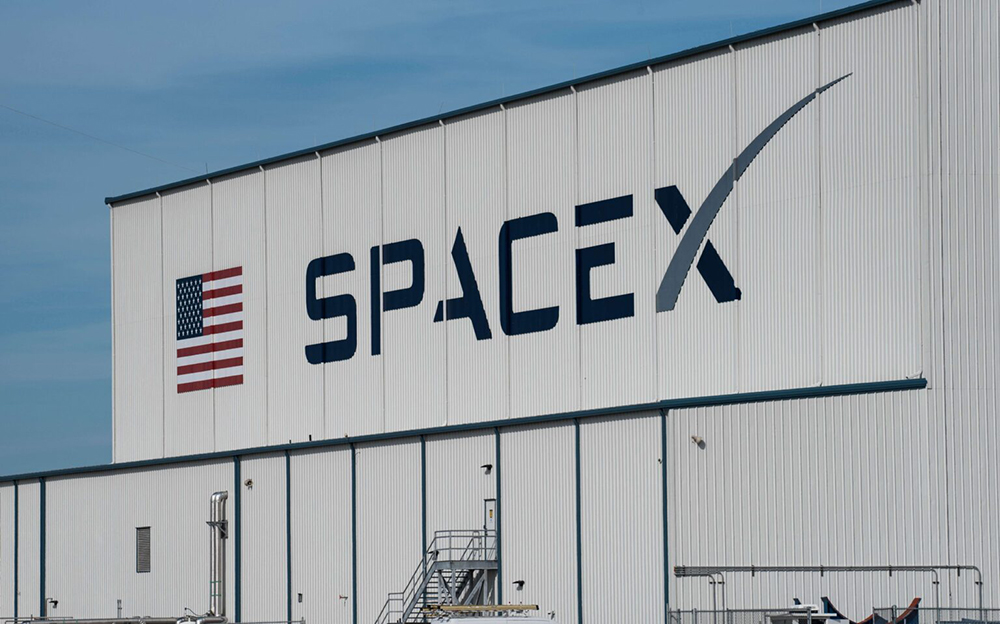
The global investment community is approaching what may prove to be one of the most consequential tests of market confidence in recent financial history as SpaceX reportedly prepares for a public offering that could value the aerospace and satellite communications giant at no less than $1.8 trillion.
If completed at the anticipated valuation, the offering would not only rank among the largest corporate debuts ever attempted, but could also serve as a pivotal referendum on investor enthusiasm for the next generation of technology-driven enterprises. With additional highly anticipated public offerings from artificial intelligence leaders OpenAI and Anthropic widely expected to follow, financial markets may soon be asked to absorb trillions of dollars in new equity value within a remarkably compressed timeframe.
The prospect has generated extraordinary excitement across Wall Street and global financial centers. Yet it has also prompted a growing number of market observers to ask a fundamental question: Is investor demand truly limitless?
Among those raising concerns is Nigel Green, Chief Executive Officer of deVere Group, one of the world’s largest independent financial advisory organizations. Green argues that the coming months may reveal whether enthusiasm surrounding artificial intelligence, advanced technology, and disruptive innovation is as deep and sustainable as many market participants currently believe.
“Markets are about to discover whether investor appetite for AI and tech is as deep as many assume,” Green observed.
His assessment reflects a broader debate unfolding among institutional investors, asset managers, and financial strategists as they evaluate whether the unprecedented valuations being attached to leading technology companies can continue climbing indefinitely.
According to reports, SpaceX is targeting a valuation approaching $1.8 trillion while seeking to raise as much as $75 billion through its anticipated public offering.
Such figures would place the company in rarefied territory, rivaling some of the largest and most influential corporations on the planet.
The sheer magnitude of the proposed offering has stunned many market participants.
“SpaceX alone is seeking one of the largest valuations ever attached to a newly public company,” Green noted.
“Add the expected listings of OpenAI and Anthropic into the equation and investors could be asked to absorb trillions of dollars of fresh equity value within a relatively short period.”
“Even highly enthusiastic markets have limits.”
Those comments underscore the unprecedented scale of what may soon confront global investors.
Never before have so many transformative technology enterprises sought public-market financing at such extraordinary valuations within a relatively condensed period.
Despite concerns regarding valuation, few observers dispute SpaceX’s remarkable achievements.
Founded by Elon Musk, the company has fundamentally transformed the economics of spaceflight, dramatically reducing launch costs while simultaneously establishing itself as a dominant force in commercial aerospace.
The company generated nearly $19 billion in revenue during the previous year, driven largely by the explosive growth of its Starlink satellite internet network.
Starlink now reportedly serves more than 10 million customers worldwide, providing internet connectivity across remote regions, underserved communities, military installations, maritime routes, and commercial enterprises.
Green acknowledged the extraordinary scope of SpaceX’s accomplishments.
“Nobody can dispute what SpaceX has achieved,” he stated.
“It’s transformed commercial space launch economics, built a communications network with global reach and established itself as one of the most strategically important private companies in the world.”
That assessment is widely shared across financial circles.
SpaceX today occupies a unique position at the intersection of several of the most powerful economic and technological trends shaping the global economy.
Supporters of the anticipated offering argue that SpaceX represents far more than a traditional aerospace company.
Rather, they view it as a diversified platform positioned at the center of multiple transformational industries.
“Supporters see exposure to satellite connectivity, AI infrastructure, defense technology, launch services and future commercial opportunities in space all wrapped into one investment,” Green explained.
Indeed, few corporations possess exposure to as many high-growth sectors simultaneously.
Its launch division remains the dominant player in commercial space transportation.
Its Starlink network has become a critical component of global communications infrastructure.
Its defense relationships continue expanding amid increasing geopolitical tensions.
Its future ambitions include lunar operations, deep-space exploration, advanced manufacturing, and potentially even interplanetary transportation.
Such a combination has fueled investor enthusiasm and helped justify increasingly ambitious valuations.
Yet Green warns that admiration for a company’s achievements should not automatically translate into unquestioning acceptance of its valuation. “A great company and a great stock are not always the same thing,” he cautioned.
This distinction has become increasingly important as investors evaluate whether SpaceX’s anticipated valuation accurately reflects both its opportunities and its risks.
According to Green, investors must carefully examine the assumptions embedded within a valuation approaching $1.8 trillion.
“Markets are being asked to place an extraordinary valuation on a business that continues to invest aggressively and burn significant amounts of cash in pursuit of future growth,” he said. “At close to $1.8 trillion, investors are effectively pricing in years of success before much of that profitability has arrived.”
His comments highlight a central concern among some analysts.
While SpaceX has achieved remarkable revenue growth, many of its most ambitious projects remain long-term ventures whose ultimate profitability has yet to be fully demonstrated.
Financial history offers numerous examples of companies entering public markets amid enormous enthusiasm only to struggle under the weight of elevated expectations.
Green believes those historical precedents deserve careful consideration.
“Many of the world’s largest IPOs generated enormous excitement before delivering disappointing returns during their first year on public markets,” he observed. “Investors become captivated by the story, expectations move higher and reality eventually has to catch up.”
That phenomenon has repeated itself throughout multiple market cycles.
Periods characterized by extraordinary optimism often lead investors to assign valuations based on idealized future outcomes rather than present realities.
When growth inevitably encounters obstacles, share prices can experience substantial volatility.
Green acknowledged that SpaceX may ultimately defy such historical patterns.
“SpaceX may prove different,” he said. “Elon Musk has repeatedly delivered outcomes many believed were impossible.”
Nevertheless, he emphasized that valuation risk cannot be ignored.
“But valuation risk remains valuation risk.”
Another factor likely to receive close scrutiny from prospective investors is Elon Musk’s extraordinary influence over the company.
Musk has long been recognized as one of the most visionary and controversial entrepreneurs of the modern era.
His leadership has unquestionably played a central role in SpaceX’s success.
However, Green argues that investors must understand the distinction between ownership and control.
“Public shareholders need to recognize that Elon Musk maintains overwhelming influence over the company,” he said. “Ownership and control are two very different things.”
“Investors may own shares, but strategic decision-making remains highly concentrated.”
For some investors, Musk’s leadership represents one of SpaceX’s greatest strengths. For others, concentrated authority may introduce governance considerations that warrant careful evaluation.
The implications of a SpaceX offering extend well beyond the company itself.
Green believes the emergence of several enormous technology listings could fundamentally alter capital flows throughout global equity markets. “For years, a relatively small group of companies has dominated market returns, index performance and investor attention,” he noted. “The Magnificent Seven have absorbed vast amounts of capital and have become increasingly influential within global equity markets.”
That elite group—widely understood to include Nvidia, Microsoft, Amazon, Meta, Alphabet, Apple, and Tesla—has served as the primary engine of market growth in recent years.
However, Green believes a new generation of technology giants may soon begin competing for investor capital. “SpaceX, OpenAI and Anthropic have the potential to begin changing that dynamic.”
The arrival of multiple blockbuster offerings could create difficult allocation decisions for institutional investors. “Capital is finite,” Green emphasized. “Large pension funds, sovereign wealth funds, ETFs and asset managers cannot endlessly increase exposure to every opportunity that emerges.”
“If several mega-IPOs arrive within months of each other, money will need to come from somewhere.” That observation highlights one of the most important questions facing markets today.
Will investors simply deploy new capital into these offerings, or will they reallocate existing investments away from established technology leaders? Green believes the latter possibility deserves serious consideration.
“Some of the capital that has flowed consistently into Nvidia, Microsoft, Amazon, Meta, Alphabet, Apple and Tesla could increasingly be redirected toward a new generation of AI and space leaders.”
For Green, the broader significance of SpaceX’s anticipated public debut lies in what it may reveal about the current state of investor psychology.
Historically, periods marked by a surge in large public offerings have often coincided with elevated levels of optimism. “Periods characterized by huge IPO activity often coincide with peaks in investor optimism,” he said. “Every cycle eventually reaches a stage where demand appears almost unlimited.”
The crucial question now confronting markets, he argues, is whether investor demand can continue keeping pace with rapidly expanding supply. “The critical question facing markets this summer is whether demand genuinely is unlimited or whether supply finally begins catching up.”
Ultimately, Green believes SpaceX possesses the potential to become one of the defining corporations of the next decade. “SpaceX could become one of the defining public companies of the next decade,” he concluded. “The opportunities are immense, but the risks are immense too.”



