




























By: Chaya Sora Jungreis-Gertzulin
We all have memories of firsts. For a child, it may be something as simple as opening a brand-new box of Crayolas. The wow of seeing the crayons seamlessly lined up, with their pointy heads just begging to be used. For an older child, it could be starting off the first day of school with the perfect new shoes or sneakers. We get older. Our firsts change. How happy we are the first time we put on an amazing outfit, purchased for a special occasion. Or, the thrill of getting behind the wheel of a new car, taking in a whiff of that distinct fresh-car scent.
But the spark of newness and novelty doesn’t last. The crayons get worn down, eventually breaking. The footgear gets scuffed and used-looking. That special dress, worn at first with excitement, becomes same-old, same-old. And, that fresh-car scent slowly fades away. With time, the firsts just don’t feel the same. It’s no longer so special.
Not so with Aaron and the lighting of the Menorah. In this week’s parsha, Beha’aloscha, Aaron HaKohein is given the mitzva of lighting the Menorah. The Torah tells us, “Va’ya’as kein Aaron, And Aaron did so.” (Bamidbar 8:3) Rashi quotes from a Sifri, “To declare the praise of Aaron – shelo shina, that he did not deviate.” Aaron did not make any changes. He did precisely what was instructed.
Why does the Torah need to tell us that Aaron lit the Menorah in the exact way that he was instructed? Would we expect otherwise? After all, Aron was the Kohein Gadol, and lighting the Menorah was a commandment from HaShem.
Both the Kotzker Rebbe and the Vilna Gaon explain that Rashi is alluding not to the physical lighting of the Menorah, but to the spirit, the heartfelt anticipation and excitement Aaron felt each and every time.
For 39 years, day-after-day, week-after-week, month-after-month, year-after-year. It didn’t matter. He never tired of the mitzva. It never became stale in his eyes.
To Aaron, each time was the first time. It was always with the same devotion and dedication. With the same energy and enthusiasm. Aaron never got burnt out from completing his tafkid, his task, but looked forward to fulfilling his special mitzva with hisla’a’vus, with much anticipation and love.
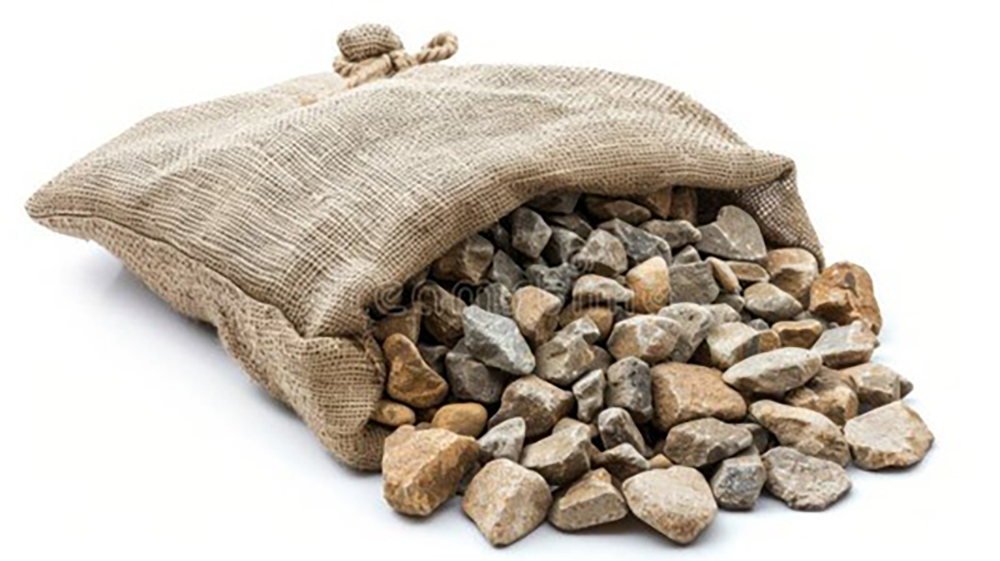
I recently heard a beautiful vort from Rabbi Simon Jacobson, illustrating how one should properly look at the beauty of keeping mitzvos. He was asked if Judaism is meant to be easy or hard. He answered with a chuckle and shared a story. A story of someone who was given a sack filled with 100 pounds of stones and told that they would be his to keep if he carried it across the road. Most people would say, who needs 100 pounds of stones, and reject the offer. But, what if it was a sack filled with 100 pounds of precious stones – diamonds.
Most people would not hesitate, and would say, I’ll even take 200 pounds across the street. No matter how heavy it is, you shlep it. Somehow you find the energy, the strength. Because even though it’s the same weight as the 100 pounds of stones, when you recognize and appreciate the value, it makes it worth the effort. So, it is with Yiddishkeit. Yes, there are regulations and it demands commitment. If you see it as stones, it’s a burden. But, if you see Torah and mitzvos as diamonds, it’s very light. It’s worth the effort.
A life lesson for us. To study Torah and perform mitzvos with passion and excitement. To look at each day as a first. For Aaron, each time he lit the Menorah, he did not view it as a burden, as a repetitive rote function. To Aaron, mitzvos were never stones, they were always diamonds. Aaron’s actions teach us that every time we review the weekly parsha, every time we say Modeh Ani upon awakening, and Shema before going to sleep, we should say the words with kavanna, with sincerity and concentration. Each word, not a stone, but a diamond. As it says in the words of the Shema, “Asher Anochi mi’tzavcha hayom, That I command you today.” (Devarim 6:6). Rashi comments that the mitzvos should not grow old in our eyes, but they should be “k’cha’dasha”. Always new, always fresh, always special.
It all sounds wonderful, but is it doable? How do we become an Aaron in spirit? Perhaps, the answer lies within the very flames Aaron kindled. The Hebrew word for fire is “aish”, spelled aleph, shin. Aleph for ahava, love. Shin for simcha, joy. If we look at a Torah life with aish, ahava and simcha, our inner flame will not be extinguished. But, our spiritual passion for Torah will only grow.
When my mother, The Rebbetzin, began HINENI almost 60 years ago, she chose a flame from which the word HINENI emerged as the insignia for the organization. A flame. Fire. The fire within the soul. My mother would often speak about the pintele yid, the little spark within every Jewish neshama. A spark that is waiting to become a flame. A spark that she fanned by teaching Torah to the masses with ahava and simcha. And, the spark ignited, bursting forth into a raging fire, touching thousands upon thousands of neshamos, bringing so many back to their roots. As my mother would say, “If you will it, a giant flame will come forth, a flame that will proclaim, HINENI, Here Am I, Here Am I, my G-d.”
Torah and mitzvos are not stones to be carried but diamonds to be cherished. When we approach them with ahava and simcha, the flame within our neshama burns brighter, and every mitzva becomes new once again.
Shabbat Shalom!
Chaya Sora
Chaya Sora can be reached at [email protected]
This article was written L’zecher Nishmas / In Memory Of HaRav Meshulem ben HaRav Osher Anshil HaLevi, zt”l and Rebbetzin Esther bas HaRav Avraham HaLevi, zt’l



