

















|
Getting your Trinity Audio player ready...
|
Trump Signals Confidence in Iran Talks While Warning of Alternative Measures if Diplomacy Fails
President Says U.S. Is ‘Getting What We Want Slowly’ as Tehran Rejects Claims of Final Agreement and Defends Its Sovereignty
By: Fern Sidman
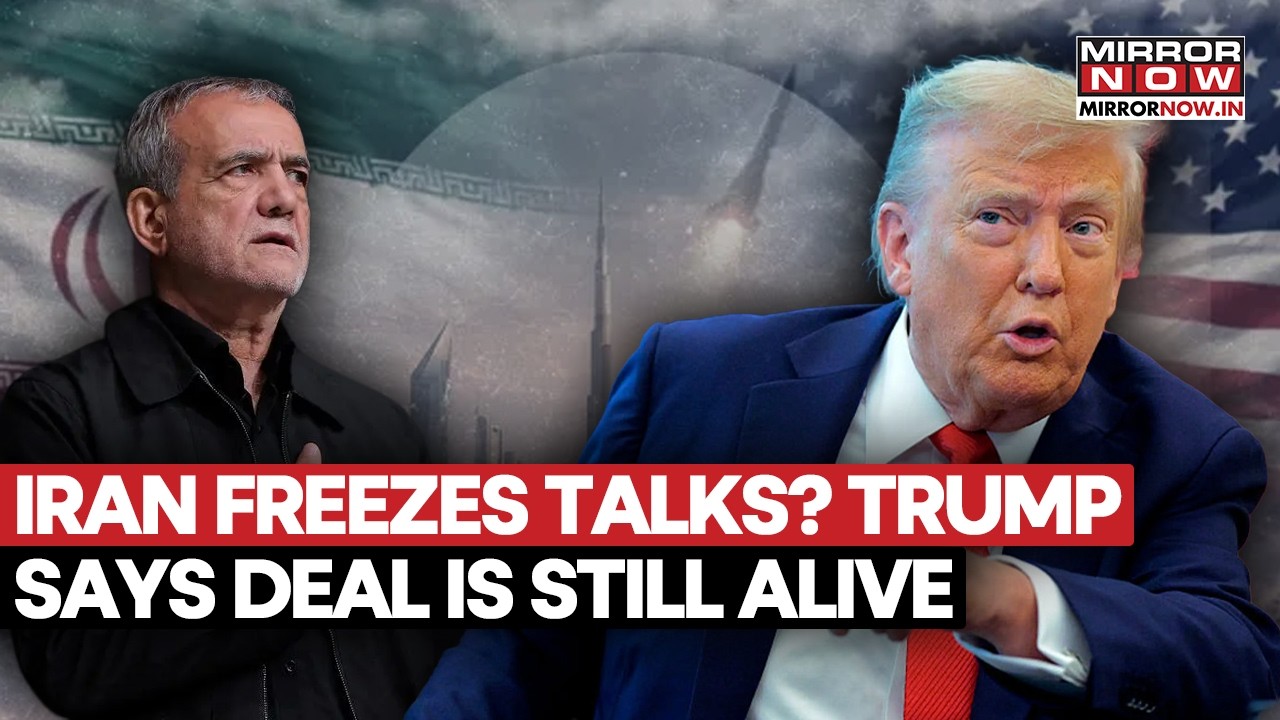
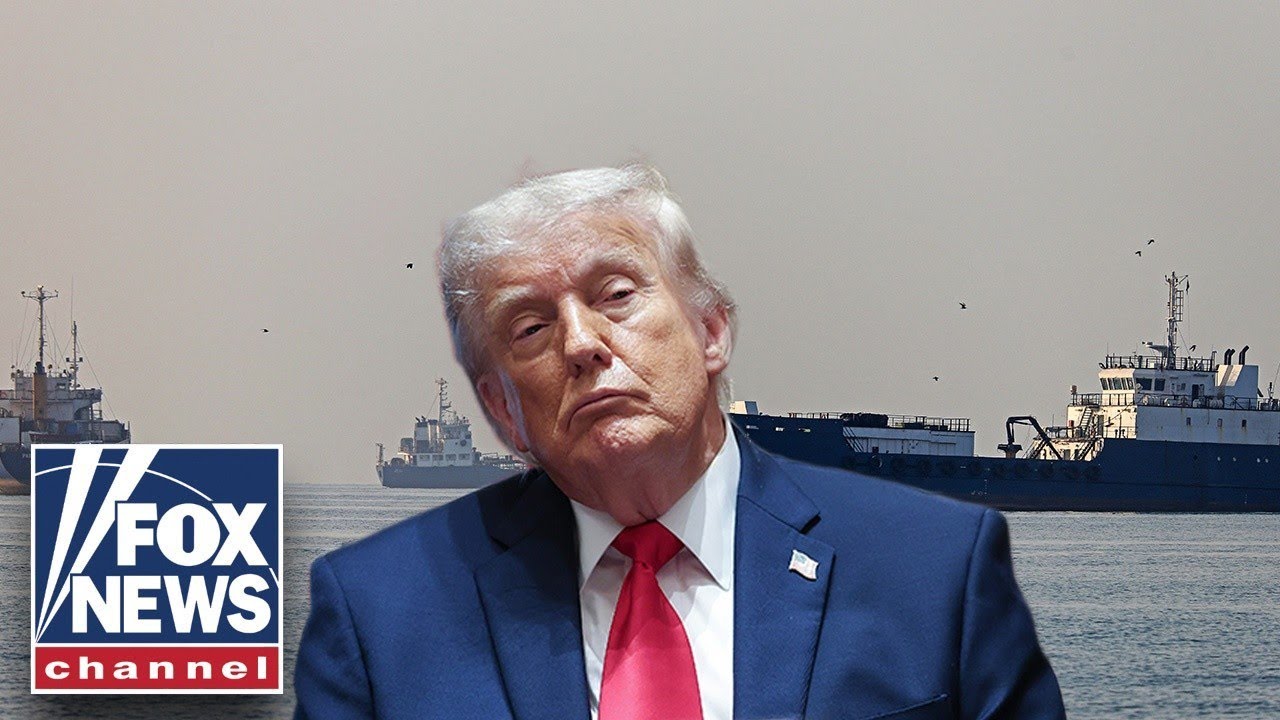
President Donald Trump expressed renewed confidence in ongoing negotiations with Iran during a televised interview that aired Saturday night, declaring that the United States is steadily achieving its strategic objectives while emphasizing that preventing Iran from obtaining a nuclear weapon remains a non-negotiable condition of any future agreement.
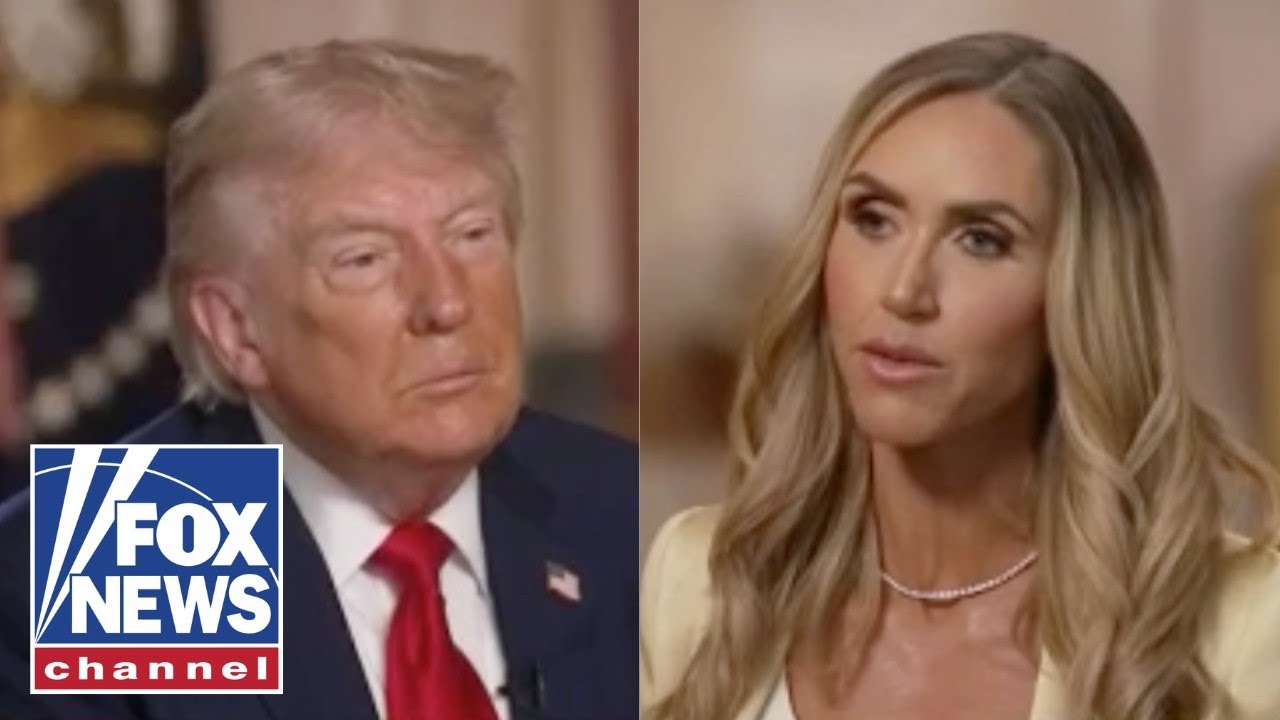
The remarks, delivered during an interview with Lara Trump on Fox News, came amid an increasingly complex diplomatic landscape in which American officials continue exploring a potential framework for de-escalation with Tehran, while Iranian leaders publicly insist that no final agreement has been reached.
According to Ia report on Saturday evening at Israel National News, Trump projected confidence throughout the interview, arguing that recent military and diplomatic developments have strengthened Washington’s leverage while allowing the administration to pursue negotiations from a position of strength.
“We’ve defeated their military, essentially defeated their military,” Trump stated. “I would rather get a deal because we can open the strait immediately upon signing. The one guarantee that I have to have is that there will be no nuclear weapons.”
The president’s comments reflected a consistent theme that has characterized his administration’s approach toward Iran: a willingness to negotiate coupled with repeated warnings that alternative options remain available if diplomacy fails to achieve Washington’s objectives.
As Israel National News noted in its coverage, the most significant aspect of Trump’s remarks centered on the language governing Iran’s nuclear commitments.
The president suggested that negotiations had progressed beyond earlier formulations that focused exclusively on domestic nuclear weapons development.
“They’ve agreed to that, and it was very interesting,” Trump said. “They originally said ‘we will not develop a nuclear weapon’. I said, ‘Well, what happens if you buy a nuclear weapon?’ So now it says ‘we will not develop or in any way purchase a military weapon.’ That’s a big difference.”
The distinction highlighted by Trump underscores one of the fundamental challenges that have long complicated negotiations with Iran: establishing verifiable restrictions that prevent not only indigenous nuclear weapons development but also alternative pathways to acquiring nuclear capabilities.
Israel National News reported that Trump presented the revised language as evidence that American negotiators are successfully obtaining stronger commitments than were initially offered by Iranian representatives.
Whether such language ultimately appears in a finalized agreement remains uncertain, particularly given Tehran’s subsequent public statements denying that any final understanding has been achieved.
One of the more striking elements of Trump’s interview was his repeated insistence that he is not rushing toward a diplomatic breakthrough.
In an era when political leaders often seek rapid foreign-policy victories, Trump portrayed patience as an essential negotiating tool.
“We’re getting what we want slowly,” he said. “Very tough negotiators. It takes a long time. I’m in no hurry.”
The president acknowledged that domestic economic considerations could create incentives for a faster resolution, particularly regarding global energy markets.
“I’d like to say I’m in a hurry because, you know, gasoline prices are going to come tumbling down,” Trump remarked. “But if you’re going to be in a hurry, you’re not going to make a good deal.”
The Israel National News report noted that these comments appear consistent with Trump’s broader negotiating philosophy, which often emphasizes leverage, patience, and a willingness to walk away from discussions that fail to meet key objectives.
The president reiterated that view later in the interview. “And slowly but surely, we’re getting, I think, what we want,” Trump said. “And if we don’t get what we want, we’re going to end it a different way.”
While Trump did not elaborate on what alternative measures might entail, the statement reflected the administration’s longstanding position that military, economic, and diplomatic tools remain available if negotiations break down.
The interview followed a significant White House meeting held the previous day in the Situation Room, where Trump and senior advisers reportedly spent approximately two hours reviewing developments related to a possible agreement with Iran.
Israel National News reported that the consultations included discussions about the status of ongoing negotiations and various potential pathways forward.
Despite the lengthy deliberations, no final decision emerged from the meeting.
The absence of an immediate breakthrough appears to reinforce Trump’s assertion that negotiations remain active but incomplete.
Officials familiar with the discussions have suggested that several critical issues continue to require clarification before any formal agreement can be finalized.
The Situation Room meeting underscored the strategic importance the administration attaches to the negotiations, particularly given their implications for regional stability, global energy markets, and nuclear nonproliferation efforts.
While Washington projected cautious optimism, Iran offered a sharply different assessment.
According to the Israel National News report, Iranian officials categorically rejected reports suggesting that a conclusive diplomatic arrangement had been achieved.
Foreign Ministry spokesperson Esmail Baghaei served as Tehran’s principal voice on the matter, emphasizing that negotiations remain fluid and incomplete. Baghaei acknowledged the existence of ongoing communications but rejected suggestions that the process had reached a decisive conclusion.
The Iranian official stressed that messages continue to be exchanged through intermediaries, including channels reportedly facilitated by Pakistan. However, he insisted that these exchanges should not be interpreted as evidence of a finalized agreement.
His comments highlighted the substantial gap that often exists between diplomatic discussions and formal agreements, particularly in negotiations involving deeply entrenched geopolitical rivals.
Baghaei adopted an especially defiant tone when addressing what he characterized as external pressure on Iran. The spokesman emphasized Iran’s determination to make independent decisions regarding its national interests. Iran, he said, “said goodbye to the language of ‘must’ 47 years ago.”
The statement represented a direct rejection of any perception that foreign governments can dictate terms to the Islamic Republic. “We make our own decisions based on the interests and rights of the Iranian people,” Baghaei asserted.
Such rhetoric has long been a hallmark of Iranian diplomatic messaging, particularly when responding to American demands concerning nuclear activities, regional influence, and military capabilities.
By emphasizing sovereignty and resistance to external pressure, Iranian officials seek to demonstrate that any eventual agreement would result from negotiation rather than coercion.
Another major point of contention involves maritime security and freedom of navigation in the Strait of Hormuz, one of the world’s most strategically important waterways. The strait serves as a critical artery for global energy shipments, with substantial volumes of oil and natural gas passing through the corridor each day.
According to the Israel National News report, Baghaei sharply criticized American naval activities in the region. He characterized the U.S. naval blockade as unlawful and argued that it violated international norms governing maritime commerce.
The Iranian spokesman described the deployment as both a ceasefire violation and a disruption of freedom of navigation.
His comments reflected Tehran’s broader effort to frame American actions as destabilizing while portraying Iran as defending its sovereign rights and regional interests.
At the same time, U.S. officials have consistently argued that maritime operations are intended to preserve security, protect international shipping routes, and deter hostile activities.
Despite the public disagreements, both sides appear committed to maintaining diplomatic channels. Israel National News reported that Pakistani-mediated communications continue to facilitate exchanges between Washington and Tehran.
Such indirect negotiations have historically played an important role in U.S.-Iran relations, particularly during periods when direct diplomatic engagement was limited or politically sensitive.
Baghaei confirmed that communications remain active. However, he reiterated that no final agreement has emerged from the process. His comments suggest that while both governments remain engaged, substantial differences continue to separate their respective positions.
The persistence of these backchannel discussions nevertheless indicates that neither side has abandoned diplomacy. Instead, negotiations appear to be entering another phase characterized by cautious exploration, public signaling, and continued efforts to bridge remaining gaps.
The divergent messages emerging from Washington and Tehran illustrate the complexity of one of the world’s most consequential diplomatic negotiations. On one side, President Trump expresses confidence that the United States is steadily obtaining stronger commitments from Iran while maintaining patience and leverage.
On the other, Iranian officials insist that no agreement exists and reject any suggestion that Tehran is yielding to external demands.
Israel National News has consistently highlighted this tension between optimism and uncertainty, noting that the ultimate success of the negotiations will depend on resolving fundamental disputes concerning nuclear activities, regional security, sanctions, and maritime access.
For now, both sides continue talking.
Whether those conversations ultimately produce a durable agreement or give way to renewed confrontation remains one of the most closely watched questions in international affairs. Trump’s message was unmistakable: diplomacy remains the preferred path, but alternative options remain on the table if negotiations fail to deliver the guarantees Washington seeks.
As the negotiations continue, the world watches closely, aware that the outcome could shape the security architecture of the Middle East and influence global stability for years to come.



