

















|
Getting your Trinity Audio player ready...
|
JPMorgan Chase Chief Says Private Meeting With New York’s New Mayor Was ‘Pleasant,’ But Warns That Sound Policy — Not Higher Taxes — Will Determine the City’s Success
By: Russ Spencer
JPMorgan Chase Chairman and Chief Executive Officer Jamie Dimon has revealed new details about his recent face-to-face meeting with New York City Mayor Zohran Mamdani, describing the encounter as cordial and constructive while simultaneously offering a pointed reminder that governing the nation’s largest city requires far more than ideological conviction.
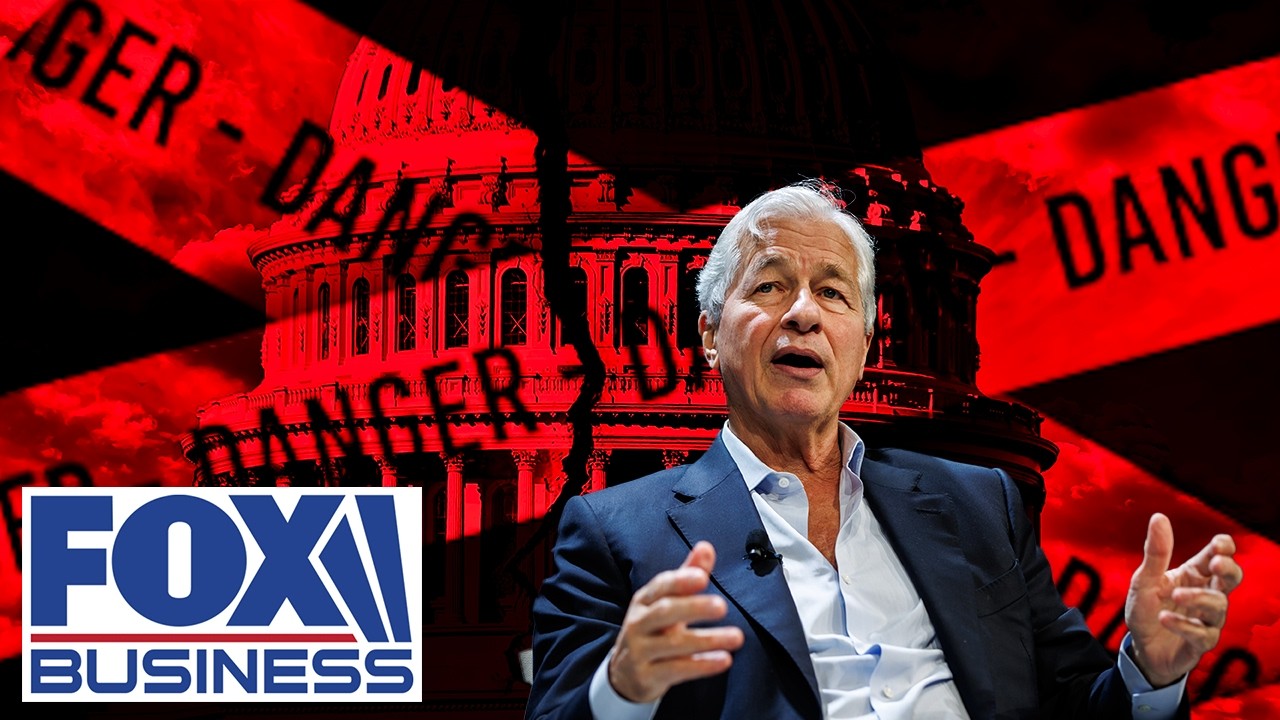
In remarks delivered during an interview on Friday with Fox Business Network host Maria Bartiromo and highlighted in a report in The New York Post, Dimon characterized the conversation as “pleasant” and “earnest,” while making clear that he used the opportunity to express his concerns directly to the newly elected mayor about the challenges confronting New York City.
“He was very polite. It was very earnest. We had a very good conversation, but I said everything I wanted to say,” Dimon told Bartiromo.
The comments offered one of the clearest public windows into the private discussions that have been taking place between Wall Street leaders and Mamdani, whose ascent to City Hall has generated both enthusiasm among progressive activists and deep apprehension among many business executives, investors, and real estate stakeholders.
As The New York Post has reported, Mamdani’s ambitious policy agenda has sparked intense debate regarding taxation, housing, economic development, and the broader future of New York City’s business climate.
Dimon, who has led JPMorgan Chase for more than 20 years and remains one of the most influential voices in American finance, suggested that his discussion with the mayor centered less on politics and more on practical governance.
During the interview, Dimon explained that the conversation touched on two issues that continue to dominate public policy debates nationwide: affordable housing and child care.
“I got to talk about affordable housing and child care,” Dimon said.
The veteran banking executive acknowledged that these concerns affect millions of Americans and remain priorities for policymakers at every level of government.
“Most people want it,” he observed.
Yet Dimon emphasized that the real challenge lies not in identifying goals but in executing policies effectively. “If you do it badly, it would be a disaster,” he warned.
The JPMorgan chief urged policymakers to rely on expertise and evidence rather than ideology when designing solutions.
“Do it right. There are studies that can tell you how to do it right. Get people who know what they’re doing and implement proper policies.”
His comments reflected a broader philosophy that has become a hallmark of Dimon’s public statements over the years: that competent administration often matters more than political rhetoric.
Perhaps the most striking observation from Dimon’s interview was his argument that government leaders frequently focus on raising taxes or increasing spending while neglecting the importance of effective policymaking, according to The New York Post report.
“Good policy is free,” Dimon declared.
The concise phrase encapsulated a message that Dimon has delivered repeatedly throughout his career: that thoughtful governance can often achieve better results than expensive programs or aggressive tax increases.
“I feel like telling the politicians, ‘Don’t try to raise more taxes or spend more money, sit down and fix policy.’”
The remarks are likely to resonate within New York’s business community, where concerns have intensified regarding the potential economic impact of several proposals associated with Mamdani’s administration.
Business leaders have repeatedly warned that excessive taxation could accelerate the migration of companies, investors, and high-income residents to lower-tax states.
At the same time, advocates of Mamdani’s agenda argue that increased public investment is necessary to address longstanding inequities in housing affordability, education, and social services.
Dimon’s intervention effectively places him among those urging caution and emphasizing managerial competence over ideological experimentation.
The JPMorgan executive also highlighted the extraordinary scale of the task confronting Mamdani.
The mayor now oversees one of the largest municipal governments in the world, employing approximately 300,000 workers and managing a budget that rivals that of many sovereign nations.
“The 34-year-old Mamdani has never had a job like the one he now holds,” Dimon noted. “I mean, he’s running the city with 300,000 employees now.”
The observation underscored a concern frequently expressed by critics who question whether Mamdani’s background as a political activist and legislator adequately prepared him for the immense administrative responsibilities of City Hall, as was noted in The New York Post report.
Dimon suggested that history offers numerous examples of leaders who struggled to translate political vision into effective governance. “And I’ve seen mayors who just, they fail abysmally because they can’t administer themselves out of a paper bag, or ideology blinds them to practical, realistic, real-world policy.”
The statement, while not directed exclusively at Mamdani, carried an unmistakable warning about the dangers of allowing ideology to eclipse practical considerations.
New York City’s challenges are vast and multifaceted, ranging from public safety and transportation to housing affordability, economic growth, infrastructure maintenance, and fiscal management.
Navigating those issues successfully requires not only political leadership but also administrative discipline.
Despite his concerns, Dimon struck a notably constructive tone when discussing the mayor. Rather than positioning himself as an adversary, he suggested that he would welcome opportunities to contribute positively if called upon. “And so we’ll see,” Dimon said. “And, you know, if I can help them do the good stuff, I’d be happy to do that.”
The comment reflects a broader pattern among major business leaders who remain wary of certain policy proposals but continue to express a willingness to work with city officials in pursuit of shared objectives.
New York’s economic vitality has historically depended on cooperation between government, finance, real estate, technology, labor, and civic institutions.
Dimon’s remarks suggest that despite ongoing disagreements, avenues for dialogue remain open.
The conversation between Dimon and Mamdani took place on May 18 and was part of a broader outreach effort by the mayor.
According to The New York Post report, Mamdani also met separately with Goldman Sachs Chief Executive David Solomon as he sought to reassure influential figures within New York’s financial sector.
The meetings occurred amid growing controversy surrounding several elements of the mayor’s economic agenda.
Among the most debated proposals is a so-called pied-à-terre tax targeting second homes valued at $1 million or more.
Supporters argue the measure could generate additional revenue for public services while focusing the burden on affluent property owners.
Critics contend that such taxes risk discouraging investment and driving wealth out of the city.
The issue has become emblematic of the broader debate over New York’s economic future under Mamdani’s leadership.
One episode that attracted particular attention involved a video Mamdani filmed outside a luxury penthouse owned by hedge fund billionaire Ken Griffin. The video was intended to promote the proposed tax on high-value secondary residences.
The stunt generated immediate backlash. Griffin responded forcefully, reportedly describing the move as “creepy.”
The billionaire subsequently announced plans to expand Citadel’s operations in Florida rather than New York and suggested that a proposed $6 billion Park Avenue development could potentially be reconsidered, as was reported by The New York Post.
The controversy fueled concerns among business leaders about the city’s relationship with major employers and investors.
Asked about the incident, Dimon appeared to suggest that the mayor may have learned a lesson from the experience. “My guess is he probably regrets that,” Dimon remarked. “But you got to ask him that.”
While measured in tone, the comment reflected broader concerns about the potential consequences of antagonizing business leaders whose investments support thousands of jobs and billions of dollars in economic activity.
The exchange between Dimon and Mamdani comes at a pivotal moment for New York City.
The New York Post report noted that the city continues to recover from years of economic disruption while confronting persistent challenges related to affordability, public safety, infrastructure, and quality of life.
Mamdani’s supporters view his administration as an opportunity to pursue transformative reforms aimed at addressing inequality and expanding opportunity.
His critics warn that some of his proposals could undermine economic competitiveness and accelerate the departure of businesses and taxpayers.
Dimon’s comments reflect the perspective of a leader who has spent decades navigating complex economic environments and who understands the delicate balance required to sustain growth while addressing social concerns.
The JPMorgan chief did not issue sweeping condemnations or blanket endorsements.
Instead, he offered a pragmatic message rooted in experience: success depends not on slogans, ideology, or political theater, but on competent governance and sound policy.
As The New York Post has documented throughout the ongoing debate, the relationship between City Hall and New York’s business community will likely play a decisive role in shaping the city’s future trajectory.
For now, Dimon appears willing to give the new mayor an opportunity to prove himself.
Whether that confidence is ultimately rewarded remains one of the most consequential questions facing New York in the years ahead.



