

























|
Getting your Trinity Audio player ready...
|
Critics Say Continued Financial Benefits for Prisoners and Families of Attackers Undermine Peace Efforts and Reinforce a Culture of Violence
By: Fern Sidman
A renewed controversy surrounding financial payments made by the Palestinian Authority to prisoners, former prisoners, and families connected to Palestinians involved in attacks against Israelis has ignited fresh criticism from Israeli officials and pro-Israel advocacy organizations, who argue that the policy remains one of the most significant obstacles to peace and reconciliation in the region.
The latest dispute emerged after the Israeli Foreign Ministry publicly accused the Palestinian Authority of continuing what it described as a longstanding “blood-money policy,” citing reports that Palestinian government institutions recently distributed funds to various groups that include incarcerated Palestinians and families of individuals killed during the conflict.
The issue has once again placed the Palestinian Authority under intense scrutiny, reviving a debate that has persisted for decades and has repeatedly complicated diplomatic efforts aimed at resolving the Israeli-Palestinian conflict.
According to a statement posted by the Israeli Foreign Ministry on social media, “Palestinian Authority continues its blood-money policy.”
The declaration was quickly amplified by several pro-Israel organizations, including Americans for a Safe Israel, commonly known as AFSI, which argued on Thursday that the reported payments represent not merely a social welfare program but an incentive structure that rewards violence and glorifies terrorism.
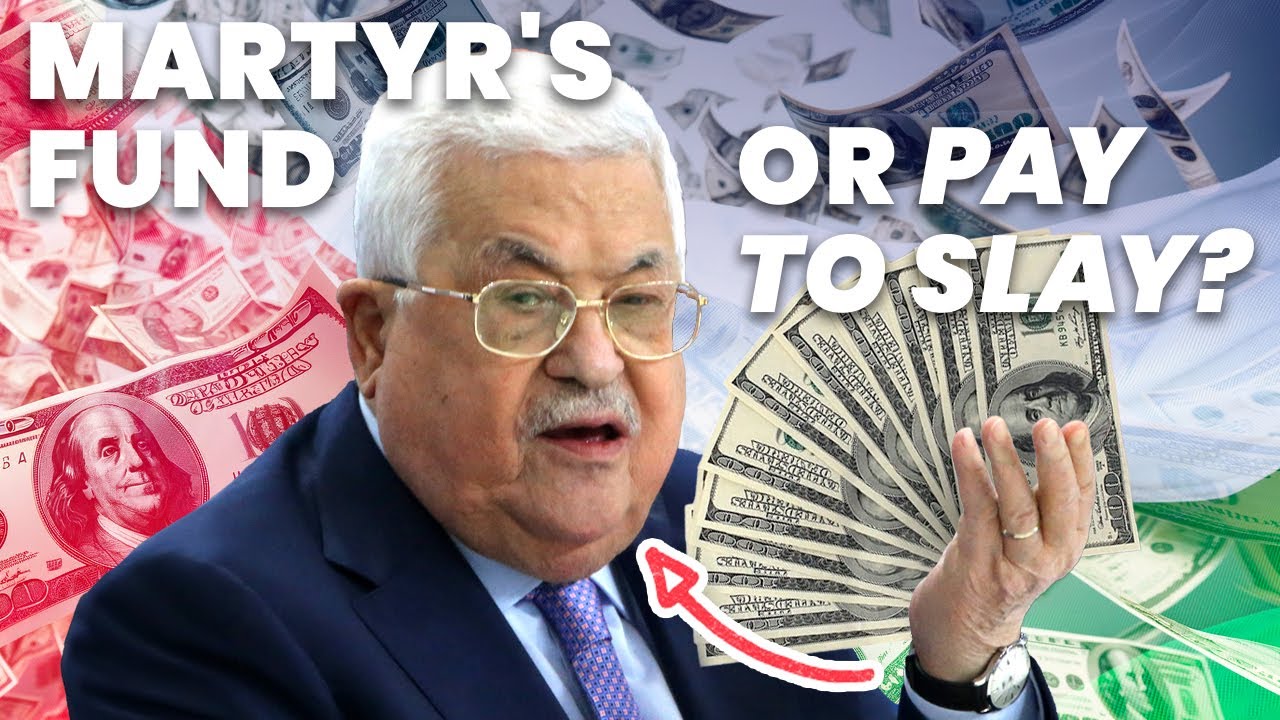
“The Israeli government is correct for long condemning this ‘pay-for-slay’ system,” said Moshe Phillips, chairman of Americans for a Safe Israel.
“This is a direct incentive for violence against Israeli citizens. The men paying these terrorists are the very ones Chris Van Hollen and others seem to think are interested in leading a peaceful Palestinian State. The PA leadership is not interested in peace.”
The question of Palestinian Authority financial support programs has remained one of the most contentious issues in Middle Eastern diplomacy.
Israeli officials have consistently argued that payments provided to individuals imprisoned for security-related offenses, as well as to families of those killed during confrontations with Israel, constitute an institutionalized reward system that encourages future attacks.
Palestinian officials, by contrast, have historically defended aspects of these programs as social welfare measures intended to support families whose primary providers are no longer able to earn income.
The disagreement has repeatedly surfaced during peace negotiations, congressional debates in the United States, and discussions among international aid donors.
The latest allegations are based in part on information published by Palestinian Media Watch, an Israeli non-governmental organization that monitors Palestinian media, educational materials, and official government communications.
According to reports cited by Palestinian Media Watch and referenced by Israeli officials, the Palestinian Authority Ministry of Finance recently approved grants directed toward what were described as three separate “fighting sectors.”
Those sectors reportedly include individuals imprisoned in Israeli detention facilities, operatives active in various locations, and relatives of deceased Palestinians involved in conflict-related activities.
The reports have reignited concerns among Israeli policymakers and advocacy groups who view the payments as evidence that the Palestinian Authority continues to maintain policies incompatible with peaceful coexistence.
Americans for a Safe Israel contends that the allocation of public funds to individuals associated with terrorism reflects deeply rooted priorities within the Palestinian political system.
The organization argues that resources directed toward such programs could instead be used to improve infrastructure, economic development, healthcare, education, and other civilian needs.
AFSI officials maintain that continuing the payments sends a troubling message regarding the values and objectives of Palestinian leadership.
According to the organization, the decision to continue funding individuals convicted of violent offenses demonstrates what it characterizes as a systemic unwillingness to renounce terrorism.
“The PA’s choice to prioritize funding for violent terrorists, including those that targeted families and their children, over civil infrastructure demonstrates a systemic refusal to abandon terrorism,” the organization said.
Supporters of this position argue that genuine peace efforts require not only diplomatic negotiations but also the elimination of financial and symbolic incentives that may encourage future violence.
Another issue highlighted by AFSI involves the continued popularity of Marwan Barghouti within segments of Palestinian society and the dominant Fatah political movement.
Barghouti, a prominent Palestinian political figure, is currently serving multiple life sentences in an Israeli prison following convictions related to attacks carried out during the Second Intifada.
Despite his incarceration, Barghouti remains a highly influential figure in Palestinian politics and is frequently discussed as a potential future leader.
Phillips pointed to Barghouti’s performance in recent internal Fatah voting as evidence that support for militant figures remains deeply embedded within Palestinian political culture.
“This entrenched pro-terrorism stance is highly unlikely to change, particularly given current Palestinian societal trends,” Phillips said. “Jailed Fatah terrorist Marwan Barghouti—who is serving multiple life sentences in an Israeli prison for orchestrating deadly terror attacks during the so-called Second Intifada—received the highest number of votes in Fatah’s internal election earlier this month.”
The significance of Barghouti’s continuing influence extends beyond symbolic politics.
Israeli analysts frequently cite his popularity as evidence that figures associated with armed resistance continue to command substantial support among Palestinians.
Critics argue that this reality complicates efforts to cultivate moderate leadership committed to compromise and negotiated solutions.
The broader implications of the controversy reach far beyond financial assistance programs.
For many Israeli observers, the debate reflects fundamental concerns about the future direction of Palestinian politics and the viability of any eventual peace agreement.
Phillips argued that the combination of continued payments and support for figures such as Barghouti reveals a political culture that remains committed to honoring violence.
“The persistent paying of Palestinian Arab terrorists and the political supremacy of a convicted terrorist leader like Barghouti reinforce a dangerous truth: the Palestinian political establishment remains deeply committed to honoring and rewarding violence,” Phillips stated.
Such criticisms have become increasingly common amid ongoing regional instability and continuing security concerns.
Israeli officials frequently point to these issues when explaining skepticism regarding international proposals aimed at advancing Palestinian statehood. They argue that reforms addressing terrorism incitement and financial incentives must precede any major political breakthroughs.
The controversy arrives at a particularly sensitive moment for the region.
The aftermath of the October 7 attacks, continuing security operations, and ongoing diplomatic efforts have heightened scrutiny of institutions on both sides of the conflict.
International actors, including the United States and European governments, continue to monitor Palestinian Authority governance and financial practices closely.
Questions surrounding transparency, accountability, and the use of public funds remain central to discussions about future aid and diplomatic engagement.
For Israel and organizations such as Americans for a Safe Israel, the issue is not merely financial.
Rather, they view it as a reflection of broader ideological currents that influence education, public discourse, and political leadership within Palestinian society.
Founded in 1970, Americans for a Safe Israel is among the oldest pro-Israel advocacy organizations operating in the United States. For more than five decades, the organization has promoted educational initiatives and public policy advocacy focused on Israel’s security concerns.
AFSI emphasizes that it is not affiliated with any political party in either the United States or Israel.
Its leadership has consistently argued that confronting terrorism and challenging narratives that justify violence remain essential components of achieving lasting peace in the Middle East.
The organization views the latest reports regarding Palestinian Authority payments as confirmation that significant structural reforms remain necessary before meaningful reconciliation can occur.
As international attention remains focused on the future of Israeli-Palestinian relations, the controversy surrounding prisoner payments is likely to remain a contentious issue.
Supporters of Israel argue that the practice rewards violence and undermines peace efforts, while defenders of Palestinian welfare programs have historically maintained that assistance to affected families serves humanitarian and social purposes.
What remains clear is that the issue continues to generate intense debate among policymakers, diplomats, advocacy organizations, and the broader public.
For critics such as the Israeli Foreign Ministry and Americans for a Safe Israel, the latest reports serve as evidence that fundamental obstacles to peace remain firmly in place.
Whether those concerns will influence future diplomatic initiatives remains uncertain, but the debate over financial support programs continues to occupy a central place in discussions about security, accountability, and the prospects for lasting stability in the Middle East.



