



























|
Getting your Trinity Audio player ready...
|
By: Jeff Gorman
A fierce ideological confrontation unfolding inside one of Brooklyn’s most iconic progressive institutions has erupted into a far broader political and cultural firestorm, exposing profound divisions within New York City’s liberal establishment over Israel, antisemitism, progressive activism, and the boundaries of political protest.
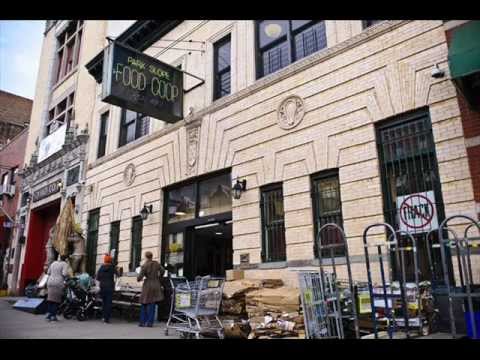
At the center of the increasingly acrimonious debate is the Park Slope Food Coop, the celebrated member-owned grocery collective long viewed as a symbol of brownstone Brooklyn’s left-leaning civic culture. According to a report on Saturday in The New York Daily News, members of the Coop are scheduled to vote Tuesday on a controversial proposal to ban all Israeli-made products from the store’s shelves, setting off an emotional and politically charged battle that has reverberated throughout New York’s Jewish community and spilled directly into the high-profile Democratic congressional primary in New York’s 10th District.
What might otherwise appear to be a narrow dispute over a handful of imported consumer goods has instead become a revealing flashpoint in the broader national debate surrounding Israel, antisemitism, and the increasingly contentious relationship between progressive politics and Zionism.
Supporters of the boycott initiative argue that the measure represents a moral response to Israel’s military campaigns in Gaza and Iran, as well as broader Israeli policies toward Palestinians. Advocates portray the proposed boycott as a symbolic act of solidarity and political pressure, comparing it to historic economic campaigns directed against apartheid South Africa and segregation-era institutions in the American South.
“It’s about the fact that we’re complicit in what’s happening over there and it needs to stop immediately,” said boycott supporter John Caramichael, 27. “This is what we can do.”
Yet critics counter that the proposed ban is not merely misguided, but deeply divisive and dangerously emblematic of a growing tendency to single out the Jewish state in ways many believe inevitably spill over into hostility toward Jewish communities themselves.
The practical scope of the boycott proposal is strikingly limited. As The New York Daily News reported, the Coop currently carries only a small number of Israeli-made products, including a relatively obscure brand of Israeli hummus, corn snacks, and Ecolove hair products. Nevertheless, opponents argue that the symbolism attached to targeting Israeli goods carries implications far beyond the products themselves.
“It is just an excuse to show your power,” said Andre Schklowsky, 84, a longtime Coop member who joined in 1974. “It’s not gonna affect much of what I actually buy. It is just an excuse to divide people.”
That sentiment has become increasingly common among veteran members who fear the Coop’s longstanding mission of community cooperation and affordable food access is being eclipsed by imported geopolitical warfare.
Bruno Grandsard, a 25-year member of the Coop, lamented what he described as the transformation of a beloved neighborhood institution into a platform for ideological confrontation.
“It’s terrible for the co-op. (It) creates division,” Grandsard said. “Most people don’t care. It’s a supermarket.”
Indeed, many opponents argue that the boycott movement threatens to fracture one of Brooklyn’s most successful civic institutions while accomplishing virtually nothing tangible in the Middle East itself.
That skepticism was illustrated vividly during a confrontation outside the Coop last week when a local couple challenged a pro-boycott organizer over the practical logic of the initiative.
“So you want to get rid of chili peppers?” the man reportedly asked, questioning how removing Israeli agricultural products from a Brooklyn grocery store would alter the trajectory of a conflict occurring 6,000 miles away.
Yet despite the seemingly narrow scope of the proposal, the emotional intensity surrounding the debate has escalated rapidly.
The conflict gained major momentum after Rabbi Rachel Timoner of Congregation Beth Elohim delivered a forceful sermon denouncing the boycott initiative. Timoner, one of New York’s most influential progressive Jewish religious leaders and an ally of Mayor Zohran Mamdani, warned that the proposal risked inflaming communal tensions and deepening already dangerous divisions within the city.
Her intervention proved particularly significant because it underscored how opposition to the boycott extends well beyond traditionally conservative or pro-Netanyahu political circles. Many progressive Jewish leaders who sharply criticize Israeli government policies nevertheless reject blanket boycotts of Israel as fundamentally counterproductive and morally problematic.
For many Jewish New Yorkers, the issue transcends specific Israeli policies and instead touches on broader anxieties surrounding rising antisemitism across New York City and the United States.
The timing of the Coop controversy is especially sensitive given the dramatic surge in antisemitic incidents following the Oct. 7 Hamas attacks and the ensuing war in Gaza. Jewish communities across New York have reported increased harassment, demonstrations outside synagogues, threats against Jewish institutions, and escalating social hostility tied to the Israel-Hamas conflict.
Against that backdrop, many critics of the boycott fear that campaigns targeting Israeli products inevitably contribute to a climate in which Jewish identity itself becomes politicized and stigmatized.
That concern has become central to the political dimension of the controversy, particularly in the Democratic primary battle unfolding in New York’s 10th Congressional District.
The district, which includes lower Manhattan and large portions of brownstone Brooklyn, contains one of the nation’s largest Jewish voting blocs and has become a microcosm of the Democratic Party’s growing internal divisions over Israel.
Congressman Dan Goldman has emerged as one of the boycott’s most outspoken critics, portraying the measure as part of a broader campaign aimed not merely at criticizing Israeli policy but at undermining Israel’s legitimacy altogether.
“Joining a movement that was founded on the principle of the elimination of Israel will have no impact on the Israeli government or the Israeli economy,” Goldman said in a statement cited by The New York Daily News. “Instead, it only succeeds at shifting the responsibility for the Israeli government’s actions to American Jews, which is quintessential antisemitism.”
Goldman’s remarks reflect concerns widely shared throughout much of New York’s Jewish community that the Boycott, Divestment and Sanctions movement, commonly known as BDS, frequently crosses the line from political criticism into efforts to isolate and delegitimize the Jewish state itself.
Numerous Jewish organizations and mainstream political leaders have long argued that the movement applies uniquely punitive standards to Israel while ignoring far more egregious human rights abuses elsewhere in the world.
Goldman, who identifies as a “progressive Zionist,” has repeatedly emphasized that disagreement with Prime Minister Benjamin Netanyahu’s government does not require participation in campaigns that economically or culturally isolate Israel.
His position, however, places him in increasingly delicate political terrain within a district whose progressive electorate has shifted substantially leftward on Israel-related issues in recent years.
His challenger, Brad Lander, has attempted to occupy a more nuanced middle ground. Though Lander stated he personally would oppose the boycott proposal, he simultaneously defended boycott advocates against accusations of antisemitism.
“Principled people can disagree here,” Lander said. “Boycotts, divestments, and sanctions are legitimate tools of advocacy campaigns.”
That balancing act reflects the increasingly difficult political calculus facing many progressive Democrats, particularly progressive Jewish politicians attempting to maintain credibility with both Jewish voters and activist movements deeply critical of Israel.
Lander’s own political evolution has become a major point of discussion throughout the campaign.
As The New York Daily News report noted, Lander previously maintained a far more outspoken pro-Israel posture and had strongly opposed an earlier boycott battle at the Coop in 2012. Yet in recent years, especially following his political alliance with Mayor Mamdani, Lander has moved noticeably leftward on Israel-related issues.
Mamdani himself remains one of New York’s most polarizing political figures on the Israel question. A fierce critic of Netanyahu, he has described Israel’s actions in Gaza as genocidal and has become deeply controversial among many Jewish voters throughout the city.
That broader political shift reflects an increasingly visible fracture inside Democratic politics nationwide, particularly among younger progressives whose views on Israel differ dramatically from previous Democratic generations.
Political analysts cited by The New York Daily News argue that the Coop controversy illustrates a widening schism among progressive voters, especially progressive Jewish Democrats who increasingly find themselves torn between liberal social activism and concerns about growing antisemitism.
Recent polling reportedly suggests Lander currently holds a substantial lead over Goldman heading into the June 23 primary, though analysts believe the boycott controversy could potentially help Goldman consolidate support among moderate Jewish voters in Brooklyn and lower Manhattan.
Still, Democratic strategist Chris Sosa warned that Goldman’s emphasis on Israel could alienate many younger progressive voters who strongly oppose Israeli military actions.
“By highlighting this issue, Goldman isolates him from all the other voters who don’t agree with him on Israel,” Sosa said. “It doesn’t make any political sense.”
Yet others argue precisely the opposite — that Goldman’s willingness to confront the boycott movement directly may resonate with voters increasingly alarmed by the normalization of anti-Israel activism that many perceive as edging dangerously close to antisemitic rhetoric and exclusion.
For critics of the Coop boycott, the issue is not simply about imported hummus or cosmetic products. Rather, they view the proposal as emblematic of a broader ideological trend in which Israel alone becomes uniquely targeted for moral condemnation while Jewish concerns about rising hostility are minimized or dismissed.
That perception has intensified as anti-Israel demonstrations increasingly spill into Jewish neighborhoods, religious institutions, and civic spaces throughout New York City.
And thus, the Park Slope Food Coop — once celebrated primarily as a neighborhood grocery collective and symbol of community cooperation — now finds itself transformed into a battleground in one of the defining political and cultural struggles of modern progressive America.
What happens Tuesday inside that Brooklyn Coop may ultimately matter far less than what the controversy itself has already revealed: a Democratic coalition increasingly fractured over Israel, a Jewish community increasingly anxious about antisemitism, and a city whose political fault lines continue to widen with extraordinary speed.



