
























|
Getting your Trinity Audio player ready...
|
Bipartisan Alarm Bells Sound in Congress as Lawmakers Demand Unified Fight Against Rising Antisemitism
By: Ariella Haviv
In a political era increasingly defined by ideological tribalism, digital radicalization, and incendiary rhetoric amplified at unprecedented speed across social media platforms, two members of Congress from opposite sides of the political aisle issued an unusually forceful bipartisan warning this week: antisemitism in the United States has reached intolerable levels, and political leaders must confront it aggressively regardless of whether it originates from the far left or the far right.
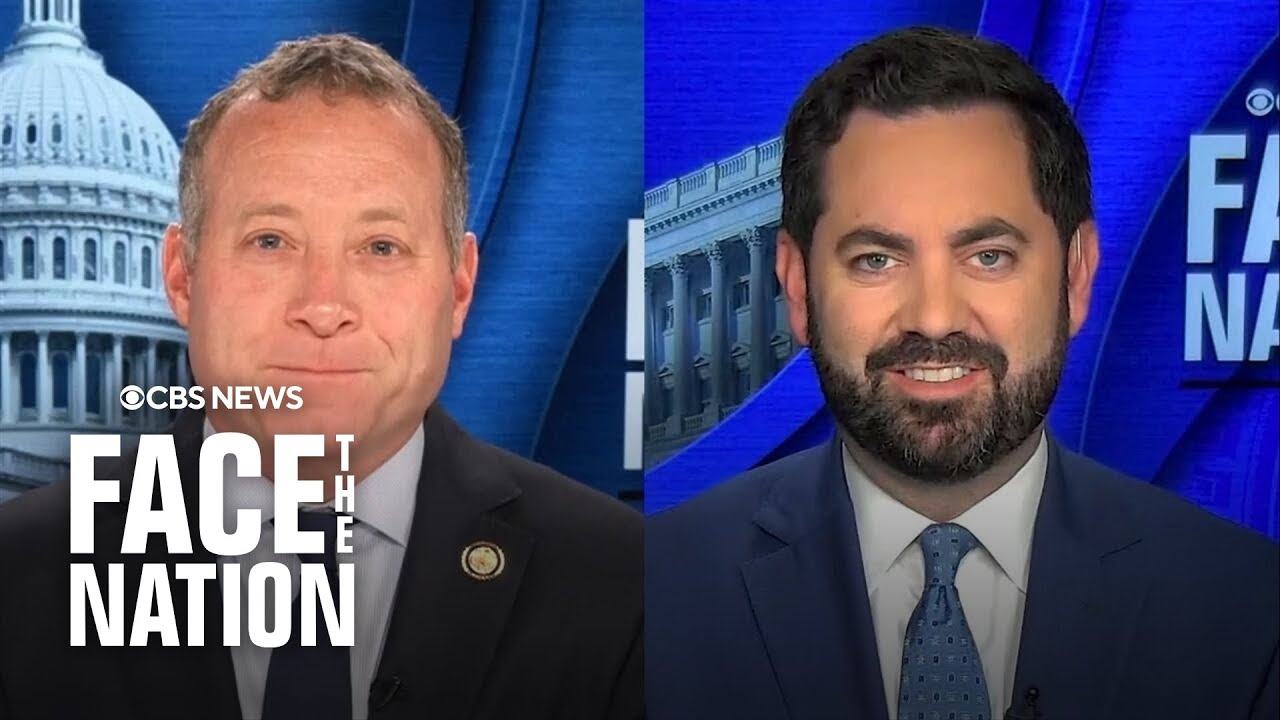
Representative Josh Gottheimer, Democrat of New Jersey, and Representative Mike Lawler, Republican of New York, joined forces to spotlight what they described as a deeply disturbing normalization of antisemitic discourse in American public life. Their remarks accompanied the introduction of a bipartisan congressional resolution condemning antisemitic rhetoric propagated by influential online personalities whose enormous digital reach has helped mainstream dangerous conspiracy theories, anti-Jewish tropes, and extremist narratives.
The lawmakers specifically cited controversial online figures including left-wing political streamer Hasan Piker and conservative commentator Candace Owens, arguing that ideological affiliation must never excuse rhetoric that demonizes Jews or fuels hatred against the Jewish community.
“It’s totally unacceptable, and what’s happening now is it’s far too often in our politics on both sides,” Gottheimer declared. “Whether it’s Hasan Piker, who’s a streamer on the left, or Candace Owens on the right.”
“None of this should be acceptable,” Gottheimer continued. “And Mike and I … both of us believe deeply that we need to stand up to this.”
The remarks reflect mounting concern within Washington and beyond that antisemitism — once broadly relegated to the political fringes — has increasingly migrated into mainstream digital discourse, activist culture, entertainment spaces, and even electoral politics.
Lawler echoed Gottheimer’s warning with equal urgency, insisting that political movements cannot selectively condemn hatred only when it emerges from opposing ideological camps.
“What Josh and I are trying to do in putting this resolution forward is to say, ‘Enough,’” Lawler stated. “And to say to both parties, ‘We have to police our own. We cannot allow this. We cannot support candidates who engage in rank, vile antisemitism.’”
That phrase — “police our own” — has emerged as one of the central themes of the lawmakers’ initiative. Both men argued that antisemitism cannot be treated as a partisan weapon to be deployed selectively against political adversaries while ignored or rationalized within one’s own ideological coalition.
Instead, they contend, combating anti-Jewish hatred requires moral consistency and institutional courage.
The bipartisan resolution, introduced in late April, condemns “antisemitic hate-filled rhetoric” disseminated by influential online personalities and calls upon social media companies, public officials, and civic institutions to take stronger action against its proliferation.
The measure specifically references allegations that Hasan Piker promoted rhetoric perceived as supportive of Hamas and made derogatory comments concerning Jews and Israel. It also cites Candace Owens for allegedly amplifying conspiracy theories and reviving historically antisemitic narratives, including blood libel themes that have haunted Jewish communities for centuries.
The resolution arrives against the backdrop of an alarming nationwide surge in antisemitic incidents following the Hamas terrorist attacks against Israel on Oct. 7, 2023 — atrocities that killed approximately 1,200 people and triggered a wave of geopolitical instability, campus unrest, and ideological polarization throughout the United States and Europe.
Since those attacks, Jewish organizations, civil rights groups, and law enforcement agencies have documented a dramatic escalation in threats, harassment, assaults, vandalism, online intimidation, and anti-Jewish rhetoric.
Jewish communities across the United States have reported increasing fears regarding public visibility, synagogue security, campus hostility, and online targeting. Many Jewish Americans say they now feel vulnerable in ways not experienced for generations.
The congressional effort spearheaded by Gottheimer and Lawler reflects growing frustration that antisemitism is often minimized, rationalized, or selectively ignored depending on the political identity of the perpetrator.
Indeed, one of the most striking aspects of the lawmakers’ comments was their insistence that antisemitism today manifests across multiple ideological ecosystems simultaneously.
On one side exists a strain of far-left anti-Zionist extremism that critics argue increasingly collapses distinctions between criticism of Israeli government policy and outright hostility toward Jews themselves. On the other side remains a persistent far-right ecosystem steeped in conspiracy theories concerning Jewish power, financial control, media influence, and demographic manipulation.
The convergence of those narratives — though emerging from vastly different ideological traditions — has created what many experts describe as a uniquely dangerous environment.
Historically, antisemitic conspiracy theories thrived primarily on extremist margins. Today, however, social media algorithms, influencer culture, livestreaming platforms, podcasts, and digital tribalism have dramatically accelerated the speed at which such ideas spread to mass audiences.
Figures with millions of followers now possess the ability to disseminate inflammatory rhetoric instantaneously to enormous global audiences without traditional editorial oversight or institutional accountability.
That reality has profoundly transformed the information landscape confronting younger Americans in particular.
Unlike previous generations, millions now consume political content primarily through online personalities rather than traditional journalism, academic institutions, or civic organizations. In many cases, those personalities cultivate highly emotional, identity-driven audiences prone to ideological absolutism and conspiratorial thinking.
Gottheimer and Lawler appear deeply concerned that antisemitism has become increasingly embedded within that ecosystem.
Their resolution specifically urges social media companies and public leaders to confront antisemitic rhetoric more aggressively rather than allowing it to metastasize unchecked across digital platforms.
The effort also represents another example of the unusually close working relationship between the two lawmakers, both of whom have built reputations as pragmatic bipartisan operators despite serving in an era of extreme congressional polarization.
Gottheimer and Lawler have collaborated extensively through the House Problem Solvers Caucus, a bipartisan coalition designed to encourage cross-party cooperation on major legislative issues. They previously worked together on the Antisemitism Awareness Act and other measures related to hate crimes, civil rights protections, and educational initiatives.
Their alliance carries particular symbolic significance because both represent districts with substantial Jewish populations deeply affected by the nationwide rise in antisemitism.
New York and New Jersey have experienced some of the country’s highest-profile antisemitic incidents in recent years, including violent assaults, synagogue threats, anti-Israel demonstrations that escalated into anti-Jewish harassment, and persistent online targeting.
Both lawmakers suggested that the current moment demands political clarity rather than ideological equivocation.
For Gottheimer, the challenge lies partly in confronting elements within progressive political spaces that increasingly tolerate rhetoric once considered beyond the pale.
For Lawler, the challenge involves confronting antisemitic conspiratorial currents that continue surfacing within segments of right-wing media and populist activism.
Neither appeared interested in allowing partisan defensiveness to dilute the seriousness of the threat.
“What Josh and I are trying to do,” Lawler emphasized again, “is to say, ‘Enough.’”
The timing of the resolution is also politically significant because antisemitism has become an increasingly contentious fault line within American politics itself.
Democrats have faced internal battles over anti-Israel activism, campus protests, and rhetoric emerging from progressive coalitions. Republicans, meanwhile, have wrestled with extremist conspiracies and inflammatory commentary emanating from certain right-wing influencers and internet personalities.
In many instances, critics argue, partisan reflexes have prevented leaders from responding consistently.
The lawmakers’ initiative seeks to challenge precisely that dynamic.
Observers note that the resolution’s focus on online influencers reflects growing recognition that digital culture now plays a central role in shaping political radicalization. Unlike traditional public figures constrained by institutional accountability, online personalities often operate within highly insulated communities where inflammatory rhetoric drives engagement, visibility, and financial incentives.
The result is an environment where outrage frequently outperforms nuance and conspiracy often spreads faster than factual correction.
For Jewish advocacy organizations, the congressional resolution represents a notable attempt to restore moral coherence to the public conversation surrounding antisemitism.
Many Jewish leaders have expressed frustration that antisemitism is too often treated as politically inconvenient depending on the source. Some incidents trigger immediate condemnation, while others become mired in ideological rationalization or dismissed as merely “anti-establishment” speech.
Gottheimer and Lawler appear intent on rejecting those distinctions entirely.
Their message is straightforward: antisemitism remains antisemitism regardless of whether it emerges wrapped in progressive activism, nationalist populism, online conspiracy culture, or ideological radicalism.
And both lawmakers warned that failure to confront it consistently risks further normalizing hatred at a moment when Jewish communities already feel increasingly vulnerable.
The broader implications extend far beyond Congress.
As America moves deeper into an era dominated by digital political ecosystems, decentralized media influence, and increasingly polarized identity politics, the struggle over how society responds to antisemitism may become a defining test of democratic culture itself.
Whether political institutions, technology companies, educational systems, and civic leaders can successfully contain that rising tide remains deeply uncertain.
But for at least one moment inside an otherwise fractured Congress, two lawmakers from opposing parties delivered a rare bipartisan message with unmistakable clarity: hatred toward Jews cannot be tolerated, rationalized, or excused — no matter who promotes it, no matter where it originates, and no matter how politically inconvenient confronting it may become.