












|
Getting your Trinity Audio player ready...
|
By: Tzirel Rosenblatt
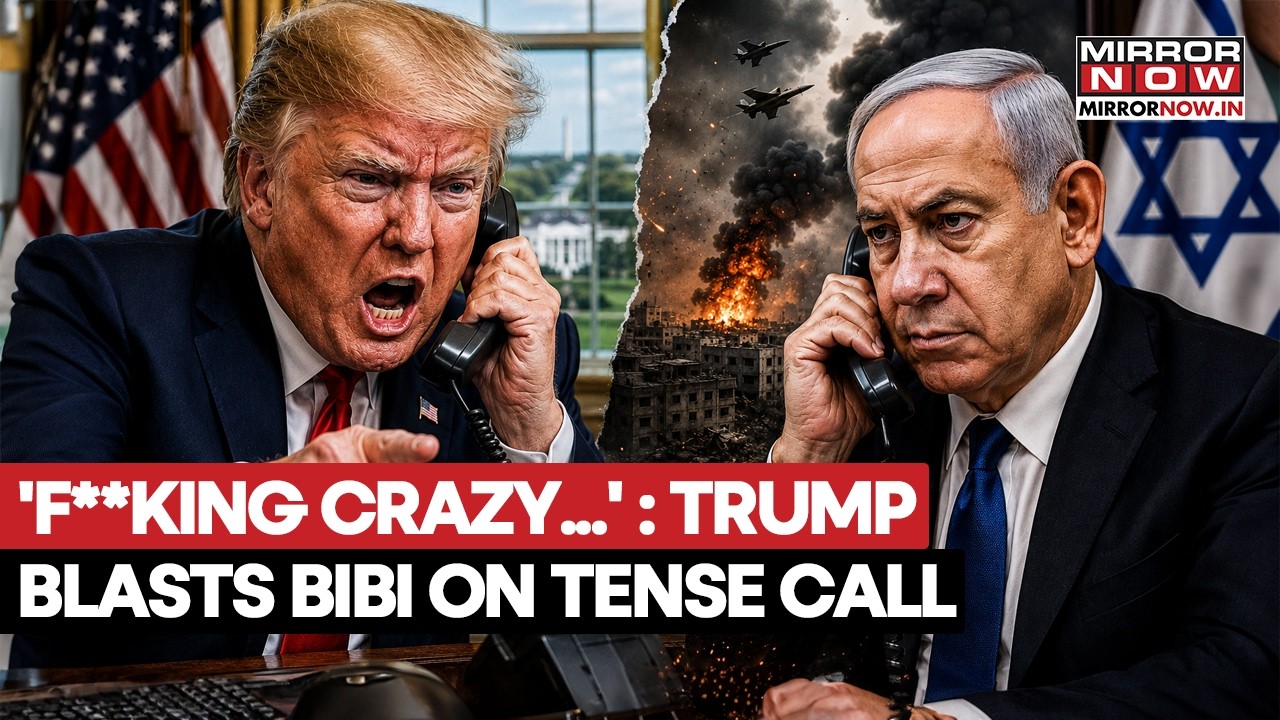
President Trump intensified pressure on the Iranian regime on Sunday with a series of dramatic public statements and symbolic warnings that underscored both the volatility of the ongoing negotiations with Tehran and the administration’s willingness to resort to overwhelming military force should diplomacy fail.
In a move that immediately reverberated across diplomatic and security circles, Trump posted an image on Truth Social depicting a bomb mounted beneath a fighter jet, accompanied by the words: “THANK YOU FOR YOUR ATTENTION TO THIS MATTER!” — a phrase the president frequently employs at the conclusion of his public statements. According to analysts and officials cited by Israel National News, the image was widely interpreted as a blunt strategic message directed at Iran’s leadership, signaling that any hesitation, delay, or perceived bad-faith maneuvering by Tehran could provoke swift and devastating military consequences.
The ominous post came amid increasingly delicate negotiations between Washington and Tehran over what could become one of the most consequential Middle Eastern diplomatic agreements in recent years. While the Trump administration has repeatedly emphasized that progress is being made toward a potential accord, the president’s latest rhetoric illustrated the dual-track strategy currently defining the White House approach: aggressive diplomacy reinforced by unmistakable military deterrence.
Israel National News reported that Trump’s social media activity on Sunday reflected both optimism regarding the emerging negotiations and deep skepticism toward Iran’s intentions. The president appeared determined to reassure his political base and American allies that any agreement reached under his administration would fundamentally differ from the controversial 2015 nuclear accord negotiated during the Obama presidency.
“If I make a deal with Iran, it will be a good and proper one, not like the one made by Obama, which gave Iran massive amounts of CASH, and a clear and open path to a Nuclear Weapon,” Trump wrote on Truth Social.
“Our deal is the exact opposite, but nobody has seen it or knows what it is. It isn’t even fully negotiated yet,” the president added.
The remarks reflected Trump’s longstanding effort to distinguish his foreign policy doctrine from that of former President Barack Obama, whose Joint Comprehensive Plan of Action with Iran became one of the defining geopolitical controversies of the previous decade.
For years, Trump and his allies have argued that the Obama-era agreement provided Tehran with economic relief while failing to permanently dismantle the Islamic Republic’s nuclear ambitions. Trump formally withdrew the United States from the agreement during his first term in office, reimposing sweeping sanctions and initiating what his administration described as a “maximum pressure” campaign against the Iranian regime.
Now, as the administration edges closer toward a new framework with Tehran, Trump appears acutely aware of growing criticism from conservative circles concerned that the White House could ultimately accept concessions that allow Iran to preserve portions of its nuclear infrastructure.
Addressing those critics directly, Trump lashed out at opponents of the negotiations.
“So don’t listen to the losers, who are critical about something they know nothing about,” the president declared.
He concluded with a forceful assertion designed to project confidence and control over the negotiations.
“Unlike those before me who should have solved this problem many years ago, I don’t make bad deals,” Trump wrote.
The president’s rhetoric became even more pointed in a separate Truth Social post earlier Sunday morning, where he once again condemned the Obama administration’s nuclear diplomacy with Iran in exceptionally harsh terms.
“One of the worst deals ever made by our Country was the Iran Nuclear Deal, put forth and signed into existence by Barack Hussein Obama and the rank amateurs of the Obama Administration,” Trump stated.
“It was a direct path to Iran developing a Nuclear Weapon,” he continued. “Not so with the transaction currently being negotiated with Iran by the Trump Administration — THE EXACT OPPOSITE, in fact!”
The president also attempted to calm concerns that the administration was moving too quickly toward an agreement.
According to the Israel National News report, Trump stressed that negotiations were progressing carefully and deliberately, emphasizing that American negotiators had been instructed not to rush toward a premature settlement.
“The negotiations are proceeding in an orderly and constructive manner,” Trump wrote, “and I have informed my representatives not to rush into a deal in that time is on our side.”
That comment appeared aimed not only at Tehran but also at domestic critics demanding a harder line against the Iranian regime.
The administration’s negotiating strategy appears designed to leverage sustained economic and military pressure while exploring whether Tehran is prepared to make unprecedented concessions regarding its nuclear program.
Trump specifically noted that the blockade and sanctions regime targeting Iran would remain fully operational until any agreement was finalized and verified.
“He noted that the blockade of Iran will remain in full force and effect until an agreement is ‘reached, certified, and signed,’” Israel National News reported.
The evolving diplomatic framework itself remains highly fluid.
On Saturday, Trump announced that final details of an impending agreement could be revealed “shortly,” fueling intense speculation throughout Washington, Jerusalem, and major Middle Eastern capitals regarding the shape of the potential accord.
Reuters subsequently reported that the emerging proposal would unfold through a multi-stage process designed to gradually de-escalate the regional crisis while opening broader negotiations concerning Iran’s nuclear activities and regional conduct.
According to Reuters, the framework would reportedly include 3 primary stages.
The first stage would formally conclude the current military confrontation involving Iran.
The second phase would focus on resolving tensions surrounding the Strait of Hormuz, one of the world’s most strategically vital maritime corridors through which enormous volumes of global oil shipments pass each day.
The third phase would establish a 30-day negotiation window intended to facilitate broader diplomatic discussions regarding Iran’s nuclear program and regional security arrangements, with the option to extend those talks if necessary.
Yet despite the apparent diplomatic progress, substantial obstacles remain.
The New York Times reported later Saturday night that the core of the emerging agreement centers on what American officials reportedly view as the most critical issue of all: Iran’s stockpile of highly enriched uranium.
According to two United States officials cited by The New York Times, the prospective agreement would require Tehran to completely surrender its dangerous stockpile of highly enriched uranium — a provision considered absolutely essential by the Trump administration and many congressional Republicans.
That issue has become the defining fault line within the negotiations.
Iran currently possesses approximately 970 pounds of uranium enriched to the 60% threshold, according to data from the International Atomic Energy Agency. Experts widely acknowledge that uranium enriched to that level places Tehran alarmingly close to weapons-grade capability.
American officials reportedly insisted that any viable agreement must include the complete forfeiture or removal of that stockpile to prevent Iran from rapidly advancing toward nuclear weapons capability in the future.
The New York Times report indicated that Iran has now committed in principle to surrendering the material, although many operational and verification questions remain unresolved.
The technical mechanics governing how the uranium would be transferred, diluted, or otherwise neutralized are expected to become the subject of additional negotiations.
Still, the administration appears to regard Iran’s preliminary acceptance of the principle itself as a major diplomatic breakthrough.
For Trump, securing that concession would also provide a powerful political defense against accusations that he is repeating the mistakes of previous administrations.
Indeed, much of Sunday’s messaging from the White House appeared carefully crafted to reassure skeptical Republicans, pro-Israel advocates, and foreign policy hawks that Trump remains fully prepared to use military force if Tehran attempts to manipulate the process.
The fighter jet image posted on Truth Social represented perhaps the clearest expression yet of that strategy.
Observers interpreted the image not merely as political theater, but as a deliberate reminder of America’s overwhelming military capabilities and the administration’s willingness to employ them if diplomacy collapses.
Israel National News reported that the image was widely viewed as a warning that “any foot-dragging on the part of Iran will result in immediate force.”
That interpretation aligns with broader reports that the Pentagon has continued preparing extensive contingency plans targeting Iran’s nuclear infrastructure should negotiations fail.
Recent reports have indicated that American military planners presented Trump with a range of aggressive strike options aimed at neutralizing Iran’s nuclear facilities, particularly installations associated with uranium enrichment and weapons development.
The administration’s strategy therefore appears rooted in maintaining maximum leverage while testing whether Tehran is genuinely prepared to make historic concessions.
For Iran’s leadership, the stakes are equally enormous.
The country remains crippled by years of sanctions, economic deterioration, currency collapse, and growing domestic unrest. At the same time, Tehran faces mounting regional isolation and sustained pressure from both the United States and Israel.
Yet Iranian officials have so far remained publicly cautious regarding Trump’s announcements.
The Islamic Republic has not fully confirmed many details publicly discussed by American officials and media outlets, contributing to uncertainty regarding how close the two sides truly are to a finalized accord.
Still, the administration continues projecting confidence.
Trump’s latest statements suggest he believes Tehran now understands both the potential benefits of cooperation and the catastrophic risks associated with continued confrontation.
Whether that calculation ultimately produces a durable agreement remains uncertain.
But as Israel National News observed throughout its coverage, the negotiations have now entered an extraordinarily sensitive and consequential phase — one in which diplomacy, military deterrence, political messaging, and regional security calculations are colliding simultaneously.
And with Trump publicly signaling both openness to a deal and readiness for force, the coming days may determine whether the Middle East moves toward a historic diplomatic breakthrough or back toward dangerous escalation.



