















|
Getting your Trinity Audio player ready...
|
Tucker Carlson’s Son to Leave White House; Signaling a Deeper Rift in Conservative Circles
By: Jeff Gorman
In a development that underscores the shifting dynamics within Washington’s conservative establishment, Buckley Carlson—son of prominent media figure Tucker Carlson—has quietly departed his role within the White House to embark upon a new venture in political consulting. The move, first reported by VIN News on Sunday, is being interpreted not merely as a routine career transition, but as a moment emblematic of broader ideological fissures that have begun to surface within influential circles aligned with the current administration.
Carlson, who served as deputy press secretary to Vice President JD Vance, had reportedly signaled his intention to leave as early as December. According to accounts referenced by VIN News, he remained in his position for several months thereafter to facilitate an orderly transition, reflecting both a degree of professional discipline and the importance placed on continuity within the vice president’s communications apparatus. His departure now marks the end of a tenure that, while relatively low-profile in public visibility, was situated at the nexus of high-stakes political messaging during a period of considerable geopolitical tension.
The decision to establish an independent consulting firm suggests a deliberate recalibration of Carlson’s professional trajectory. In recent years, political consulting has emerged as a domain of increasing influence, offering opportunities to shape electoral strategies, messaging frameworks, and policy narratives from outside the formal structures of government. For a figure with Carlson’s proximity to senior leadership and familiarity with the inner workings of the administration, the transition may prove both strategically advantageous and indicative of a desire for greater autonomy.
Yet the significance of Carlson’s exit cannot be fully understood without situating it within the broader context of tensions involving his father, Tucker Carlson, and President Donald Trump. As reported through VIN News, the elder Carlson has adopted an increasingly confrontational posture toward the administration, particularly in relation to its approach to Iran. His outspoken criticism of military engagement and his assertion that such actions were driven by external interests have placed him at odds with the president’s policies and rhetoric.
Tucker Carlson’s remarks have been notable not only for their severity but also for their departure from the traditional contours of conservative foreign policy discourse. Characterizing the conflict as “completely disgusting and evil,” and describing it as one of the gravest errors of any American president in recent memory, he has articulated a perspective that diverges sharply from the administration’s emphasis on strategic deterrence and national security imperatives. More controversially, his suggestion that officials should refuse to carry out presidential directives represents an extraordinary challenge to established norms of civilian control and institutional hierarchy.
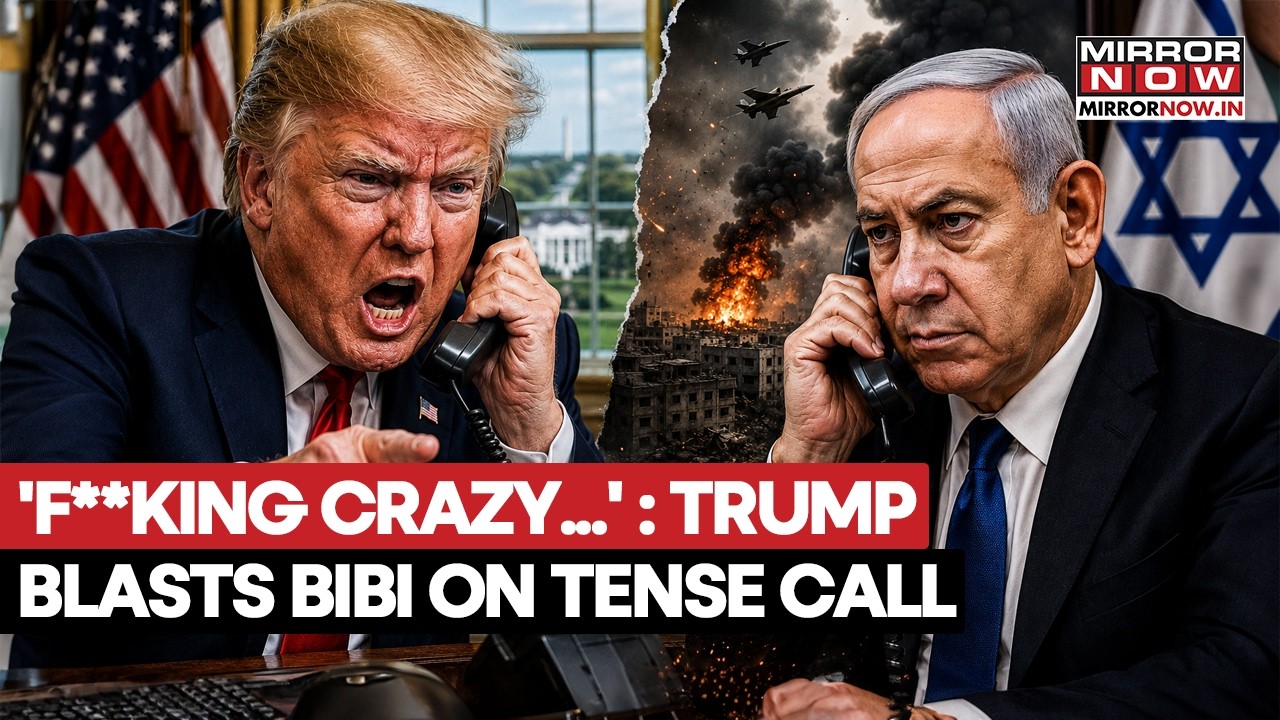
President Trump’s response has been equally forceful, if not more so. In a series of public statements disseminated through social media, he has dismissed Carlson in terms that are both personal and derisive, questioning his intellectual capacity and professional credibility. Such exchanges, as highlighted in reporting referenced by VIN News, have transformed what might have remained a policy disagreement into a highly visible personal feud, one that reverberates across the broader conservative ecosystem.
Within this charged atmosphere, Buckley Carlson’s position in the White House inevitably attracted scrutiny. His familial connection to one of the administration’s most vocal critics placed him in a uniquely delicate position, navigating the intersection of personal loyalty and professional responsibility. This tension was brought into sharp relief during an incident last November, when Vice President Vance responded to a journalist’s inquiry regarding Carlson’s role and the criticisms directed at him.
Vance’s defense of his deputy press secretary was emphatic and unequivocal. While acknowledging a general tolerance for dissent within the coalition, he drew a firm line against what he characterized as personal attacks on his staff. His language, notably forceful in its denunciation of Carlson’s detractors, underscored both his loyalty to his team and the intensity of the political environment in which they operate. As recounted in accounts referenced by VIN News, the episode illustrated the extent to which internal dynamics within the administration can become entangled with external controversies.
The vice president’s office has not issued an official comment on Carlson’s departure, leaving observers to infer the underlying motivations and implications. In the absence of formal statements, the timing of the move invites speculation regarding its relationship to the broader tensions involving Tucker Carlson and the administration. While there is no direct evidence to suggest that these factors precipitated the decision, the convergence of events has nonetheless fueled discussion about the interplay between personal affiliations and professional trajectories in the highest echelons of government.
From a structural perspective, Carlson’s departure also highlights the fluidity of roles within contemporary political ecosystems. The boundary between government service and private consulting has become increasingly permeable, with individuals frequently moving between these spheres in pursuit of influence and opportunity. This phenomenon reflects a broader transformation in the nature of political power, wherein formal positions are complemented—and sometimes rivaled—by the strategic leverage afforded by advisory and consulting roles.
For Carlson, the establishment of a consulting firm represents an entry into a competitive and highly consequential arena. Political consultants play a pivotal role in shaping electoral outcomes, crafting narratives, and advising candidates and organizations on matters ranging from communications strategy to policy positioning. Success in this field requires not only technical expertise but also the ability to navigate complex networks of relationships and to anticipate the evolving priorities of both clients and the broader political landscape.
The implications of this transition extend beyond the individual level. Carlson’s move may serve as a bellwether for other figures within the administration who are contemplating similar shifts, particularly in an environment characterized by rapid change and heightened uncertainty. As political alignments continue to evolve, the capacity to operate effectively across institutional boundaries may become an increasingly valuable asset.
In this context, Buckley Carlson’s departure can be seen as both a personal career decision and a reflection of broader currents within the political sphere. It encapsulates the interplay between loyalty and independence, between institutional roles and external influence, and between the stability of established structures and the dynamism of an evolving political environment.
As reported through VIN News, the story continues to unfold, with questions remaining about the long-term implications for both Carlson and the administration. Will his consulting firm become a significant player in shaping future campaigns and policy debates? Will the tensions between the president and his father continue to escalate, and if so, what impact might that have on the broader coalition?
For now, what is clear is that Buckley Carlson’s exit marks a moment of transition—not only for one individual, but for a political landscape in which the boundaries of influence are continually being redrawn. In the corridors of power and beyond, the reverberations of this move are likely to be felt in ways that extend far beyond the immediate circumstances of his departure.



