













Huckabee’s Message to Tehran’s Proxies Resonates Across a Turbulent Middle East
By: Fern Sidman
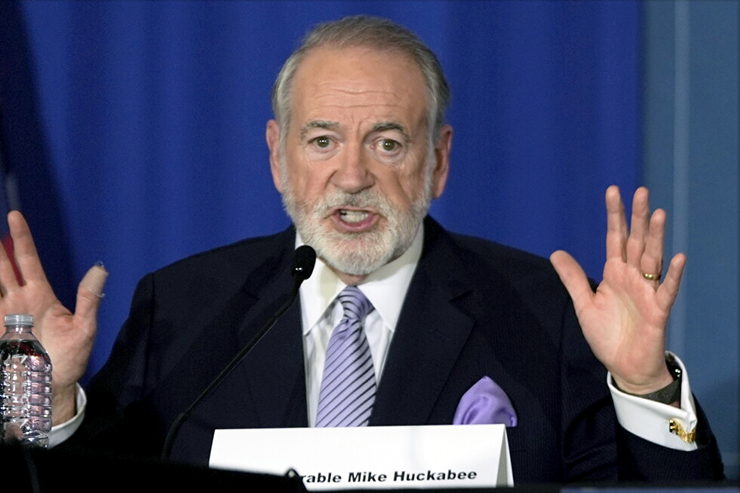
At a moment when diplomatic language is often carefully calibrated, heavily qualified, and deliberately ambiguous, United States Ambassador to Israel Mike Huckabee has once again demonstrated a willingness to articulate uncomfortable truths with unusual clarity.
His recent suggestion that members of Hezbollah and Hamas should be deported to Iran, the nation widely regarded by Western governments as the principal sponsor and benefactor of both organizations, was immediately controversial. Yet beneath the provocative headline lies an argument that many supporters of Israel and critics of Iranian regional influence believe deserves serious consideration.
According to a report by Iran International, Huckabee argued in a post on X that if Iran serves as the primary patron of Hezbollah and Hamas, then it should bear responsibility for hosting the very organizations it supports. The ambassador suggested that such a move would allow both Israel and Lebanon to free themselves from what he described as Iranian-backed proxy forces that have contributed to years of instability, conflict, and insecurity.
Whether one views the proposal as symbolic or practical, Huckabee’s comments succeeded in drawing attention to a reality that many policymakers have been reluctant to confront directly: Hezbollah and Hamas do not operate in a geopolitical vacuum.
For decades, intelligence agencies, military analysts, and government officials throughout the Western world have documented Iran’s extensive relationships with armed groups across the Middle East. Iran International noted that Huckabee’s remarks came amid ongoing negotiations concerning Gaza and broader regional tensions involving Lebanon and Iran, placing renewed focus on the question of Tehran’s influence throughout the region.
Supporters of Huckabee argue that his statement was less about the mechanics of deportation and more about exposing what they view as a persistent double standard in international diplomacy.
If Hezbollah is celebrated by Iranian leaders, funded by Iranian institutions, armed through Iranian channels, and promoted as part of Iran’s regional strategy, then why should Lebanon continue bearing the consequences?
Likewise, if Hamas maintains close ties with Tehran and receives political and material support from the Islamic Republic, why should neighboring populations be forced to endure the instability that often accompanies armed conflict?
These are the questions Huckabee’s comments appear designed to raise.
According to the Iran International report, Huckabee also criticized what he characterized as Iranian efforts to pressure Israel regarding military operations along its northern border while ceasefire negotiations continue.
Many supporters of Israel have applauded the ambassador’s willingness to challenge what they see as an increasingly common diplomatic narrative in which Israel is repeatedly urged to exercise restraint while hostile actors face comparatively less scrutiny.
For those who share Huckabee’s perspective, the ambassador’s comments reflect a broader principle: nations have an inherent right to defend their citizens against organizations that openly threaten their security.
That principle has become particularly relevant in northern Israel, where communities have endured years of tension, rocket attacks, and security threats associated with Hezbollah’s military presence along Lebanon’s southern frontier.
Supporters argue that Huckabee’s remarks demonstrate moral clarity at a time when many public figures prefer ambiguity. They note that Hezbollah remains designated as a terrorist organization by the United States and numerous Western governments. Hamas is similarly designated by the United States, the European Union, and other democratic nations.
Against that backdrop, Huckabee’s critics may object to the tone of his comments, but his supporters contend that the underlying logic is difficult to dismiss. If Tehran wishes to champion these organizations politically, then Tehran should be prepared to assume greater responsibility for their consequences.
Iran International reported that Iranian officials had not immediately issued an official response to Huckabee’s remarks. That silence has done little to diminish the attention generated by the controversy.
Indeed, the ambassador’s comments have become part of a broader debate regarding accountability in the Middle East. For many years, policymakers have struggled to determine how best to address the influence of armed non-state actors operating across multiple national borders. Traditional diplomatic frameworks often focus on governments, treaties, and formal institutions. Organizations such as Hezbollah and Hamas complicate those frameworks because they operate simultaneously as political movements, military organizations, and regional actors.
Supporters of Huckabee believe his remarks cut through that complexity by focusing attention on what they see as the root issue: state sponsorship.
Whether one agrees entirely with his proposal or not, there is little doubt that Huckabee succeeded in highlighting a question that remains central to regional security.
Can lasting peace be achieved without addressing the relationships between governments and the armed organizations they support?
Many analysts would argue that the answer is no. The broader significance of Huckabee’s comments extends beyond the immediate controversy. They reflect an emerging school of thought among some American and Israeli policymakers who believe that diplomatic progress requires confronting uncomfortable realities rather than obscuring them behind carefully crafted language.
To those supporters, Huckabee’s remarks were not inflammatory. They were candid. They were not reckless. They were direct.
And in a region where euphemisms often substitute for honesty, many believe directness has become an increasingly valuable commodity.
Iran International’s reporting underscores the fact that the ambassador’s proposal does not represent a formal policy initiative or an internationally negotiated plan. Nevertheless, political statements frequently influence public debate precisely because they force difficult issues into the open.
In that respect, Huckabee’s comments appear to have achieved their intended effect. They have reignited discussion about Iran’s regional role. They have highlighted concerns regarding Hezbollah and Hamas. And they have challenged policymakers to address questions that many observers believe have remained unresolved for far too long.
Whether one ultimately agrees with Huckabee’s proposal or not, his supporters argue that he deserves credit for confronting the issue directly and refusing to ignore what they regard as one of the central strategic realities of the modern Middle East.
In an era increasingly defined by diplomatic caution, Ambassador Huckabee has chosen a different path: one of bluntness, conviction, and unmistakable clarity.
For many supporters of Israel and advocates of a tougher approach toward Iran’s regional activities, that message resonates powerfully.



