












Iranian Fans Challenge FIFA Restrictions as Pre-Revolution Flag Appears During World Cup Match
By: Glenn Wiscowski
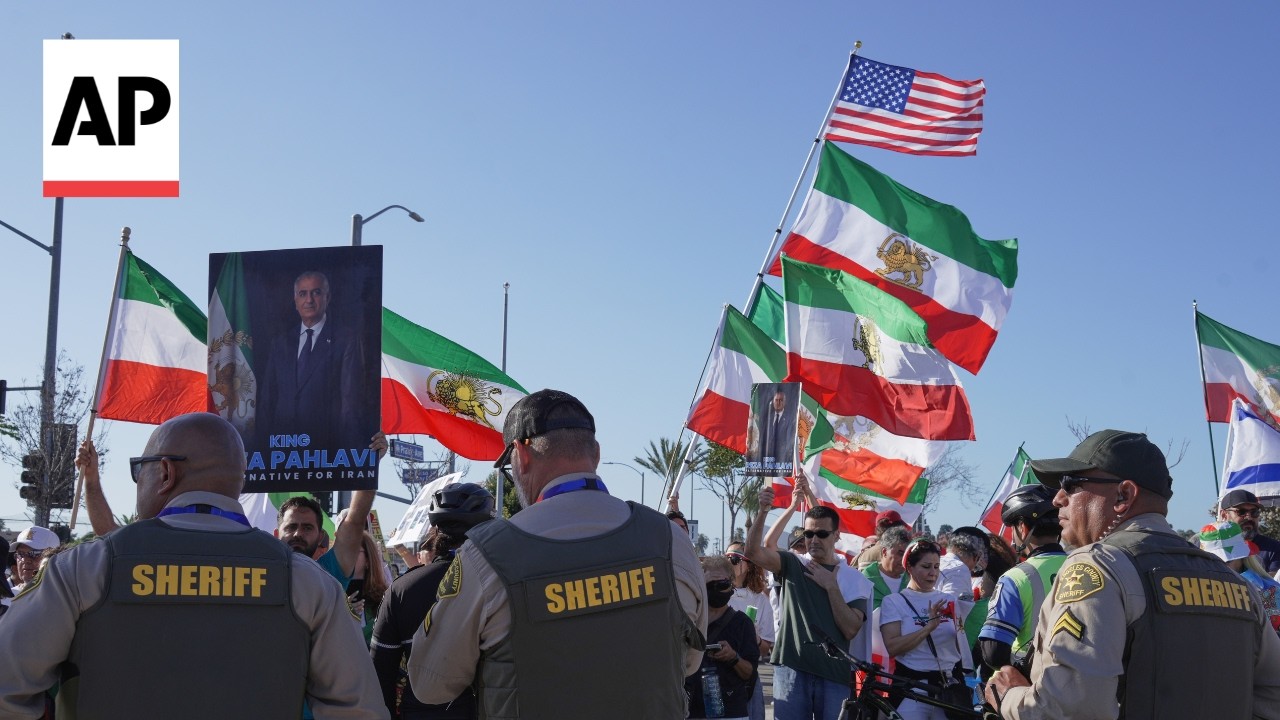
The opening stages of the FIFA World Cup 2026 have already delivered the drama, passion, and spectacle that define international football’s premier competition. Yet one of the tournament’s most consequential storylines has emerged not from the action on the pitch, but from the political symbolism displayed in the stands and outside the stadium, where Iranian supporters openly challenged FIFA regulations by displaying the pre-1979 Lion and Sun flag during Iran’s opening World Cup match.
According to reports referenced by The New York Post, the incident has reignited a broader international debate concerning the increasingly complex intersection of sports, politics, freedom of expression, and FIFA’s longstanding commitment to maintaining political neutrality within its competitions.
The appearance of the Lion and Sun flag—an emblem associated with Iran prior to the Islamic Revolution of 1979—quickly became one of the most discussed developments surrounding the match. Although FIFA regulations explicitly prohibit political banners, symbols, and demonstrations within official tournament venues, the historic flag was reportedly visible both inside and outside the stadium, drawing attention from spectators, security officials, journalists, and political observers alike.
The New York Post noted that the demonstrations reflected deep divisions that continue to exist within segments of the Iranian diaspora, many of whom view the Lion and Sun flag as a symbol of national identity separate from the current ruling establishment in Tehran.
For many of the supporters carrying the flag, the display represented far more than a simple expression of nostalgia. Instead, it served as a public declaration of political dissent on one of the largest international stages available.
The World Cup has long occupied a unique position within global culture. With billions of viewers worldwide, few events possess the ability to command international attention quite like FIFA’s flagship tournament. As a result, activists, governments, advocacy organizations, and political movements have frequently sought to use the competition as a platform to advance causes extending far beyond athletics.
The Iranian demonstrations appear to represent the latest chapter in that continuing dynamic. Reports indicated that groups gathered outside the venue carrying banners and chanting slogans calling for political change in Iran. While the demonstrations remained separate from the official sporting event itself, their proximity to the match ensured significant visibility.
The New York Post reported that the protests underscored ongoing tensions among portions of the Iranian diaspora, many of whom continue to engage in political activism related to developments inside Iran.
The symbolism of the Lion and Sun flag is particularly significant. For supporters, the flag represents an Iranian national identity that predates the Islamic Republic and connects to centuries of Persian history. For opponents, however, the symbol can evoke different political interpretations tied to Iran’s pre-revolutionary era.
The competing meanings attached to the emblem help explain why its appearance at international sporting events frequently generates controversy. FIFA has spent decades attempting to prevent precisely such disputes from entering its competitions.
The organization’s tournament regulations prohibit political messages, banners, and symbols within official venues. FIFA officials have consistently argued that football should serve as a unifying force rather than a platform for political confrontation.
Supporters of FIFA’s approach contend that maintaining strict neutrality is essential to preserving the integrity of international competition. They argue that allowing political displays could open the door to escalating disputes among supporters from competing nations, potentially transforming sporting contests into arenas for ideological conflict. Critics, however, argue that such restrictions can be difficult to enforce and may conflict with principles of free expression.
The controversy surrounding the Iranian flag demonstrates the practical challenges facing FIFA. According to reports referenced by The New York Post, security personnel reportedly confiscated some prohibited items during the event. Nevertheless, several restricted flags remained visible, illustrating the difficulties associated with implementing and enforcing tournament regulations across venues hosting tens of thousands of spectators.
The situation was further complicated by prior legal challenges involving FIFA’s flag restrictions. According to reports, a United States court previously declined to overturn FIFA’s policies after a legal challenge sought to invalidate the organization’s restrictions concerning political displays.
That decision effectively reinforced FIFA’s authority to establish and enforce rules governing conduct within official tournament venues. Yet the legal ruling has done little to settle the broader philosophical debate.
Advocates of unrestricted expression argue that international sporting events naturally become platforms for political messages because athletes, fans, and nations do not exist in isolation from world events. They point to numerous historical examples in which sports have intersected with political movements, social causes, and human rights campaigns.
From Olympic protests to anti-apartheid activism to demonstrations concerning democracy and civil liberties, major sporting events have repeatedly served as stages upon which broader societal debates unfold. The Iranian demonstrations appear to fit within that historical tradition. What makes the situation particularly notable is the extent to which it reflects divisions among Iranians living outside their homeland.
The Iranian diaspora is remarkably diverse in its political perspectives, generational experiences, and visions for the country’s future. While many supporters attending matches simply wish to cheer for their national team, others view international competitions as rare opportunities to attract global attention to political causes.
The World Cup’s unparalleled visibility amplifies those opportunities. Every image broadcast from inside or outside a stadium has the potential to reach audiences numbering in the hundreds of millions. Consequently, even relatively small demonstrations can achieve outsized international impact.
The New York Post report observed that the appearance of the prohibited flag has sparked renewed discussions regarding where FIFA should draw the line between legitimate fan expression and political activism. Some observers argue that symbols tied to national identity should be permitted, particularly when they are not accompanied by explicit political slogans. Others contend that exceptions would create impossible enforcement challenges and invite accusations of favoritism or inconsistency. FIFA officials have historically sought to avoid precisely such dilemmas by maintaining blanket prohibitions on political displays.
Whether that approach remains sustainable in an increasingly interconnected and politically engaged world remains an open question. The incident also highlights the growing challenge faced by international sports organizations as global political tensions increasingly intersect with major athletic competitions.
Modern sporting events are no longer merely athletic contests. They are global media spectacles occurring within an environment shaped by social media, instant communication, political polarization, and transnational activism. As a result, governing bodies frequently find themselves navigating disputes that extend far beyond the boundaries of sport.
For FIFA, the Iranian flag controversy serves as yet another reminder that maintaining neutrality can be far more complicated than simply writing rules. The organization must balance competing priorities: preserving the nonpolitical character of its competitions, respecting diverse cultural and national identities, ensuring public safety, and responding to evolving expectations concerning freedom of expression.
Each objective can conflict with the others. The Iranian demonstrations illustrate that reality with unusual clarity.
Even as players competed on the field and supporters focused on the match itself, broader political questions remained impossible to ignore. The images of the Lion and Sun flag circulating through international media ensured that discussions about Iran’s political future would become part of the tournament’s narrative regardless of FIFA’s intentions.
Whether viewed as an act of political protest, an expression of cultural identity, or a challenge to tournament regulations, the incident has already become one of the defining off-field stories of the World Cup’s opening phase.
As the tournament progresses and global attention intensifies, FIFA officials will likely continue confronting difficult questions regarding political expression within international sports.
For now, however, the events surrounding Iran’s World Cup opener have demonstrated once again that even the world’s most celebrated sporting competitions cannot fully escape the powerful currents of politics, identity, and public dissent that shape contemporary global affairs.
And as The New York Post and other media outlets continue to document the controversy, the debate over sporting neutrality and freedom of expression appears certain to remain a prominent feature of the World Cup conversation long after the final whistle has sounded.



