



|
Getting your Trinity Audio player ready...
|
By: Jerome Brookshire
In a moment that has drawn both attention and scrutiny, Mikie Sherrill recently visited a prominent mosque in Paterson, New Jersey, marking the conclusion of Ramadan alongside members of the local Muslim community. What might otherwise have been a routine gesture of interfaith outreach has instead ignited renewed debate, owing to the complex and contested history of the mosque’s spiritual leader, Mohammad Qatanani.
The visit, first brought into sharper public focus through reporting referenced by New York Post on Wednesday underscores the delicate intersection of community engagement, national security concerns, and the enduring challenges of adjudicating allegations that remain unresolved in the public imagination, even when addressed within the legal system.
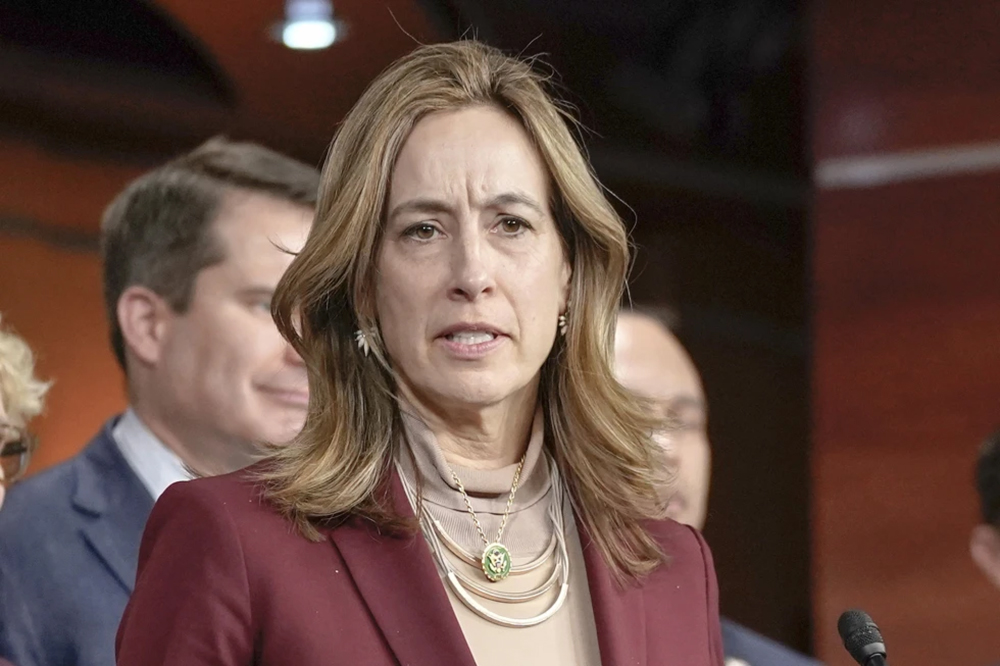
Governor Sherrill’s appearance at the Islamic Center of Passaic County took place during Eid al-Fitr, the festival that concludes the Muslim holy month of Ramadan. The gathering was characterized by celebration, reflection, and communal unity, themes that the governor echoed in a public message expressing wishes for peace and joy among Muslim residents.
Her participation aligns with a longstanding tradition among elected officials of engaging with diverse religious communities, particularly during significant cultural and spiritual observances. Such visits are often intended to reinforce inclusivity and to acknowledge the contributions of different faith groups to the broader civic fabric.
Yet in this instance, the presence of Imam Qatanani introduced a layer of complexity that has since dominated public discussion.
Imam Qatanani’s background has been the subject of legal and political scrutiny for nearly two decades. Immigration authorities initiated proceedings against him in 2008, seeking his deportation on the grounds that he had failed to disclose a prior detention by Israeli authorities in 1993. According to claims cited at the time, Israeli officials alleged that Qatanani had acknowledged involvement with Hamas, an organization designated by the United States as a terrorist group.
Qatanani has consistently and emphatically denied these allegations. He has maintained that he was never formally charged and that his detention involved coercive interrogation practices, which he described as abusive. These assertions became central to his defense during immigration proceedings.
The case ultimately turned on the evidentiary standards required to substantiate claims of terrorist affiliation. An immigration judge ruled in Qatanani’s favor, concluding that the government had not met its burden of proof. The decision granted him and his family permanent residency, while also expressing skepticism regarding the reliability of the evidence presented.
Subsequent attempts to revisit the case, including an appeal in federal court, were unsuccessful. As noted in reporting referenced by The New York Post, a federal appeals court declined to overturn the earlier decision, effectively bringing the legal proceedings to a close.
The distinction between legal adjudication and public perception lies at the heart of the current controversy. While the courts have determined that the evidence against Qatanani was insufficient to warrant deportation, the underlying allegations continue to resonate in public discourse.
This divergence is not uncommon in cases involving national security concerns, where the threshold for legal action may differ from the standards by which individuals are judged in the court of public opinion. For some observers, the absence of a definitive legal finding of wrongdoing is sufficient to resolve the matter. For others, the persistence of allegations—however contested—remains a source of unease.
Governor Sherrill’s visit has brought this tension into sharper focus, prompting questions about how public officials should navigate such complexities when engaging with community leaders.
Supporters of Imam Qatanani point to his longstanding role within the New Jersey community as evidence of his character and contributions. During the 2008 proceedings, he was supported by a diverse array of character witnesses, including religious leaders from Jewish and Christian communities. Their testimonies highlighted his involvement in interfaith dialogue and community service.
Notably, reports at the time indicated that Qatanani encouraged cooperation with law enforcement following the attacks of September 11, 2001, including urging members of his congregation to assist the Federal Bureau of Investigation in translation efforts. This aspect of his record has been cited as indicative of a commitment to civic responsibility and public safety.
These elements form part of a broader narrative that portrays Qatanani as a figure who has sought to build bridges across communities, even as he has faced sustained scrutiny.
For Governor Sherrill, the visit represents both an affirmation of inclusivity and a potential political liability. In an era of heightened sensitivity to issues of security and extremism, any association—however indirect—with figures who have faced such allegations can become a focal point for criticism.
The New York Post’s coverage has emphasized the historical context of Qatanani’s case, bringing renewed attention to details that had largely receded from public view. This dynamic illustrates the role of media in shaping and reshaping narratives, particularly when new developments—or new associations—bring past controversies back into the spotlight.
At the same time, Sherrill’s office has not issued a detailed response to the renewed attention, leaving open questions about how the administration views the balance between community engagement and the potential risks associated with such interactions.
The episode raises broader questions about the responsibilities of public officials in navigating complex and often contentious landscapes. Engagement with diverse communities is a cornerstone of democratic governance, yet it is not without its challenges.
Leaders must weigh the benefits of inclusion against the potential for controversy, particularly when individuals or institutions involved have histories that are subject to differing interpretations. The challenge lies in maintaining a commitment to openness while exercising due diligence in understanding the contexts in which such engagements occur.
In this regard, the Sherrill visit serves as a case study in the complexities of modern political leadership. It highlights the need for careful consideration of both the symbolic and substantive implications of public actions.
The role of media outlets, including The New York Post, in bringing attention to the imam’s history highlights the importance of investigative reporting in democratic societies. By revisiting the details of past cases, such reporting contributes to a more informed public discourse, even as it may also reignite debates that had previously subsided.
At the same time, the manner in which such information is presented can influence public perception, shaping the narratives that emerge from complex situations. The interplay between reporting, interpretation, and response is a defining feature of contemporary media landscapes.
As the discussion surrounding Governor Sherrill’s visit continues, it serves as a reminder of the intricate interplay between law, perception, and leadership. The case of Imam Qatanani, resolved in the courts yet lingering in public debate, exemplifies the challenges inherent in reconciling these domains.
For the governor, the visit reflects a commitment to engaging with diverse communities during moments of cultural significance. For critics, it raises questions about judgment and awareness in the context of unresolved concerns.
Ultimately, the episode underscores the need for nuanced understanding in an increasingly complex world. It is a reminder that actions taken in the spirit of inclusion can carry unintended consequences, and that the pursuit of unity must be accompanied by a careful consideration of context.

She is scum