



|
Getting your Trinity Audio player ready...
|
By: Fern Sidman
In a development that underscores the fragile and volatile state of Middle Eastern geopolitics, Israeli officials are reportedly preparing for the potential resumption of military operations involving Iran, as diplomatic negotiations between Tehran and Washington appear increasingly precarious. The emerging scenario, marked by contingency planning and heightened military readiness, reflects a convergence of strategic anxieties in both Jerusalem and Washington, where policymakers are grappling with the possibility that diplomacy may soon give way to renewed confrontation.
According to a detailed report on Friday from World Israel News, Israeli leadership has been briefed on the likelihood that ongoing negotiations between the United States and Iran could collapse within a matter of days. Such an outcome, officials have warned, would significantly alter the regional security landscape, compelling Israel to reassess its own posture and preparedness in anticipation of escalatory developments.
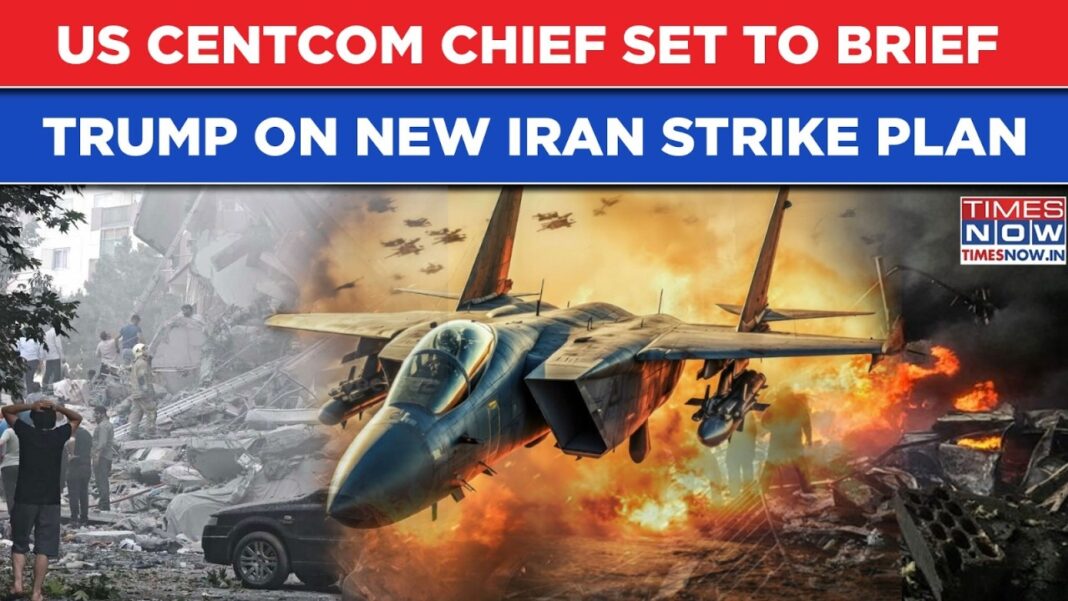
At the center of these deliberations is the role of the United States, where President Trump has been actively engaged in reviewing a spectrum of military options. In a high-level briefing that reportedly lasted approximately forty-five minutes, senior military leaders—including Brad Cooper and Dan Caine—presented the president with updated operational plans for potential strikes against Iranian targets. The existence of such plans, as confirmed by multiple senior officials, signals a readiness to act should diplomatic avenues fail to yield tangible results.
The strategic calculus underpinning these preparations is multifaceted. On one hand, the United States seeks to maintain leverage in negotiations that have thus far produced limited progress. On the other, there is a recognition that decisive action—whether in the form of targeted strikes or broader military engagement—could fundamentally reshape the dynamics of the standoff. As the World Israel News report noted, the dual-track approach of diplomacy backed by credible military threat remains a cornerstone of Washington’s strategy.
Among the options under consideration is a plan described by sources as a “short and powerful” series of strikes aimed at critical Iranian infrastructure. These targets are believed to include gas and energy facilities, as well as elements of the regime’s operational framework. The objective of such an approach would be to deliver a concentrated blow capable of altering Tehran’s strategic calculations without precipitating a prolonged conflict.
Another, more ambitious proposal involves asserting control over portions of the Strait of Hormuz, a maritime corridor of immense global significance. By ensuring the uninterrupted passage of commercial shipping and oil tankers, such a move would seek to neutralize one of Iran’s principal sources of leverage. However, this option carries considerable risks, including the potential requirement for ground forces and the likelihood of direct confrontation with Iranian assets.
A third scenario, previously discussed in strategic circles, contemplates the deployment of special operations forces to secure Iran’s stockpile of enriched uranium. This highly sensitive mission would aim to address concerns regarding nuclear proliferation while minimizing the broader impact on civilian infrastructure. Yet the complexity and inherent risk associated with such an operation render it one of the most challenging options on the table.
President Trump’s own remarks have provided insight into his evolving perspective. Speaking earlier in the week, he characterized the existing naval blockade on Iran as “to a certain extent a bit more effective than bombing,” suggesting a preference for measures that exert sustained pressure without immediate escalation. Nevertheless, sources indicate that the blockade is viewed as only one component of a broader strategy, and that the administration remains prepared to escalate if Iran fails to respond to diplomatic overtures.
The blockade itself has already had significant implications for regional stability. By targeting Iranian-linked shipping in the Strait of Hormuz, the United States has sought to constrain Tehran’s economic activity while signaling its willingness to enforce maritime security. This approach, while effective in certain respects, has also heightened tensions, increasing the likelihood of miscalculation or unintended escalation.
Compounding the uncertainty is the ambiguous status of the current conflict. A senior U.S. official, speaking to Reuters, suggested that the war has effectively concluded following the expiration of a sixty-day period since its declaration to Congress, with no formal extension requested. This interpretation, however, has been contested by lawmakers who argue that periods of ceasefire should not be excluded from the timeline. The resulting dispute highlights the complexities of reconciling legal frameworks with operational realities.
For Israel, the implications of these developments are profound. The prospect of renewed U.S. military action against Iran carries both opportunities and challenges. On one hand, it aligns with Israel’s longstanding objective of countering Iranian influence and preventing the advancement of its nuclear program. On the other, it introduces the possibility of regional escalation that could draw Israel into a broader conflict.
Israeli officials, as reported by World Israel News, are therefore adopting a posture of cautious preparedness. Cabinet ministers have been briefed on the potential need for the United States to “give a push” in order to break the current impasse, a phrase that encapsulates the delicate balance between diplomatic engagement and military intervention. The emphasis on readiness reflects an understanding that events may unfold rapidly, requiring swift and decisive action.
The broader regional context further complicates the picture. Iran’s strategic position, bolstered by its network of allied groups and its control over key geographic chokepoints, affords it considerable leverage. At the same time, the country faces mounting economic and political pressures, factors that may influence its willingness to engage in negotiations or to escalate tensions.
International observers are closely monitoring the situation, aware that the stakes extend far beyond the immediate actors involved. The Strait of Hormuz, through which a significant portion of the world’s oil supply passes, represents a critical artery of the global economy. Any disruption to its flow would have far-reaching consequences, affecting markets and economies across the world.
In this environment, the interplay between diplomacy and military preparedness assumes heightened importance. The decisions made in the coming days will likely shape the trajectory of the conflict, determining whether it moves toward resolution or further escalation. As World Israel News reported, the situation remains fluid, with multiple variables influencing the outcome.
What emerges from this complex tableau is a picture of strategic uncertainty, in which competing priorities and divergent perspectives converge. The United States seeks to maintain pressure while avoiding unnecessary escalation; Israel prepares for contingencies while monitoring developments; and Iran navigates the challenge of balancing resistance with pragmatism.
The path forward is fraught with difficulty. Diplomatic negotiations, while essential, are constrained by deep-seated mistrust and conflicting objectives. Military options, while potentially decisive, carry risks that extend beyond the immediate theater of operations. The challenge for policymakers lies in navigating this landscape with precision, ensuring that actions taken in the pursuit of security do not inadvertently exacerbate instability.
As the world watches, the unfolding situation serves as a reminder of the enduring complexities of international relations. The interplay of power, strategy, and diplomacy continues to shape events in ways that are both predictable and unforeseen. In this context, the preparations underway in Israel and the deliberations taking place in Washington are not merely tactical considerations but reflections of a broader struggle to define the contours of stability in an uncertain world.
Whether the coming days will bring renewed conflict or a breakthrough in negotiations remains to be seen. What is certain, however, is that the stakes are extraordinarily high, and the consequences of any decision will reverberate far beyond the immediate actors involved.
