



|
Getting your Trinity Audio player ready...
|
By: Andrew Carlson
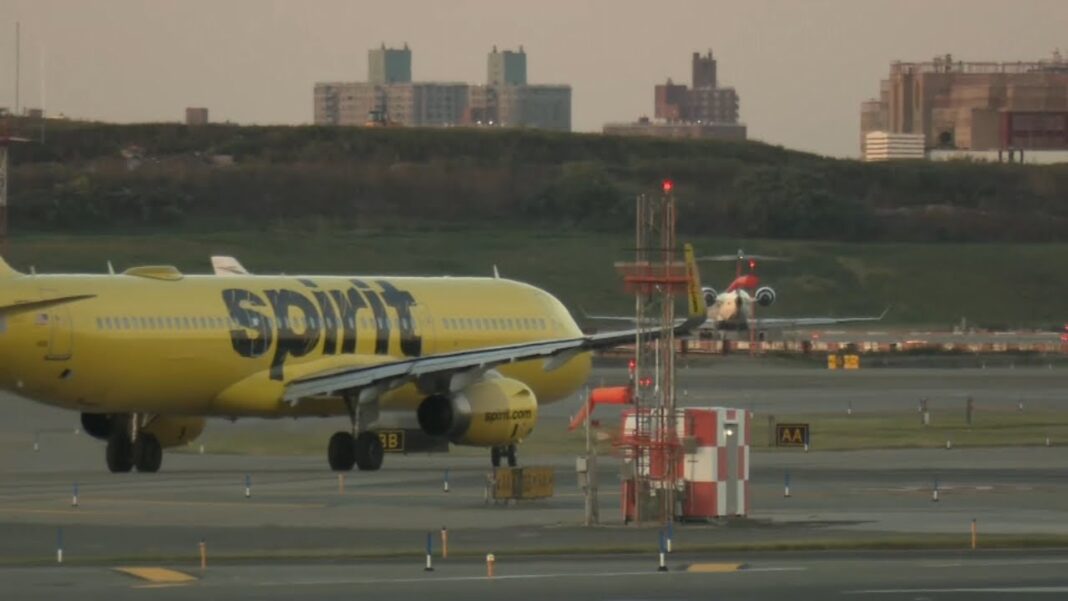
In a development that underscores the fragility of the modern aviation industry, Spirit Airlines now appears to be approaching the brink of operational cessation after a prolonged period of financial distress, failed restructuring efforts, and the collapse of a last-minute rescue initiative. What once stood as one of the most recognizable ultra-low-cost carriers in the United States now finds itself confronting the very real prospect of dissolution, a scenario that would reverberate across the airline sector and the broader economy.
As reported on Friday by The Wall Street Journal, Spirit’s precarious situation has been exacerbated by the unraveling of a proposed $500 million government-backed bailout. The plan, which had been viewed by some as a potential lifeline, ultimately faltered under the weight of competing interests and diminishing financial runway. Bondholders, whose approval was essential to the agreement, reportedly rejected key provisions, leaving the airline with neither the capital nor the time required to stabilize its operations.
The collapse of this deal marks a critical juncture in Spirit’s ongoing struggle. For months, the airline has grappled with a confluence of adverse conditions, including mounting debt obligations, escalating operational costs, and a series of unsuccessful merger attempts that might otherwise have provided a path to sustainability. The failure to secure external support has now placed the company in a position where continuation may no longer be feasible.
President Trump acknowledged the gravity of the situation during remarks delivered from the Oval Office, indicating that his administration had explored the possibility of a taxpayer-backed intervention. Such a measure, he suggested, could have preserved jobs and maintained the airline’s operational capacity, with the intention of reselling the entity once market conditions improved. “They have some good aircraft and good assets,” he observed, emphasizing the underlying value that persists despite the company’s financial turmoil.
Yet even this potential avenue appears to have been insufficient to alter the trajectory of events. The complexities inherent in structuring a bailout—particularly one involving public funds—combined with the urgency of Spirit’s cash flow challenges, created an environment in which consensus proved elusive. As The Wall Street Journal report noted, the airline effectively ran out of both time and liquidity, a dual constraint that left little room for negotiation or compromise.
Spirit’s difficulties did not emerge in isolation. The airline industry as a whole has faced significant headwinds in recent years, many of which have been amplified by geopolitical developments and macroeconomic pressures. Rising jet fuel costs, driven in part by regional instability involving Iran, have placed additional strain on carriers operating within already narrow profit margins. For ultra-low-cost airlines such as Spirit, which rely on lean operating models and aggressive pricing strategies, such increases can be particularly destabilizing.
The company’s financial challenges are further reflected in its repeated recourse to bankruptcy protection. Spirit filed for Chapter 11 restructuring in November 2024, seeking to reorganize its debt and renegotiate contractual obligations. A subsequent filing in August 2025 underscored the persistence of its difficulties, suggesting that earlier efforts had failed to achieve the necessary structural adjustments. These proceedings, while providing temporary relief, ultimately did not address the underlying issues that continue to undermine the airline’s viability.
Creditors, whose support is essential for any restructuring effort, have grown increasingly skeptical of Spirit’s prospects. In recent weeks, their willingness to extend additional concessions has diminished, reflecting concerns about the airline’s ability to generate sufficient revenue in a highly competitive market. This erosion of confidence has further constrained the company’s options, narrowing the path toward any sustainable resolution.
The potential shutdown of Spirit Airlines carries implications that extend beyond the company itself. As a major participant in the ultra-low-cost segment, Spirit has played a significant role in shaping pricing dynamics within the industry. Its business model, characterized by low base fares supplemented by ancillary fees, has influenced competitors and expanded access to air travel for cost-conscious consumers. The removal of such a player from the market could lead to reduced competition and upward pressure on ticket prices, particularly on routes where Spirit has maintained a strong presence.
For employees, the stakes are equally high. Thousands of workers, ranging from pilots and flight attendants to ground staff and administrative personnel, face uncertainty regarding their future. While the prospect of a government intervention raised hopes of preserving employment, the failure of the bailout initiative has left many in a state of apprehension. The broader economic impact, particularly in regions where Spirit maintains operational hubs, is likely to be significant.
Passengers, too, may experience disruptions as the situation unfolds. Travelers with existing bookings could encounter cancellations or delays, while those who rely on Spirit’s low-cost offerings may find fewer alternatives available. The ripple effects of the airline’s potential closure thus extend into the daily lives of individuals and communities across the country.
Despite the gravity of the situation, it is important to note that developments remain fluid. As The Wall Street Journal report emphasized, negotiations and strategic considerations continue behind the scenes, and the possibility of last-minute interventions cannot be entirely discounted. However, the trajectory of recent events suggests that the window for such measures is rapidly closing.
The broader lesson of Spirit’s predicament lies in the inherent volatility of the aviation industry. Even in periods of relative stability, airlines operate within a narrow margin of error, where external shocks—whether economic, geopolitical, or operational—can quickly destabilize established business models. The current situation serves as a stark reminder of these vulnerabilities and the challenges associated with sustaining profitability in a highly competitive environment.
For policymakers, the question of whether and how to intervene in such cases remains a subject of ongoing debate. While the preservation of jobs and infrastructure is a compelling objective, the use of public funds to support private enterprises raises complex considerations regarding fairness, precedent, and fiscal responsibility. The collapse of the proposed bailout for Spirit Airlines illustrates the difficulty of reconciling these competing priorities.
As the airline edges closer to what may be its final chapter, the focus will increasingly shift to the implications of its departure and the lessons to be drawn from its experience. The fate of Spirit Airlines, once a symbol of innovation in low-cost travel, now stands as a cautionary tale of ambition confronted by the unforgiving realities of the marketplace.
In the days ahead, stakeholders across the aviation sector will be watching closely, aware that the outcome of this crisis may influence strategic decisions and policy frameworks for years to come. Whether Spirit Airlines ultimately finds a path to survival or proceeds toward closure, its story will remain a defining episode in the evolving narrative of modern air travel.
