



























|
Getting your Trinity Audio player ready...
|
Edited by: TJVNews.com
It appears that both Israel and Lebanon are inching close to an agreement that could dramatically change Europe’s energy needs. Currently, the majority of countries in Europe receive their natural gas and oil supply that is necessary to heat homes from Russia. Since Russian President Vladimir Putin launched his war against Ukraine to reclaim the territory for his empire, Europe has found itself in a quagmire of sorts.
On the one hand, they wish to boycott Russian gas and oil supplies as the hefty revenue that Russia receives from these countries for their energy needs are essentially funding a war in which Ukrainians are being killed. Europe and the vast majority of the world have thrown their full throated support behind Ukraine in this military conflict.
Now it appears that a possible solution has arisen in the Middle East where gas and oil reserves are available for home and business consumption.
According to a report on the web site of The Foundation for the Defense of Democracies, after two years of U.S.-mediated negotiations on demarcating a maritime border between Israel and Lebanon, the two countries appear to be reaching a conclusion, with senior envoys meeting on the sidelines of the U.N. General Assembly in New York last week.
The FDD site also reported that in 2020, the Hezbollah-dominated Lebanese government claimed rights to Karish, an Israeli gas field located in the Mediterranean Sea. This insistence constituted a negotiating tactic aimed at compelling Jerusalem to make territorial concessions on the entirety of the disputed maritime area, including Qana, a prospective gas field that lies within both Lebanese and Israeli waters.
The NYT has reported that energy experts say an Israeli-Lebanese agreement should give a vital push to efforts to produce more gas in that part of the world. Over the last four years, energy production in the eastern Mediterranean has been growing as Israel, Egypt, Jordan and Cyprus have worked together to take advantage of oil and gas buried under the sea.
Mark Dubowitz, the Chief Executive of the FDD said: “Hezbollah, as always, is playing with fire — and, as always, the fuel is being poured from Tehran while ordinary Lebanese and Israelis are liable to get burned. While the Biden administration seeks an Israel-Lebanon deal soon, it should make it clear that this is in no way a response to Hezbollah threats and that Washington and Jerusalem will not be spooked into capitulation.”
Tony Badran, an FDD Research Fellow said, “Once this deal goes through, the Biden administration will have set the precedent of extracting territorial concessions from Israel under the threat of attack leveraged by the United States on behalf of Iranian assets. What’s more, the deal, by design, will turn Hezbollah into a player in Eastern Mediterranean energy.”
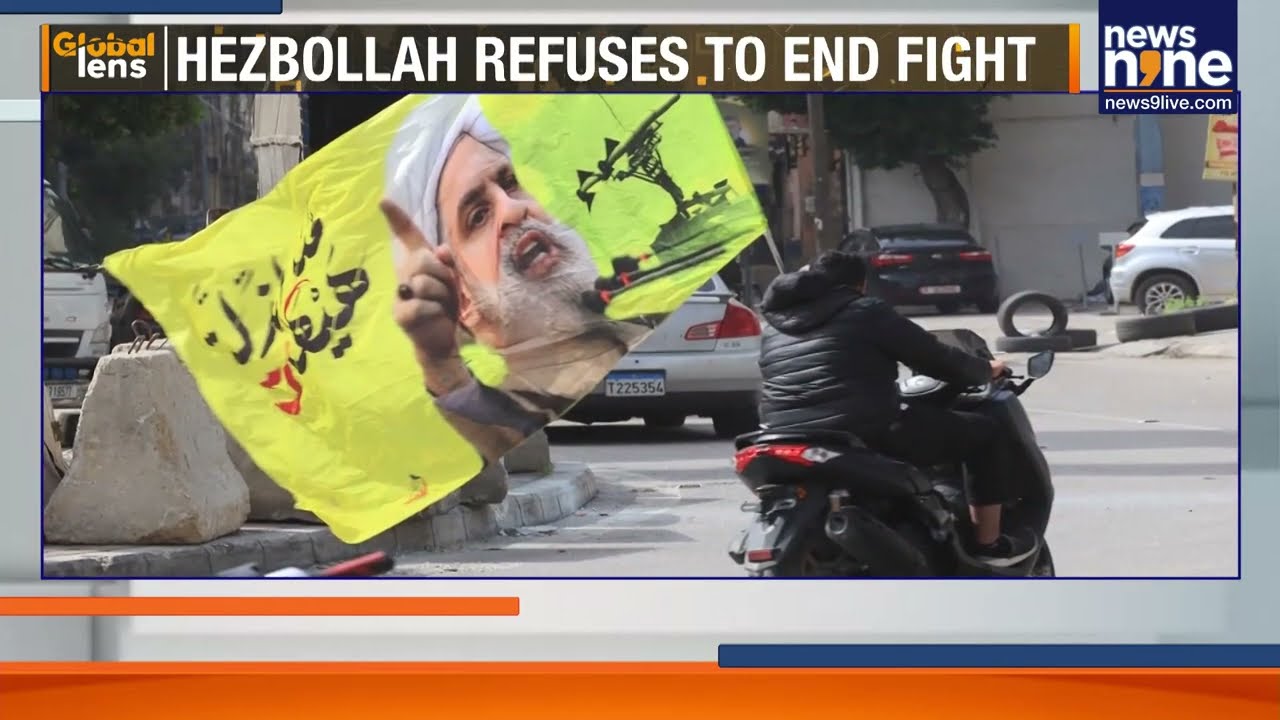
Hezbollah has threatened to attack Israeli offshore platforms should Jerusalem fail to meet its demands, according to the FDD report. Hezbollah leader Hassan Nasrallah said last month that it could expand its attacks “beyond Karish” if the two countries failed to reach an agreement that satisfies the terrorist group. In late June and early July, Hezbollah launched four drones toward Karish that the Israeli military shot down.
The NYT also reported that Charif Souki, the Lebanese American executive chairman of Tellurian, a liquefied natural gas company based in Houston said: “This is a very important step for the region to come into its own. Players are finally realizing that it’s better to cooperate than to continuously fight.”
Chevron, the second-largest U.S. oil and gas company, and several smaller businesses are already producing gas from two larger fields off Israel’s coast, according to the NYT report. That fuel has increasingly replaced coal in the country’s power plants and factories. Israel now has so much gas that it has become a net exporter of energy, sending fuel to neighbors like Jordan and Egypt. Some of that gas has also found its way to Europe and other parts of the world from L.N.G. export terminals in Egypt.
The NYT reported that Prime Minister Najib Mikati of Lebanon said on Thursday at the United Nations that he was confident about reaching an agreement with Israel. “Lebanon is well aware of the importance of the promising energy market in the eastern Mediterranean for the prosperity of all countries in the region,” he said, “but also to meet the needs of importing nations.”
U.S. and other Western oil companies have long shied away from Israel, in part because they do not want to alienate Arab countries. But, as relations between Israel and countries like Egypt, Jordan and, more recently, the United Arab Emirates have improved, more companies have expressed interest in the eastern Mediterranean, according to the NYT report.
Gas fields in the Mediterranean are one of several new suppliers that Europe will need as it seeks a long-term replacement for Russian gas, as was reported by the NYT. Other suppliers include energy companies operating in the United States, Qatar, Africa, the Caspian Sea and the North Sea.



