






















|
Getting your Trinity Audio player ready...
|
Edited by: Fern Sidman
Tensions between Israel and Hezbollah have reached a critical point as Israeli officials have issued stern warnings to the Iranian-backed terrorist group to withdraw its forces from the Lebanese border and cease missile attacks on Israel, according to a report on Tuesday in the Wall Street Journal. This situation is unfolding concurrently with the ongoing conflict with Hamas terrorists in the Gaza Strip, prompting concerns about the potential for a broader regional war.
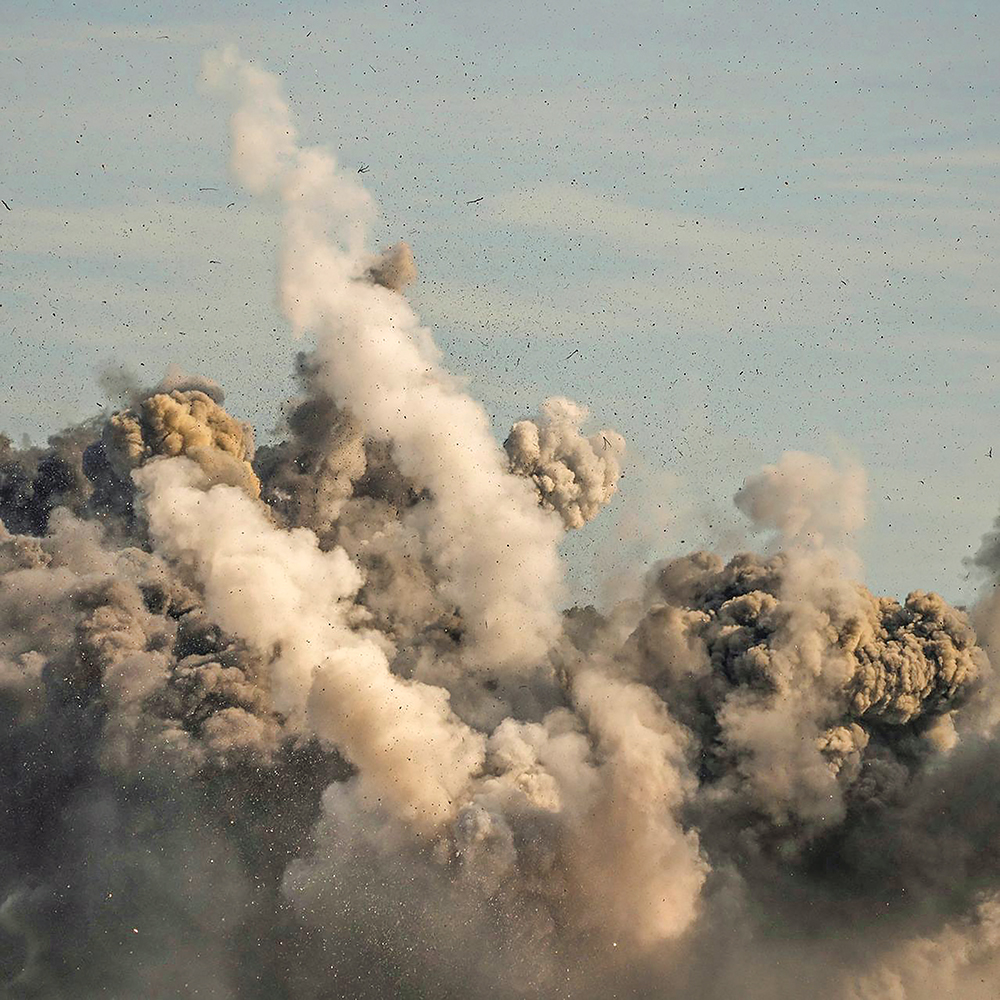
On Monday, the Israeli military responded to the firing of six projectiles from Lebanon by shelling Lebanese territory. The WSJ report indicated that in a subsequent airstrike, Israel targeted an Hezbollah site believed to be the source of the projectiles. This exchange followed a series of tit-for-tat engagements between the two sides on the previous day, resulting in casualties on both sides, the report added.
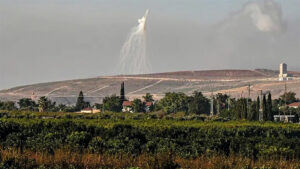
Israeli officials have expressed the urgency for Hezbollah to de-escalate the situation, emphasizing the risk of another war. To that end, the Israeli military has evacuated tens of thousands of civilians from northern Israel, transforming border communities into de facto military bases, as was noted in the WSJ report. The heightened state of alert is in response to fears of an expanded conflict, especially after the deadly attacks on October 7 that claimed the lives of 1,200 people, mostly civilians.
Israel National News reported on Tuesday that sirens sounded several times throughout the day, with Hezbollah terrorists sending hostile aircraft into Israeli territory, as well as launching rockets towards northern Israel.
In the early afternoon, the IDF reported, “Following the sirens sounding in the western Galilee, a short while ago, the IAF Aerial Control Unit identified a suspicious aerial target that crossed from Lebanon into Israeli territory,” as was noted by INN.
“A number of interceptors were launched at the target and the incident has concluded.” The launches continued, however, and the IDF later reported that “a number of launches were identified toward areas in the western Galilee. During to the incident, an interceptor was launched.”
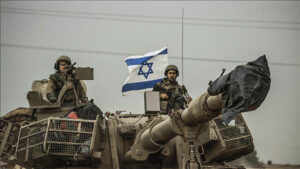
“Alerts were activated in the city of Acre due to the danger of falling fragments from the interceptor. No launches were identified toward the area of the city. IDF artillery is striking the sources of the fire in Lebanon.”
While the primary focus of the Israeli military remains on the conflict with Hamas in the Gaza Strip, tens of thousands of soldiers have been deployed to the northern border. The WSJ report said that local security officials estimate approximately 100,000 Israeli forces along the border, illustrating the gravity of the situation.
Hezbollah has reportedly concentrated its elite Radwan fighting force along the border. The report in the WSJ said that the group has introduced new weapons, such as the Burkan short-range rockets, known for their substantial explosive payload. Analysts believe these rockets were responsible for causing significant damage to an Israeli military outpost last month.
Hezbollah boasts an extensive arsenal of an estimated 150,000 missiles, dwarfing the estimated supply of Hamas. As was reported by the WSJ, among these weapons are GPS-guided missiles, including SCUD and Tishreen missiles capable of causing extensive damage across Israeli territory. The group has also increased its use of Kornet antitank missiles, employing laser-guided munitions with regular explosive and thermobaric charges designed to pierce through steel, the WSJ report added.
Despite the potency of their weaponry, Hezbollah appears cautious in the use of its advanced missiles, possibly to avoid a further escalation of hostilities. The situation remains delicate, according to the WSJ report, with Israeli officials expressing concerns about a potential miscalculation leading to an all-out conflict.
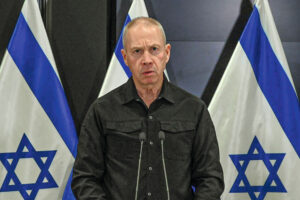
Israeli Defense Minister Yoav Gallant announced last week that Israel is willing to explore a deal with Hezbollah, involving the establishment of a security buffer along the border. The WSJ report indicated that Gallant emphasized the need for “appropriate guarantees” to ensure that Hezbollah refrains from hostile actions against Israel from this designated area. While he did not disclose specific details about Israel’s minimum requirements for a negotiated solution, Gallant reiterated the military’s preparedness to confront Hezbollah if security concerns are not adequately addressed.
Over the weekend, Tzachi Hanegbi, the head of Israel’s National Security Council, underscored the gravity of the situation, stating that pursuing a military option against Hezbollah may be unavoidable if the group and its allies continue to launch strikes on Israel, the WSJ reported on Tuesday. Hanegbi expressed skepticism about Hezbollah’s willingness to engage in diplomatic solutions but acknowledged the possibility of a peaceful resolution if the group agrees to certain conditions.
Hanegbi outlined Israel’s demands, which include the removal of Hezbollah’s Radwan fighting force and a retreat behind the United Nations-mandated cease-fire line along Lebanon’s Litani River, situated approximately 18 miles north of the Lebanon-Israel border, according to the WSJ report. The goal is to prevent a two-front war, with the resolution timeline linked to Israel’s conclusion of hostilities with Hamas.

Hezbollah has yet to respond to Israel’s demands, and internally, the militia has reportedly rejected the ultimatum, according to Hezbollah officials, the WSJ reported. The lack of a clear response adds uncertainty to an already volatile situation.
The evolving situation in the Middle East demands careful navigation and diplomatic efforts to prevent further escalation. Israel’s willingness to negotiate with Hezbollah reflects a complex balancing act between security concerns and the desire for a peaceful resolution. As international actors closely monitor developments, the region remains on edge, with the specter of a broader conflict looming over the ongoing conflicts with Hezbollah and Hamas.
The ongoing conflict between Israel and Hezbollah is being characterized as the most severe since their 34-day war in 2006, underscoring the high stakes and potential consequences of the current tensions.
The Biden administration has been actively working to prevent the Gaza conflict from evolving into a regional crisis. As was noted in the WSJ report, the deployment of two aircraft carrier strike groups to the Middle East serves as a deterrent to Hezbollah, although the terrorist group has sent mixed messages regarding its intentions.
As a result of the conflict, approximately 100,000 people in northern Israel have been displaced, seeking refuge with family or in hotels in the country’s center. According to the WSJ report, this displaced population has become a formidable lobbying force, advocating for a strong stance against Hezbollah, fueled by fears of returning to homes under the threat of attacks similar to those orchestrated by Hamas.
Also on Tuesday, Israel National News reported that during an operation in Gaza, the bodies of the hostages Eden Zakaria and (SGM) Ziv Dado were recovered by IDF Special Forces and brought back to Israel.
After an identification procedure carried out by medical officials and military rabbis together with the Institute of Forensic Medicine and the Israel Police on Tuesday, IDF and Israel Police representatives informed the families of Eden Zakaria and (SGM) Ziv Dado that their bodies had been recovered and returned to Israel, as was reported by INN. The two were taken hostage by the Hamas terrorist organization on October 7th, that their bodies had been recovered and returned to Israel.
Eden, 27, was taken hostage from the Re’im music festival and Ziv, 36, was taken hostage and fell while serving as a logistics supervisor in the Golani Brigade’s 51st Battalion, and until today was recognized as a fallen soldier in captivity, the INN report said.
The IDF sends the families its heartfelt condolences and will continue to support them.
The INN report also indicated that during the operations that enabled the location of the bodies, IDF soldiers in reserve duty (MSG) Gal Meir Eisenkot and (MSG) Eyal Meir Berkowitz fell in battle and additional soldiers were injured.
The IDF added “Our national mission is to locate the missing and return all the hostages home. We are working together with security agencies, and with all intelligence and operational means in order to return all of the hostages home.”
On the southern front, the WSJ reported Tuesday that the humanitarian situation in the Gaza Strip has reached alarming levels as the United Nations and aid groups struggle to deliver assistance to Palestinians in the isolated enclave, as Hamas continues to steal humanitarian aid that is meant for civilians. Overwhelmed hospitals, a rising death toll, and urgent pleas for evacuation paint a grim picture of the ongoing crisis. The international community, represented by a delegation to Egypt’s border with Gaza, underscored the pressing need for a humanitarian ceasefire to address the unfolding tragedy, the WSJ reported.
Neither the United Nations or international community bodies have confronted Hamas for illegally appropriating the aid that was earmarked for the Gaza population of civilians.
On Monday, the United Nations and aid organizations faced significant challenges in providing aid to Palestinians in the Gaza Strip. Hospital officials, grappling with an overwhelmed medical system, issued distress calls for help, particularly in the northern Gaza Stripm the WSJ reported. Dr. Hussam Abu Safyia, a pediatrician at Kamal Adwan hospital, emphasized the urgency of evacuation as the only viable solution amidst the deteriorating conditions.
To draw attention to the need for a humanitarian ceasefire, the United Arab Emirates organized a visit to Egypt’s border with Gaza for members of the United Nations Security Council. The WSJ report indicated that ambassadors from eight member states, including the U.K., China, and Russia, participated in the trip, although notable absences included the U.S. and France. Philippe Lazzarini, the chief of the U.N.’s Palestinian refugee agency, urged Israel to permit the flow of both humanitarian aid and commercial goods into Gaza.
China’s Ambassador to the U.N., Zhang Jun, emphasized the purpose of the visit as an effort to “feel the situation on the ground” and expressed hope that joint efforts could contribute to stopping the ongoing conflict. While not commenting specifically on the U.S. veto of a recent ceasefire resolution, Zhang Jun highlighted that the majority of the council is “on the side of peace,” the WSJ reported.
The absence of the United States and France in the diplomatic mission did not go unnoticed. A spokesperson for U.S. Ambassador to the U.N. Linda Thomas-Greenfield explained that the U.S. is acutely aware of the challenging situation and is working tirelessly to improve conditions, as was reported by the WSJ. The spokesperson, Nathan Evans, affirmed continued U.S. support for humanitarian pauses, emphasizing their importance for releasing hostages and surging aid into the affected areas.
Fierce fighting persists across the Gaza Strip as the Israeli military conducts targeted raids and discovers weapons caches in civilian areas. The report in the WSJ said that the situation in northern Gaza is described as approaching a breaking point, raising concerns about the well-being of the civilian population.
Israeli Defense Minister Yoav Gallant addressed questions about the possibility of Israel creating buffer zones in the Gaza Strip. Despite potential objections, especially from the United States, Gallant emphasized that any security areas established during the conflict would be removed upon Israel’s eventual withdrawal from Gaza, the WSJ reported. He described buffer zones as a temporary security measure, indicating that their presence is contingent on ongoing military operations.
The discourse around the creation of buffer zones highlights the delicate balance between security measures and the need for a long-term resolution to the conflict. The international community remains watchful as efforts to de-escalate tensions and address the humanitarian crisis in Gaza are of paramount importance.
In response to Hamas terrorists firing upon Israeli soldiers from a school building in southern Gaza, the Israeli military conducted a targeted raid adjacent to the school, the WSJ reported. This underscores the challenging environment in which military operations are taking place, often in close proximity to civilian infrastructure.
In the northern part of the Strip, the Israeli military reported finding several weapons caches within civilian areas. Additionally, a weapons production center was located in Jabalia, a site witnessing intense clashes between Hamas and Israeli forces, the report added. These discoveries highlight the complexity of the conflict, with weapons facilities embedded in civilian-populated zones.
Hamas has reported clashes with Israeli forces in Khan Younis and Jabalia. Throughout Monday, Hamas claimed responsibility for launching several rockets from Gaza toward southern and central Israel, further intensifying the conflict, according to the WSJ report.



