














|
Getting your Trinity Audio player ready...
|
By: Ariella Haviv
In a decision laden with geopolitical symbolism and strategic consequence, Israel’s cabinet has approved a sweeping plan to construct a major defense compound on the site of the former United Nations Relief and Works Agency facility in eastern Jerusalem—a move that has already ignited intense international scrutiny and domestic affirmation. As reported on Sunday by The Algemeiner, the initiative reflects a broader recalibration of Israeli policy toward institutions it accuses of complicity in anti-Israel activities, while simultaneously reinforcing its longstanding claims of sovereignty over the entirety of Jerusalem.
The approved plan envisions the transformation of the site into a multifaceted defense hub, incorporating a military museum, a recruitment center for the Israel Defense Forces, and an office for the defense minister. Israeli officials have framed the development not merely as an infrastructural undertaking, but as a declarative act—one that intertwines national security imperatives with ideological conviction.
Defense Minister Israel Katz articulated this posture in unequivocal terms. “This is a decision of sovereignty, Zionism, and security,” he declared, according to coverage by The Algemeiner. His remarks underscore the layered motivations behind the project, situating it within a broader narrative of state authority and historical continuity.
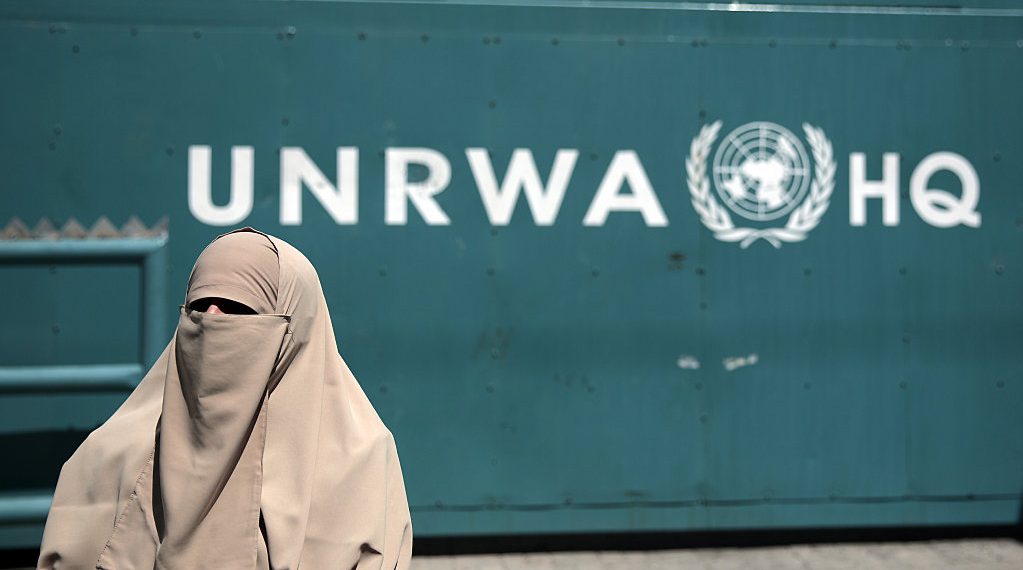
The site in question, previously occupied by UNRWA, was seized by Israeli authorities last year and subsequently cleared in January, when existing structures within the compound were demolished. The move drew sharp condemnation from UNRWA, which characterized the demolition as a violation of international law. Yet Israeli officials have remained steadfast in their position, asserting that the agency’s presence at the location had become untenable.
According to The Algemeiner report, UNRWA had already ceased operations at the site following Israeli directives requiring it to vacate its facilities. The agency has not maintained an active presence there since the beginning of the previous year. A spokesperson for UNRWA declined to comment on the latest development, a silence that contrasts sharply with the intensity of earlier criticisms.
Central to Israel’s rationale for repurposing the site are longstanding allegations concerning UNRWA’s conduct and affiliations. Israeli authorities have repeatedly accused the agency of systemic bias and, more gravely, of harboring personnel linked to the Hamas terrorist organization. These allegations intensified dramatically in the aftermath of the October 7, 2023, attacks, in which approximately 1,200 Israelis were killed in a coordinated assault that precipitated the ongoing conflict in Gaza.
In his statement, Katz did not mince words. “There is nothing more symbolic or justified than establishing the new IDF recruitment office and defense establishment institutions precisely on the ruins of the former UNRWA compound,” he asserted. He went further, alleging that UNRWA was “an organization whose employees took part in the massacres, murders, and atrocities committed by Hamas terrorists on October 7.”
These claims, while fiercely contested by UNRWA and its supporters, have nevertheless shaped Israeli policy in profound ways. As The Algemeiner has reported, the Israeli government views the dismantling of UNRWA’s infrastructure in Jerusalem as both a security necessity and a corrective measure aimed at addressing what it perceives as institutional failures within the agency.
The broader implications of the cabinet’s decision extend well beyond the immediate confines of the site. At issue is the contested status of eastern Jerusalem, a region captured by Israel from Jordan during the 1967 war and subsequently annexed—a move not recognized by much of the international community. The United Nations and numerous foreign governments continue to regard the area as occupied territory, a designation that informs their opposition to Israeli construction projects there.
Israel, by contrast, maintains that Jerusalem in its entirety constitutes its indivisible capital. The establishment of a defense complex on the former UNRWA site thus carries a dual significance: it reinforces Israel’s administrative and military presence in the city while simultaneously challenging prevailing international narratives regarding its status.
The planned inclusion of a military museum within the complex adds a further dimension to the project, suggesting an intent not only to fortify the site operationally but also to imbue it with educational and commemorative functions. Such an institution could serve to contextualize Israel’s security challenges within a broader historical framework, offering visitors a curated perspective on the nation’s defense ethos.
Equally notable is the decision to situate an IDF recruitment office at the location. This element of the plan underscores the site’s prospective role as a nexus between civilian society and the military establishment, facilitating the enlistment of new personnel while symbolically anchoring the IDF’s presence in a highly visible and contested urban environment.
The defense minister’s office, meanwhile, would elevate the compound’s status within the national security architecture, transforming it into a locus of high-level decision-making. The convergence of these functions—operational, administrative, and symbolic—suggests that the complex is intended to serve as more than a mere replacement for the demolished UNRWA facilities. Rather, it represents a comprehensive reimagining of the site’s purpose and significance.
Critics of the plan, including international organizations and various advocacy groups, are likely to view the development as a provocative escalation. They argue that constructing a military installation on land previously used for humanitarian purposes risks exacerbating tensions and undermining prospects for a negotiated resolution to the Israeli-Palestinian conflict.
Supporters, however, contend that the move is both justified and necessary. They point to the allegations against UNRWA as evidence that the agency’s presence at the site was incompatible with Israel’s security needs. From this perspective, the establishment of a defense complex constitutes a logical and proportionate response to perceived threats.
As The Algemeiner report noted, the controversy surrounding UNRWA is not confined to Israel. The agency has faced scrutiny from multiple quarters, with critics questioning its governance, oversight mechanisms, and the political implications of its activities. The Israeli government’s actions can thus be seen as part of a broader debate about the role and accountability of international organizations operating in conflict zones.
The cabinet’s decision also reflects a broader trend in Israeli policy toward asserting control over strategic locations within Jerusalem. In recent years, the government has pursued a range of initiatives aimed at consolidating its presence in the city, from infrastructure development to administrative reforms. The transformation of the former UNRWA site into a defense complex fits squarely within this trajectory.
For Israel, the stakes are both practical and symbolic. On a practical level, the new compound is expected to enhance the country’s defense capabilities and administrative efficiency. On a symbolic level, it serves as a statement of intent—a declaration that Israel will not cede ground, either physically or politically, in its capital.
The coming months are likely to see continued debate over the project, both within Israel and on the international stage. Legal challenges, diplomatic protests, and public demonstrations may all emerge as stakeholders seek to influence the outcome. Yet, for the moment, the direction of policy appears clear.
As articulated by Katz, the decision is rooted in a confluence of sovereignty, ideology, and security considerations. Whether it will achieve its intended objectives—or further entrench existing divisions—remains to be seen.
What is certain, however, is that the redevelopment of the former UNRWA site marks a significant moment in the ongoing evolution of Jerusalem’s political and physical landscape. It is a moment that encapsulates the complexities of a conflict in which history, identity, and power intersect with enduring intensity.




1 Comment
Elisheva
May 18, 2026Exactly where is this site???