






















|
Getting your Trinity Audio player ready...
|
By: Arthur Popowitz
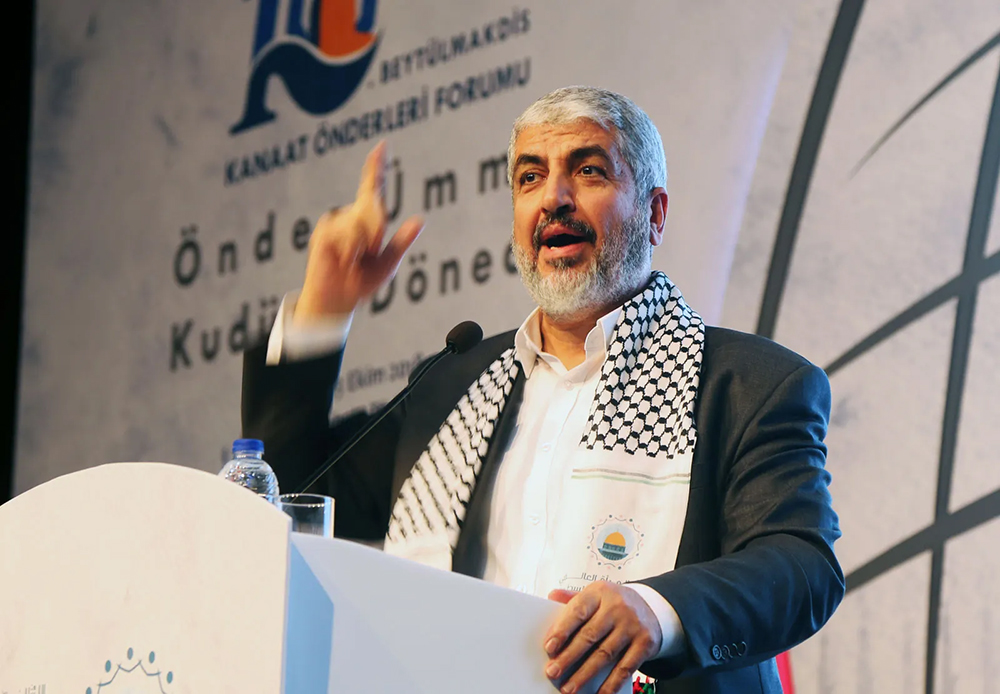
At a moment when international diplomacy is straining to sketch the outlines of a postwar order in Gaza, senior Hamas leader Khaled Mashaal used a high-profile platform in Doha to issue a categorical rejection of any disarmament and to revive the organization’s familiar vow to annihilate Israel. His remarks, delivered at the 17th Al Jazeera Forum in Qatar, reverberated across the Middle East and beyond, underscoring how distant the prospect of political compromise remains. The Jewish News Syndicate (JNS), which has closely followed the evolving contours of Washington’s Gaza framework and Hamas’s response to it, reported on Sunday that Mashaal’s intervention amounted to a frontal assault on the core premise of the U.S. peace initiative.
Mashaal’s speech unfolded against the backdrop of the second phase of President Trump’s proposed plan for Gaza, a phase that envisions the disarmament of Hamas and the deployment of an International Stabilization Force in the Strip. The American administration has framed this stage as indispensable to any credible transition toward reconstruction and governance in Gaza. Yet Mashaal, speaking with rhetorical intensity to an audience of journalists, analysts and activists, dismissed the very notion of disarmament as a mortal threat to the Palestinian cause.
According to the information provided in the JNS report, the Hamas leader portrayed calls for Hamas to lay down its weapons as a cynical stratagem designed to render Palestinians defenseless and vulnerable to what he described as Israel’s overwhelming military power.
“As long as our people are under occupation,” Mashaal declared, “talk of disarmament is an attempt to turn our people into victims, to make their elimination easier and to facilitate their destruction.” In the narrative he constructed, the armed capacity of Hamas was not merely a tactical instrument but an existential shield. The insistence on retaining weapons, he suggested, was indistinguishable from the right of an “occupied people” to resist. The JNS report noted that Mashaal went further still, insisting that any effort to hold Hamas accountable for the atrocities of October 7, 2023, amounted to an unjust attempt to single out “the resistance” for punishment.
The October 7 massacre, in which Hamas-led terrorists murdered some 1,200 people in southern Israel, wounded thousands and abducted 251 hostages, has become a watershed moment in the region’s modern history. International condemnation of the attacks was swift and unambiguous, and Israel’s ensuing military campaign in Gaza has reshaped the strategic and humanitarian landscape.
Yet Mashaal, far from expressing contrition, openly praised the operation, casting it as a turning point that had thrust the Palestinian issue back onto the center of the global stage. JNS reported that Mashaal framed the carnage as a necessary shock to what he depicted as an international order that had grown complacent about Palestinian suffering.
This rhetoric of vindication is emblematic of Hamas’s enduring worldview, in which spectacular violence is valorized as a catalyst for political relevance. Mashaal’s assertion that Israel constitutes an “existential threat” to the region further entrenched the organization’s maximalist posture. In his telling, Israel is not a neighboring state with which Palestinians must eventually negotiate a modus vivendi, but a malign force whose very existence imperils the region’s moral and political equilibrium. Such language leaves little room for the incremental compromises envisioned by diplomats seeking to stabilize Gaza.
Mashaal also addressed the U.S.-backed National Committee for the Administration of Gaza, a transitional Palestinian body intended to govern the Strip in the post-Hamas era. The initiative, which has been discussed in Washington and among regional partners, aims to create a technocratic framework that would exclude Hamas from direct authority while facilitating reconstruction and humanitarian relief. Yet Mashaal rejected the premise outright, denouncing what he termed “foreign rule” and “guardianship.”
As JNS reported, he warned against any arrangement that would, in his view, reimpose an external mandate on Gaza, invoking historical memories of colonial administration to frame contemporary international involvement as a form of neo-imperialism.
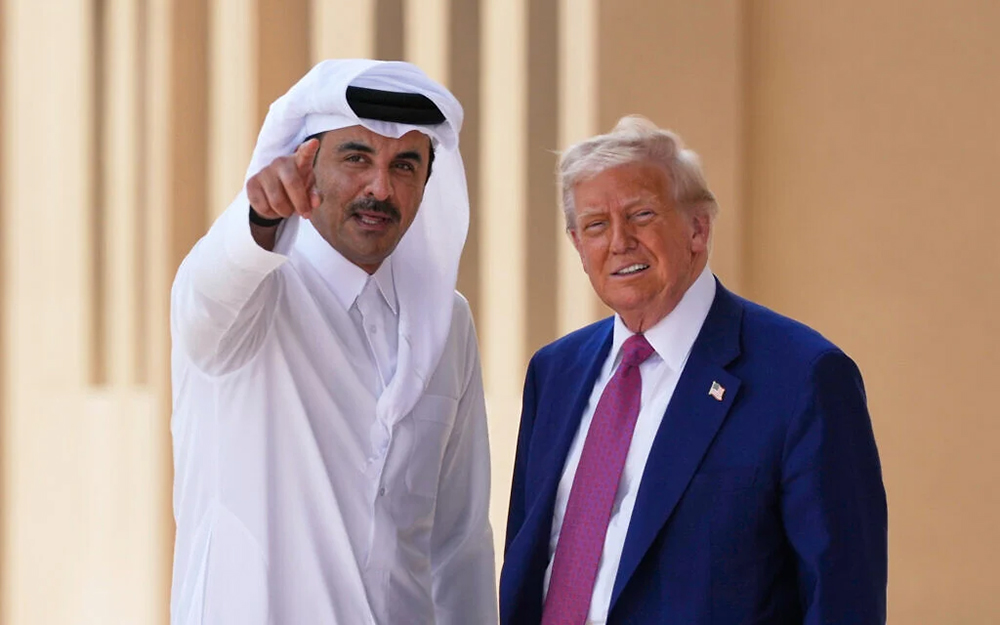
The setting of Mashaal’s remarks added another layer of complexity. Doha, which has long positioned itself as a mediator and host to various Palestinian factions, has also drawn criticism from Israel and some Western governments for providing a platform to Hamas leaders. Mashaal praised Qatar effusively, lauding the small Gulf state’s “honorable stance” on the Palestinian cause and accusing Israel of waging a campaign against Doha for this posture. The Israeli Foreign Ministry, for its part, condemned the Al Jazeera Forum as a “gathering of jihadists and their support staff,” a characterization that JNS reported reflects Jerusalem’s growing frustration with what it perceives as Qatar’s permissive environment for Hamas advocacy.
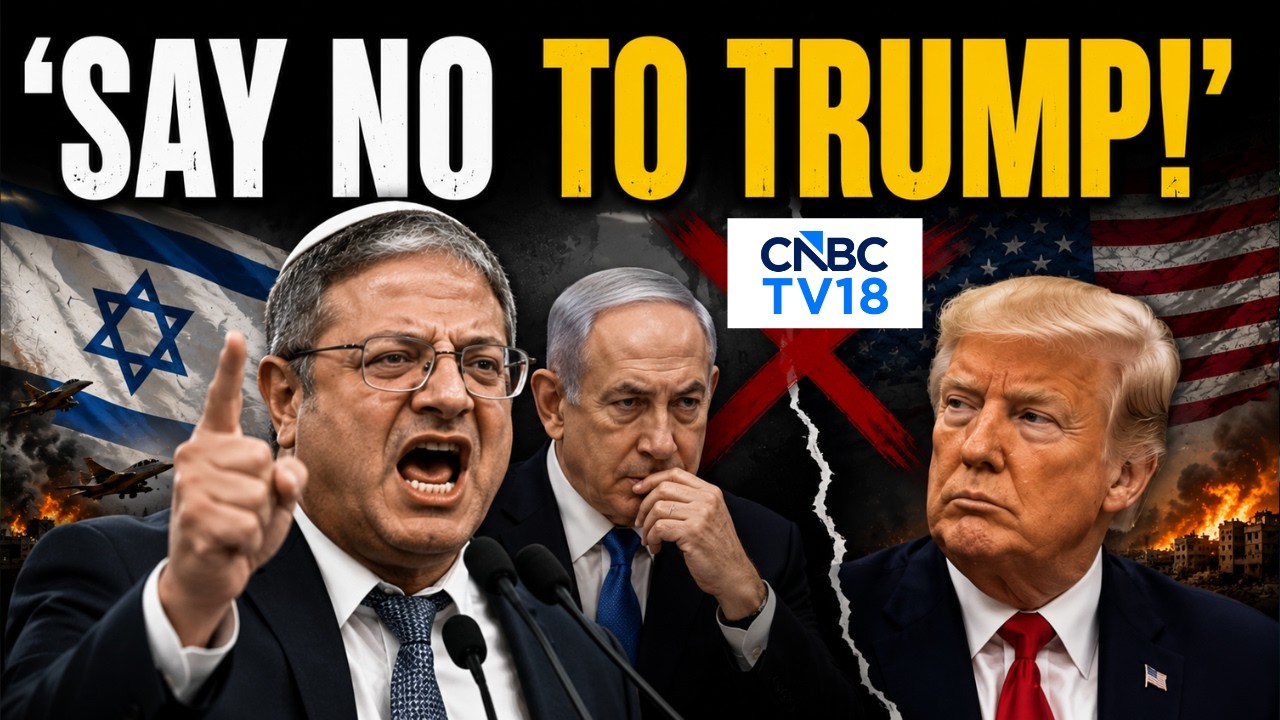
Washington’s response to Hamas’s defiance has been marked by a blend of diplomatic resolve and rhetorical menace. President Trump, speaking in Davos earlier this year, asserted that Hamas had “agreed to give up their weapons” as part of his broader 20-point plan, warning that failure to comply would result in the terrorists being “blown away very quickly.”
JNS has chronicled the tension between these confident assertions and the on-the-ground reality, where Hamas leaders, including Mashaal and senior figure Musa Abu Marzouk, have repeatedly denied that any such agreement exists. Abu Marzouk’s blunt statement to Al Jazeera that Hamas had “not for a single moment” discussed surrendering weapons further underscored the chasm between American expectations and Hamas’s public posture.
This dissonance raises profound questions about the feasibility of the U.S. plan in its current form. The success of any international stabilization effort hinges not only on the willingness of external actors to deploy resources and personnel, but also on the acquiescence of local power brokers. Mashaal’s speech suggested that Hamas views disarmament not as a step toward political normalization, but as an existential capitulation. In this light, the International Stabilization Force envisioned by Washington risks becoming a target rather than a guarantor of security.
The broader regional context further complicates the picture. Egypt, Qatar and Turkey have engaged in intermittent mediation efforts with Hamas, exploring phased disarmament proposals that would begin with heavier weapons and offer economic incentives and amnesty to fighters willing to lay down arms. Yet Israeli officials have expressed skepticism about such drawn-out processes, fearing that they would merely afford Hamas time to regroup. Mashaal’s categorical rejection of any disarmament, even under phased or incentivized frameworks, appears to vindicate those concerns.
The humanitarian catastrophe in Gaza looms over these diplomatic maneuvers. Nearly the entire population of the Strip has been displaced, and reconstruction will require billions of dollars and sustained international engagement. Israeli authorities insist that only life-saving aid be allowed into areas where Hamas remains active, a policy that reflects the enduring intertwining of humanitarian and security considerations. Mashaal’s insistence that Hamas’s armed wing remains the legitimate defender of Palestinian rights threatens to perpetuate this impasse, ensuring that reconstruction and demilitarization remain mutually hostage to one another.



