

























|
Getting your Trinity Audio player ready...
|
By: Fern Sidman
Rami Aman has spent much of his adult life doing what few in the Gaza Strip have dared to attempt: building bridges with Israelis and publicly challenging the iron grip of Hamas. For this, he paid a heavy personal price, repeatedly arrested, harassed, and finally imprisoned by the terror group for his commitment to dialogue and peace.
Now, in a searing new interview with the Geneva-based NGO UN Watch, Aman has leveled explosive accusations not only at Hamas but also at international institutions long thought to serve humanitarian or journalistic functions in Gaza. According to Aman, the United Nations Relief and Works Agency (UNRWA), the media giant Al Jazeera, and even the globally recognized Amnesty International have, knowingly or otherwise, acted as collaborators in Hamas’s suffocating control over Gaza’s society and aid lifelines.
In a report on Monday, World Israel News (WIN), which has consistently documented the infiltration of Gaza’s institutions by Hamas, highlighted Aman’s testimony as a crucial insider’s confirmation of long-standing Israeli warnings about UNRWA’s politicization and the role of international NGOs in enabling Hamas.
Rami Aman first came to prominence in the 2010s as a journalist-turned-activist determined to break the barriers of isolation between Gaza and Israel. His work culminated in April 2020, when he organized a Zoom video conference that connected ten Gazans with more than 300 Israelis. The subject was not borders, negotiations, or geopolitics, but rather something profoundly human: how to navigate the coronavirus pandemic together.
Within days, Hamas had arrested him. The “crime” of promoting normalization with Israelis — even through dialogue about public health — was sufficient grounds for imprisonment in a place where Hamas enforces a rigid narrative of resistance.
Aman remained in detention until late October 2020. But according to his interview with UN Watch, Hamas was not the only player in his arrest. He accused Amnesty International and its then-researcher in Gaza, Hind Khoudary, of actively pushing Hamas to take action against him.
“In 2020, we organized a big conference between 10 Gazans and 300 Israelis,” Aman recalled. “We were talking about coronavirus — not talking about one state or two states or talking about negotiation. We were talking about how we can save each other.”
Two days later, he said, Hind Khoudary — an Amnesty International researcher who later became a prominent Al Jazeera reporter — posted publicly on Facebook, tagging Hamas leaders and urging them to arrest him.
“I found a post started from a journalist working with Amnesty called Hind Khoudary, asking Hamas and mentioning Hamas leaders on Facebook, to arrest me. And that happened just a day later,” Aman recounted.
The revelation is stunning. As the WIN report noted, Amnesty International has frequently accused Israel of human rights violations, but Aman’s claims suggest that the organization was complicit in silencing Gazan voices calling for peace. “How come Amnesty is calling for my arrest?” Aman asked. “How come a journalist [is] asking the security to arrest me?”
For Aman, Amnesty’s betrayal was more painful than Hamas’s crackdown. Hamas is a terror group; its behavior is expected. But Amnesty, he said, “was supposed to defend me, not to collaborate with my jailers.”
If Amnesty played a role in his arrest, Aman charges that Al Jazeera has long played the role of Hamas’s megaphone.
“For many Palestinians, Al Jazeera is not trusted inside Gaza,” Aman said. “No Palestinian in Gaza watches Al Jazeera. No Palestinian in Gaza trusts in UNRWA. No Palestinian in Gaza trusts in all of these media.”
The reason, he explained, is simple: Hamas controls the message. “You will not find Al Jazeera cover any demonstration in Gaza calling for peace or calling to end the war. But you will find Al Jazeera cameras over the Israeli community, because they want the pressure comes from there, from Israel, not from Gaza.”
As the WIN report documented, Al Jazeera’s reporting consistently mirrors Hamas talking points, amplifying the group’s claims while downplaying internal dissent. Aman’s testimony affirms this, underscoring that the network ignores anti-Hamas protests inside Gaza altogether.
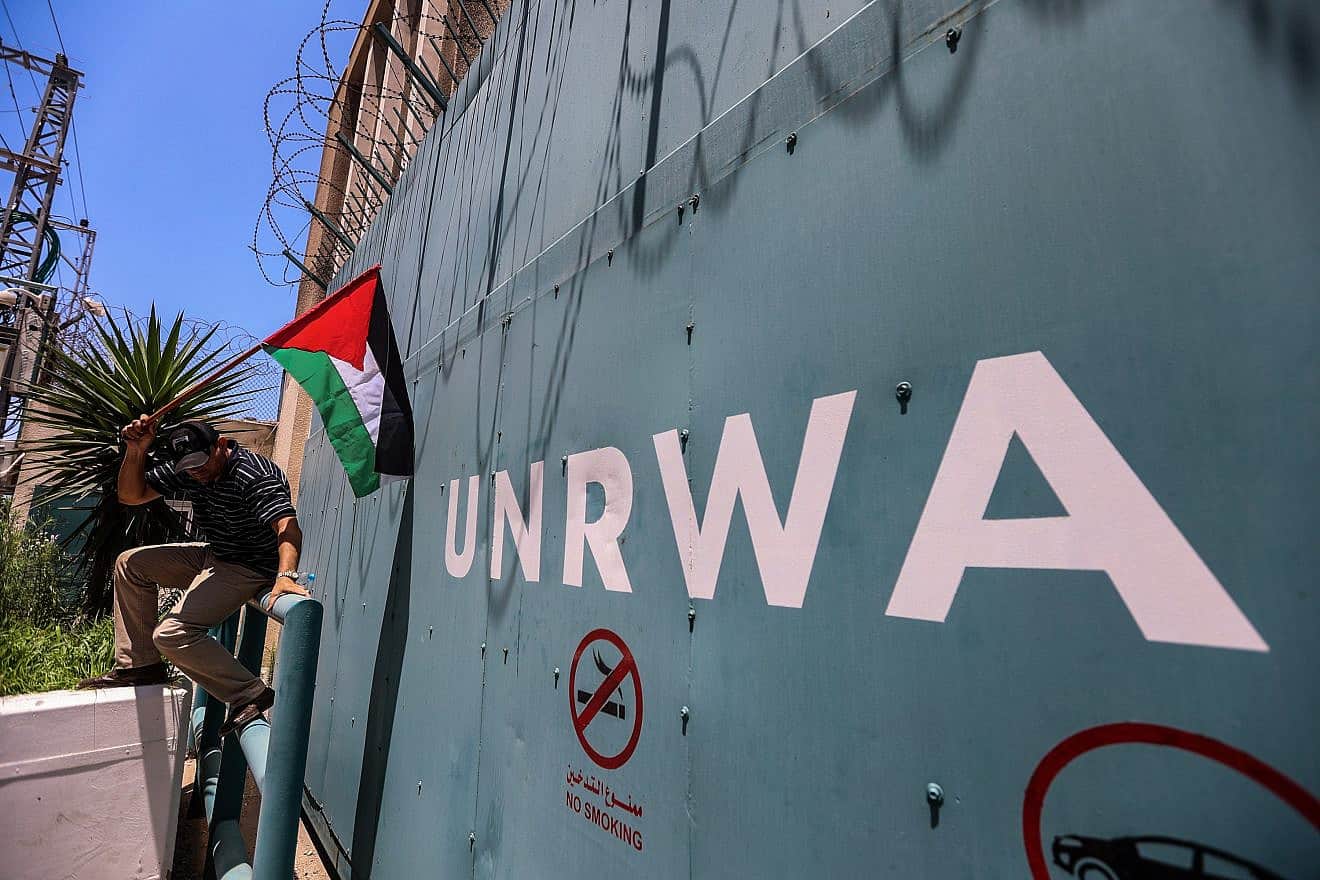
Perhaps Aman’s most explosive accusations are reserved for the United Nations Relief and Works Agency (UNRWA). For years, Israel and watchdog organizations have accused UNRWA of corruption, bias, and allowing Hamas to embed itself in its schools and infrastructure. Aman, speaking as a Gazan dissident, confirmed those suspicions.
“In 2007, Hamas started to control everything in Gaza,” he said. “The media, UNRWA, the private sector… UNRWA was one of these organizations that Hamas distributed their leaders inside and distributed their employees. Because in UNRWA, it’s like a very good salary for them, and it’s not for all people in Gaza.”
Aman further alleged that UNRWA has facilitated Hamas’s diversion of aid. He described how humanitarian supplies meant for the poor end up sold in Gaza’s markets and malls, despite clear labels marking them as “not for sale.” “Who started that? UNRWA and Hamas also,” he said.
World Israel News has often pointed to evidence of Hamas exploiting UNRWA aid shipments to bolster its rule and finance its military machine. Aman’s insider perspective confirms that this is not simply a matter of oversight but a systematic pattern of collusion.
Taken together, Aman’s accusations paint a damning portrait: international organizations that should be defending dissidents and providing neutral aid have, intentionally or otherwise, entrenched Hamas’s control.
For Aman, the silence of these organizations is not benign but complicit. Al Jazeera gives Hamas a global platform; Amnesty helps silence internal opposition; UNRWA provides salaries, jobs, and aid diversion.
The WIN report emphasized that Aman’s testimony corroborates years of Israeli concerns dismissed by the international community. The narrative long pushed by pro-Palestinian activists — that Israel is solely to blame for Gaza’s misery — ignores Hamas’s deliberate policy of repression and exploitation.
Beyond politics and propaganda lies the human toll. Aman recounted how Gazans themselves feel betrayed by the very institutions that claim to support them. “No Palestinian in Gaza trusts in UNRWA,” he said flatly. Aid is sold on the black market, protests are silenced, peace initiatives are criminalized.
In Aman’s telling, Hamas has created a system where dependence on aid is weaponized, international media is manipulated, and dissent is crushed not just by bullets but by the complicity of global NGOs.
World Israel News has consistently warned that the humanitarian façade in Gaza often masks a deeper reality: international aid sustaining Hamas’s war machine rather than alleviating the suffering of ordinary Gazans. Aman’s words give voice to that truth from within.
Aman remains defiant despite the risks. His vision of peace — of Gazans and Israelis speaking together about life, health, and humanity — is what led to his imprisonment. Yet he insists it is the only path forward.
His message is clear: Hamas does not speak for all Gazans, and international institutions that claim neutrality must be held accountable for aiding Hamas’s repression.
As WIN noted in its coverage of Aman’s testimony, the dissident’s courage highlights the urgent need for a re-evaluation of international engagement in Gaza. Rather than blindly funding UNRWA or relying on Amnesty’s reports, the world must listen to the voices of Gazans like Aman who risk everything to tell the truth.
Rami Aman’s testimony should not be dismissed as one man’s grievance. It is a window into how Hamas has entrenched its control not only through fear and violence but also through manipulation of international institutions.
World Israel News has chronicled how the U.N., human rights groups, and major media outlets have all too often become unwitting — or willing — instruments of Hamas’s agenda. Aman’s words confirm that reality from the ground up.
The dissident’s message is both a warning and a plea: the world must stop empowering Hamas through aid diversion, media complicity, and silence in the face of repression. Only then will true peace — the kind he once dared to imagine on a simple Zoom call — have a chance to take root.