



























|
Getting your Trinity Audio player ready...
|
By: Fern Sidman
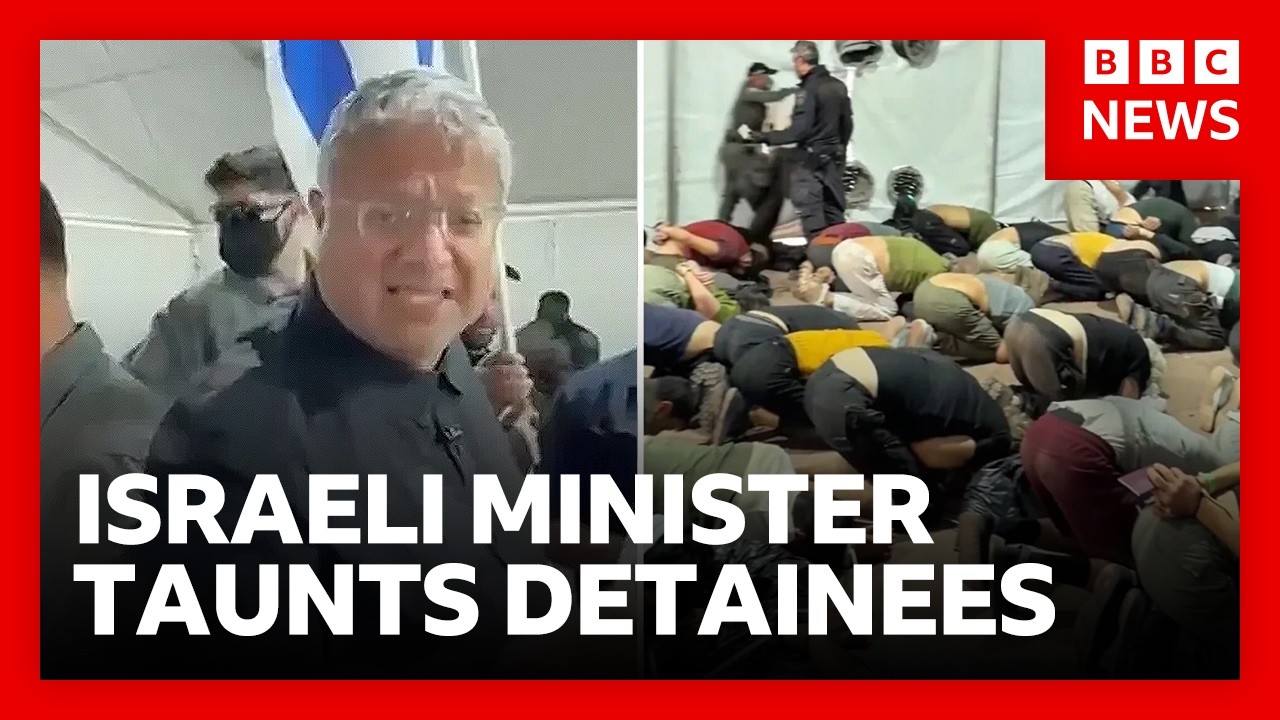
In a charged and highly consequential exchange that underscores growing fissures within Israel’s leadership, National Security Minister Itamar Ben-Gvir mounted a forceful defense of his conduct toward detained Gaza flotilla activists, using the Knesset podium to rebuke Foreign Minister Gideon Sa’ar and articulate a starkly divergent vision of national policy. As reported on Wednesday by World Israel News, the confrontation has laid bare a profound ideological divide between those prioritizing deterrence and those emphasizing diplomatic prudence in the face of mounting international scrutiny.
The controversy stems from the handling of pro-Hamas activists detained following a Gaza-bound flotilla, an episode that has already reverberated across diplomatic channels and drawn criticism from multiple quarters. At the center of the dispute is not merely the treatment of the detainees, but the broader question of how Israel should balance its security imperatives with the demands of international perception.
Addressing lawmakers, Ben-Gvir dismissed concerns over the global optics of the incident, framing the debate in uncompromising terms. “He’s worried about the images? I’m worried about the security of the citizens of Israel,” Ben-Gvir declared, in remarks cited by World Israel News. “He looks for international sympathy; we look for deterrence.” With these words, the minister crystallized a philosophy that places national defense above all other considerations, even at the cost of diplomatic friction.
Ben-Gvir’s rhetoric extended beyond immediate circumstances to encompass a broader critique of what he characterized as a historically insufficient posture toward Israel’s adversaries. “A state that doesn’t know how to set boundaries, enforce, and rule, invites its enemies to its doors and will end up sacrificing its security on the altar of failed diplomacy,” he asserted, according to World Israel News. The language, both evocative and uncompromising, reflects a worldview in which strength and clarity are seen as the only effective deterrents against hostile actors.
The minister’s remarks were delivered in direct response to a public rebuke from Foreign Minister Gideon Sa’ar, who had earlier condemned the handling of the flotilla detainees in unusually blunt terms. Sa’ar accused Ben-Gvir of inflicting tangible harm on Israel’s diplomatic standing, suggesting that the incident had undermined carefully cultivated international relationships.
“You knowingly caused harm to our state in this disgraceful display—and not for the first time,” Sa’ar said in a statement quoted by World Israel News. He further contended that Ben-Gvir’s actions had “undone tremendous, professional and successful efforts made by so many people—from IDF soldiers to Foreign Ministry staff and many others.” The criticism reflects a perspective that views international legitimacy and cooperation as indispensable components of national security.
The exchange quickly escalated, with Ben-Gvir responding in kind and accusing Sa’ar of capitulation in the face of external pressures. “Minister Sa’ar got scared, he just got scared, and he began preaching to me about damage done,” Ben-Gvir said, as reported by World Israel News. “The truth is the opposite: the one who did damage to the State of Israel is Gideon Sa’ar.”
This sharp personal rebuke underscores the intensity of the disagreement, which extends beyond policy differences into questions of leadership and resolve. Ben-Gvir went further still, charging that Sa’ar’s approach amounted to a form of weakness that emboldens Israel’s enemies. “His bowing his head to the terrorists is shameful,” he declared. “The days when our country was a punching bag are over.”
The language employed by Ben-Gvir reflects a broader shift within certain segments of Israeli political thought, emphasizing assertiveness and a rejection of what is perceived as excessive deference to international opinion. In this view, the primary responsibility of the state is to ensure the safety of its citizens through decisive action, even if such actions provoke criticism abroad.
Central to Ben-Gvir’s defense was his characterization of the flotilla participants themselves. He described them not as humanitarian actors but as individuals aligned with hostile objectives. According to the World Israel News report, the minister labeled the detainees “terror supporters and arch-terrorists,” asserting that they arrived “with no humanitarian aid, only with a clear statement to destroy the state and hurt soldiers.”
This framing is critical to understanding the minister’s position. By portraying the activists as active adversaries rather than neutral or benevolent actors, Ben-Gvir seeks to justify the stringent measures employed in their detention. In this narrative, the flotilla is not a humanitarian initiative but a strategic provocation designed to challenge Israel’s sovereignty and security.
The minister concluded his remarks by expressing unequivocal support for the law enforcement and correctional personnel involved in the operation. “I’m proud to be the minister who oversees the organizations that operated today,” he said, according to the World Israel News report. “Whoever wants to harm our fighters will be handcuffed and shackled.” This statement reinforces his broader message that the state must respond with firmness to any perceived threat.
The implications of this confrontation extend far beyond the immediate incident. As World Israel News has highlighted, the dispute reflects a deeper and more enduring tension within Israeli governance: the challenge of reconciling the demands of security with the realities of international diplomacy. While both Ben-Gvir and Sa’ar ostensibly share the same ultimate objective—the protection and prosperity of the State of Israel—their methods for achieving this goal diverge significantly.
Sa’ar’s position emphasizes the importance of maintaining Israel’s standing within the international community, recognizing that diplomatic alliances and global perceptions can have tangible impacts on national security. From this perspective, actions that generate negative publicity or alienate key partners may ultimately weaken Israel’s strategic position.
Ben-Gvir, by contrast, prioritizes immediate and unequivocal deterrence, arguing that any appearance of hesitation or compromise invites further aggression. In his view, the cost of diplomatic criticism is outweighed by the necessity of projecting strength and resolve.
This dichotomy is not new, but the intensity of the current exchange suggests that it is becoming increasingly pronounced. The flotilla incident has served as a catalyst, bringing underlying tensions to the surface and forcing a public reckoning with competing visions of national policy.
It is evident that the debate is unlikely to be resolved in the near term. The issues at stake—security, sovereignty, and international legitimacy—are among the most complex and consequential facing any nation, and particularly one operating in a region as volatile as the Middle East.
In the final analysis, the confrontation between Ben-Gvir and Sa’ar is emblematic of a broader struggle to define the contours of Israeli policy in an era of heightened uncertainty. It raises fundamental questions about how the state should navigate the delicate balance between strength and restraint, between immediate security needs and long-term diplomatic considerations.
For now, the immediate focus remains on the fallout from the flotilla incident and the broader implications for Israel’s domestic and international posture. Yet the underlying debate—over how best to safeguard the nation while preserving its global standing—will continue to shape Israeli policy for years to come.
As World Israel News has made clear, the stakes are exceptionally high, and the decisions made in this moment will resonate far beyond the confines of the Knesset chamber



