









|
Getting your Trinity Audio player ready...
|
At Tel Aviv’s Hostages Square, Witkoff and Kushner Lead Emotional Rally Celebrating Breakthrough Hostage Deal
By: Fern Sidman
In a night charged with emotion, symbolism, and political significance, U.S. Special Envoy Steve Witkoff stood before an estimated 100,000 people in Tel Aviv’s Hostages Square on Saturday to celebrate what he described as “a dream fulfilled”—a long-sought breakthrough in negotiations that is expected to bring home 48 hostages—both living and deceased—within the next 72 hours.
The rally, which a report on World Israel News described as one of the largest gatherings in Israel since the start of the war, reflected both relief and restrained sorrow—a nation standing together on the threshold of joy and mourning.
“I dreamed of this night,” Witkoff declared, his voice carrying over the sea of flags and flickering candles. “All of our hearts beating as one gathered here in Tel Aviv for peace, for unity, and for hope in this sacred place we call Hostages Square.”
For many in the crowd, his words resonated as both benediction and validation: the long vigil for the hostages, which has defined the square for months, may finally be nearing its end.
Standing beneath the spotlights beside Jared Kushner and Ivanka Trump, Witkoff addressed a visibly moved audience, his remarks punctuated by applause, tears, and the chanting of hostages’ names. According to the report at World Israel News, families of those still held captive sat in the front rows, joined by survivors from the October 7th massacre and relatives of fallen soldiers.
“You’ve shown the world that peace is not weakness,” Witkoff told them. “It is the highest form of strength. Through heartbreak and fear, you never let go of faith.”
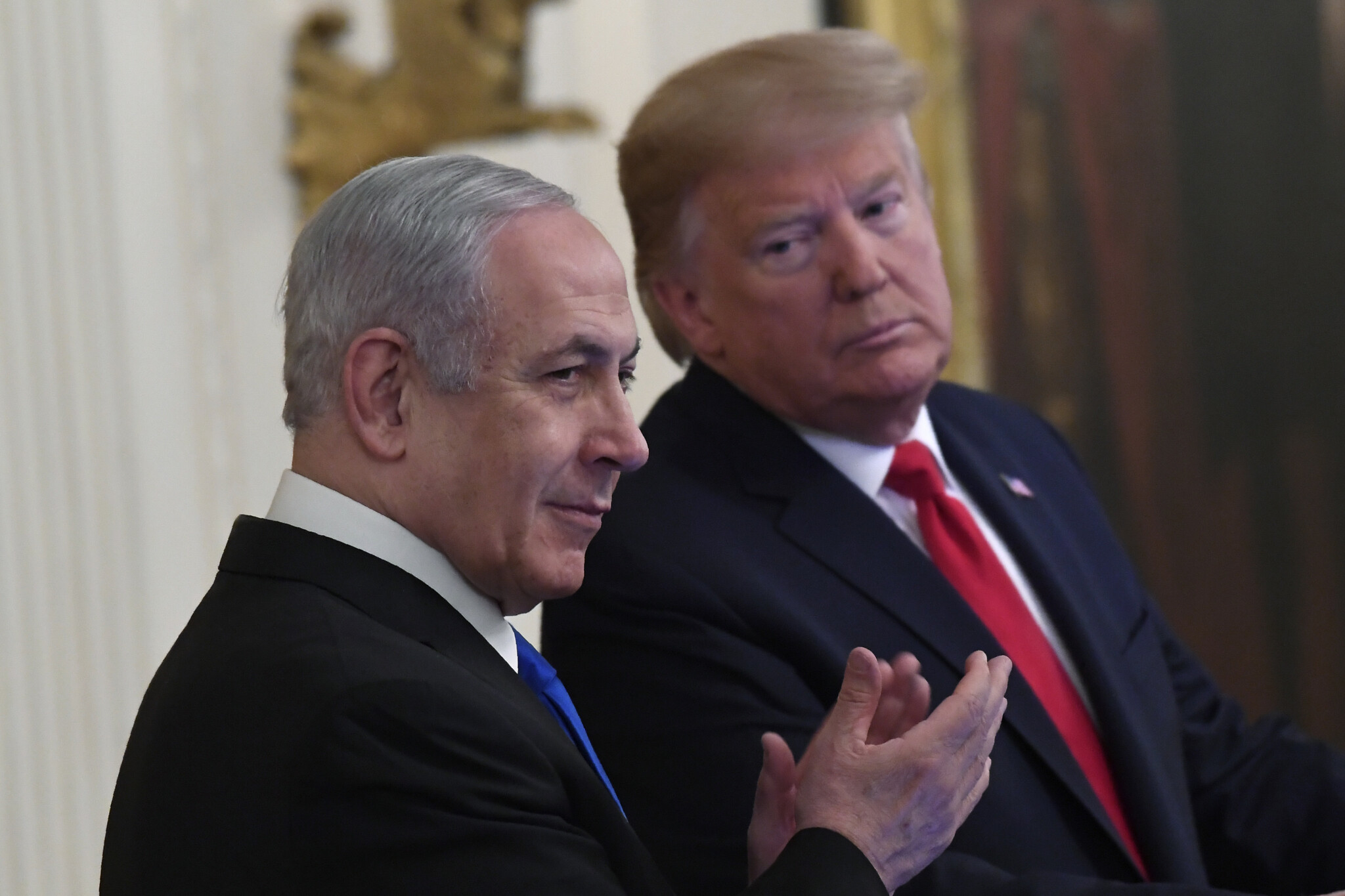
The American envoy, a close ally of both President Trump and Prime Minister Benjamin Netanyahu, has played a pivotal role in the months-long diplomatic campaign to secure the release of the remaining hostages held in Gaza.
While the precise details of the agreement remain closely guarded, the World Israel News report confirmed that it involves a multi-stage exchange, coordinated under a temporary ceasefire framework backed by both Washington and Jerusalem. The plan, sources say, was largely shaped through behind-the-scenes mediation between Witkoff, Kushner, and Israeli Strategic Affairs Minister Ron Dermer, who have served as Trump’s key interlocutors in the region.
If the night belonged to Israel, its central applause line belonged to Donald Trump.
“It was your belief,” Witkoff said, turning toward the cameras, “joined with the bold leadership of my friend and president of the United States, Donald J. Trump, that made this peace possible.”
The mention of Trump’s name sent ripples of cheers through the square, with chants of “Trump! Trump!” echoing from the crowd—a rare scene in Tel Aviv, a city more accustomed to political protests than pro-Trump celebrations.
As World Israel News reported, the president’s team has been intimately involved in the hostage negotiations for months. Trump’s envoys, led by Witkoff and Kushner, have shuttled between Washington, Cairo, and Jerusalem since August, helping to forge what one Israeli diplomat described as “the most complex and delicate operation since the Yom Kippur War.”
While Israeli officials have been careful not to disclose the full contours of the deal, insiders told World Israel News that it represents “a decisive diplomatic triumph,” combining humanitarian relief with strategic restraint. The plan reportedly includes the simultaneous release of Israeli hostages and the return of Palestinian detainees, under U.S.-supervised guarantees intended to prevent Hamas from regrouping militarily.
Perhaps the most striking element of Witkoff’s speech, as the World Israel News report observed, was its overtly spiritual tone.
He addressed the crowd not just as an emissary but as a man of faith, invoking divine providence and shared purpose. “Tonight, Jews, Christians, and Muslims are standing together,” he said, gesturing toward the interfaith delegations present at the event. “We are united by one shared prayer—for peace.”
The square, known to Israelis as Kikar HaHatufim, has become the emotional nucleus of the country’s trauma and resilience since October 7th. What began as a vigil for the abducted has transformed into a weekly pilgrimage—part protest, part prayer, and part communal therapy.
The World Israel News report noted that Saturday’s gathering was markedly different from previous rallies: celebratory yet subdued, hopeful yet cautious. Banners that once read “Bring Them Home Now” were joined by new ones proclaiming “Finally Coming Home.”
But the undercurrent of political discontent was unmistakable.
When Witkoff turned to thank Prime Minister Benjamin Netanyahu, the crowd’s reaction was immediate and unmistakably hostile. Boos echoed across the square, momentarily drowning out his words.
“Okay, okay, let me just finish my thought,” Witkoff said, pausing as he regained control of the audience. “I was in the trenches with the prime minister. Believe me, he was a very important part here.”
The envoy’s measured defense of Netanyahu—whom he credited, along with Ron Dermer, for “sacrificing so much for this country”—was met with mixed applause.
“They’ve given everything—their time, their energy, and their hearts,” Witkoff continued. “Their commitment to this country has never wavered, and it never will.”
According to the information provided in the World Israel News report, many in the audience viewed the evening as a turning point in Israel’s ongoing struggle to balance victory with grief.
For relatives of hostages who have already been confirmed dead, the deal represents not salvation but closure. For others, it is a lifeline after nearly two years of unbearable uncertainty.
One mother, identified by World Israel News as Yael Mizrachi, whose son was captured during the October 7th Hamas onslaught, told reporters: “If my boy is coming home—alive or not—I will thank God. But I will never forgive what brought us here.”
That sentiment—gratitude mingled with fury—seemed to hang in the air throughout the night.
As Witkoff’s speech ended, the giant screens behind him began projecting photographs of the hostages. The crowd fell into silence as the names scrolled upward—children, soldiers, elderly couples—each image illuminated against the night sky.
Many wept openly. Others simply stood with their heads bowed, their hands clasped.
The World Israel News report emphasized the unusual constellation of figures behind this agreement: a U.S. real estate developer turned envoy, a former White House adviser and son-in-law to the president, and Israel’s embattled leadership, navigating domestic turmoil while waging a complex war.
For Steve Witkoff, who lost his son in 2020 and has spoken publicly about the transformative impact of grief, the mission appears deeply personal. “I know what it means to lose,” he told the crowd, his voice breaking. “And I know what it means to never stop fighting for the living.”
Beside him, Jared Kushner and Ivanka Trump—both visibly emotional—embraced family members of hostages and joined the crowd in singing Hatikvah, Israel’s national anthem.
According to the report at World Israel News, the decision to hold the rally in Tel Aviv, rather than Jerusalem, was deliberate—meant to underscore national unity rather than political partisanship.
“Hostages Square is not about politics,” one organizer told the outlet. “It’s about life, memory, and the hope that someday we won’t need this square at all.”
The political reverberations of the deal—and of Saturday’s rally—are likely to extend well beyond Tel Aviv. World Israel News reported that Trump is expected to visit Israel in the coming days to meet with families of released hostages and deliver remarks before the Knesset, marking his first trip to the country since leaving office.
The visit, sources say, will serve both symbolic and strategic purposes: reaffirming U.S.-Israel solidarity under Trump’s renewed leadership and positioning the hostage release as a model of what the administration calls “peace through strength.”
For many Israelis, however, the night’s deeper meaning lay not in politics but in perseverance.
“This is a moment of both triumph and mourning,” said an attendee at the rally. “For some, the return of their loved ones marks the end of agony. For others, it marks the beginning of it. But for all, it marks the endurance of a people who refuse to give up on life.”
As the night drew to a close, Witkoff’s final words captured the delicate balance of exhaustion and hope that defines Israel’s mood.
“The president thanks you,” he said simply, his hand resting over his heart. “Thank you.”
The crowd responded with applause—sustained, resonant, cathartic.
Above Hostages Square, the sky glittered with drones spelling the word “Home.”
For the first time in nearly two years, it was not merely a plea, but a promise.