















|
Getting your Trinity Audio player ready...
|
By: Fern Sidman
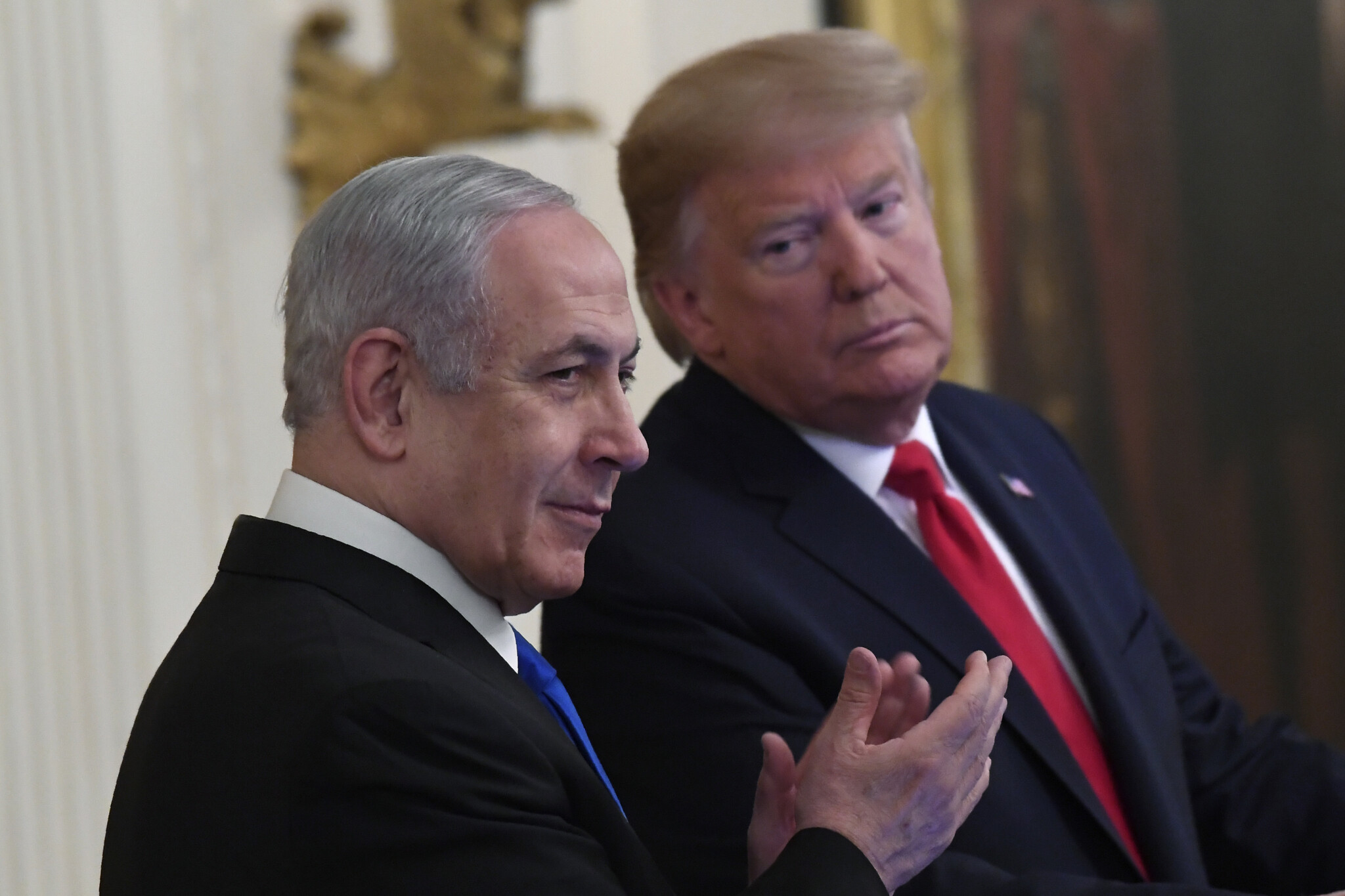
At a joint press conference on Thursday, President Donald Trump and UK Prime Minister Keir Starmer addressed one of the most contentious diplomatic issues of the current geopolitical moment: whether Britain will formally recognize a Palestinian state. The exchange, held against the backdrop of the ongoing war in Gaza and the still-unresolved plight of Israeli hostages, revealed both areas of agreement and a clear fissure between the two leaders.
As Israel National News (INN) reported on Thursday, the question of Palestinian statehood recognition arose during the press conference, prompting Prime Minister Starmer to outline his government’s approach. “We discussed this matter,” he said, emphasizing the need for a broader framework. “We agree on the need for peace and a roadmap, because the situation in Gaza is intolerable. The hostages have been held for a very long time, and they must be freed. We need assistance to enter Gaza quickly.”
Starmer went further, explaining that recognition must be viewed not in isolation but as part of what he described as an “overall package” that could transition the region “from the appalling situation that we’re in now, to the outcome of a safe and secure Israel and a viable Palestinian state.” His remarks reflect a position increasingly voiced across European capitals, where policymakers argue that the promise of eventual Palestinian statehood could reinvigorate diplomatic efforts for peace.
President Trump, however, struck a markedly different tone. He insisted that the immediate priority must be the release of Israeli hostages held by Hamas. “I want the hostages released now—right now,” Trump declared. “Not one, two, ‘We’ll give you three more tomorrow,’ like it’s been.”
According to the information provided in the Israel National News report, Trump highlighted his administration’s track record in securing hostage releases during his first term, recounting meetings with survivors who had endured Hamas captivity. “There was no humanity, anything,” he recalled asking them if their captors had shown any warmth. “And every one of them said, ‘Not even a little bit.’ It’s amazing. I always ask that question, and the answer always is: ‘Absolutely not.’ I’m shocked to hear it.”
The president’s remarks emphasized his broader insistence that the October 7th Hamas atrocities remain central to any diplomatic calculations. “We have to remember October 7th, one of the worst violent days in the history of the world,” he said, insisting that the brutality of Hamas cannot be overlooked or minimized in the pursuit of political arrangements.
While both leaders stressed their commitment to peace and security for Israel, Trump did not conceal his divergence with the UK prime minister. “I have a disagreement with the Prime Minister on that—one of our few disagreements,” Trump said, referring to the possibility of recognizing Palestinian statehood.
For Trump, the notion of granting recognition while Hamas remains in power is not only premature but dangerous. He emphasized that the conflict has spanned decades, not merely the past few years, and warned that any misstep in legitimizing Palestinian claims could embolden terror groups. “This isn’t something that started over the last year or two,” he said. “This has been for decades. But we want it to end; we have to have the hostages back immediately.”
The Israel National News report noted that Trump took particular issue with Hamas’s threats to use hostages as human shields against an Israeli ground assault. “That’s pretty brutal,” he said. “I haven’t heard that one in a long time.” The remark underscored his belief that negotiating with such actors undermines the very principle of human dignity.
Prime Minister Starmer’s comments reflected the delicate balance he must maintain domestically and internationally. Within the United Kingdom, the Labour government faces pressure from both left-wing activists who demand stronger solidarity with Palestinians and from centrists and Jewish communities who remain alarmed at the surge of antisemitic rhetoric that has accompanied pro-Hamas, pro-terror demonstrations across Britain.
By linking recognition to a broader “plan for peace,” Starmer appeared to signal that Britain’s decision would not be unilateral but contingent upon progress toward both Israeli security and Palestinian governance. “The question of recognition needs to be seen in that context,” he explained. In effect, Starmer presented recognition less as an immediate policy step than as a diplomatic incentive tied to the achievement of peace benchmarks.
Still, as the Israel National News report observed, even such conditional language diverges from Trump’s insistence on prioritizing the eradication of Hamas’s threat and the immediate return of hostages. The UK leader’s framing, while cautious, suggests openness to a path that Trump views as potentially perilous.
The backdrop of Gaza loomed heavily over the press conference. Starmer reiterated that the humanitarian situation there is “intolerable” and pressed the urgency of delivering aid into the enclave. Trump, while not dismissing the humanitarian concerns, argued that they cannot take precedence over ensuring the safety of Israeli citizens and recovering the hostages.
As the Israel National News report highlighted, Trump’s framing reflects his longstanding view that Israel’s security is paramount and non-negotiable. Starmer’s emphasis on humanitarian assistance, though widely welcomed in European circles, risks appearing to some as downplaying the brutal tactics of Hamas, including the calculated use of civilians as shields.
Analysts note that Starmer’s comments may be less about imminent recognition than about leveraging the prospect of recognition as a diplomatic tool. In recent months, voices within the European Union and at the United Nations have argued that dangling the promise of Palestinian statehood could pressure both sides to commit to negotiations.
However, as Israel National News has frequently pointed out, the flaw in such reasoning is that it risks rewarding Palestinian leadership factions that have consistently rejected peace offers, while simultaneously eroding Israel’s bargaining position. Trump’s open disagreement with Starmer suggests he sees precisely this danger: that recognition in advance of genuine reform or guarantees would embolden extremists rather than empower moderates.
For Trump, the specter of October 7 is not simply a tragic past event but a living reminder of what recognition without reform could enable. His insistence that “we have to remember October 7th” is as much a warning to allies as it is a vow to Israel. The day, which saw Hamas terrorists massacre more than 1,200 people in southern Israel, has become a touchstone in Trump’s public rhetoric.
As he reminded the press corps, the conflict is not an episodic flare-up but part of a decades-long struggle. His framing, repeatedly noted by Israel National News, positions the hostage crisis as the moral and strategic fulcrum of the entire situation.
The press conference ultimately revealed both unity and tension. Trump and Starmer agreed on the necessity of peace, the urgency of freeing hostages, and the goal of securing both Israel and Palestinians in the long term. Yet their disagreement over recognition exposed the fault lines between Washington’s hard-edged pragmatism under Trump and London’s more incremental, diplomatic framing under Starmer.
As the Israel National News report indicated, the divergence may foreshadow deeper debates in Western capitals over how best to balance humanitarian imperatives, diplomatic incentives, and unyielding support for Israel’s security. For Trump, the line is clear: hostages first, recognition later, if at all. For Starmer, recognition may yet be part of the solution—though only as one piece of a broader peace package.



