






























|
Getting your Trinity Audio player ready...
|
By: Marcy Gordon &
Mae Anderson
A former Facebook data scientist told Congress on Tuesday that the social network giant’s products harm children and fuel polarization in the U.S. while its executives refuse to change because they elevate profits over safety. And she laid responsibility with the company’s CEO Mark Zuckerberg, as was reported by the AP.
Frances Haugen testified to the Senate Commerce Subcommittee on Consumer Protection. Speaking confidently at a charged hearing, she accused the company of being aware of apparent harm to some teens from Instagram and being dishonest in its public fight against hate and misinformation.
“Facebook’s products harm children, stoke division and weaken our democracy,” Haugen said. “The company’s leadership knows how to make Facebook and Instagram safer but won’t make the necessary changes because they have put their astronomical profits before people.”

“Congressional action is needed,” she said. “They won’t solve this crisis without your help.”
AP reported that Haugen said the company has acknowledged publicly that integrity controls were crucially needed for its systems that stoke the engagement of users, but then it disabled some of those controls.
In dialogue with receptive senators of both parties, Haugen, who focused on algorithm products in her work at Facebook, explained the importance to the company of algorithms that govern what shows up on users’ news feeds, as was reported by the AP. She said a 2018 change to the content flow contributed to more divisiveness and ill will in a network ostensibly created to bring people closer together.
Despite the enmity that the new algorithms were feeding, she said Facebook found that they helped keep people coming back — a pattern that helped the social media giant sell more of the digital ads that generate most of its revenue, according to the AP report.
Senators agreed.
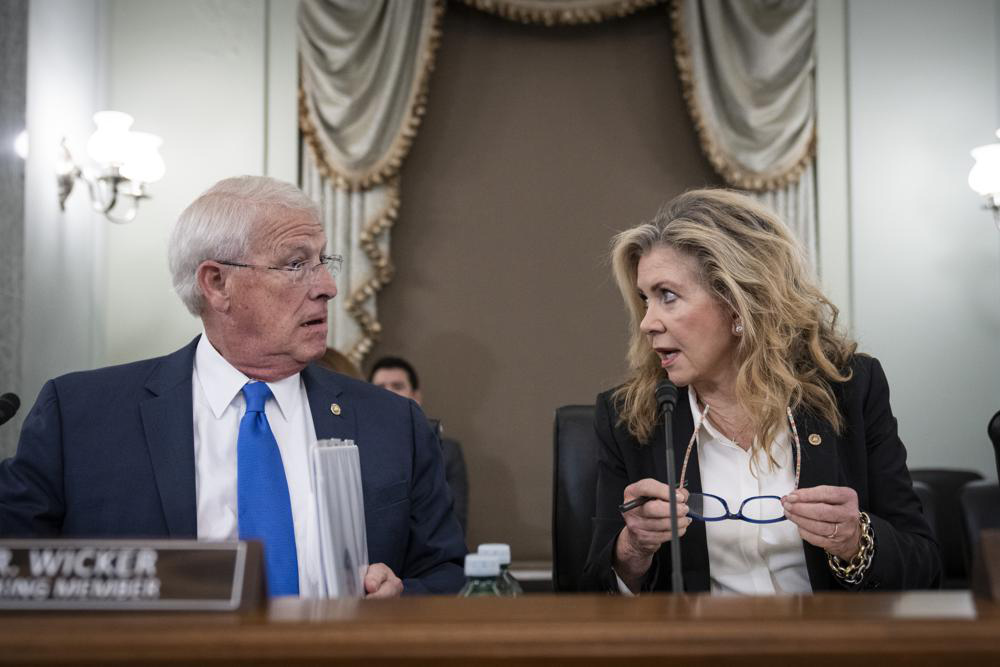
“It has profited off spreading misinformation and disinformation and sowing hate,” said Sen. Richard Blumenthal, D-Conn., the panel’s chairman. “Facebook’s answers to Facebook’s destructive impact always seems to be more Facebook, we need more Facebook — which means more pain, and more money for Facebook.”
Haugen said she believed Facebook didn’t set out to build a destructive platform. But “in the end, the buck stops with Mark,” she said referring to Zuckerberg, who controls more than 50% of Facebook’s voting shares. “There is no one currently holding Mark accountable but himself.”
AP reported that Haugen said she believed that Zuckerberg was familiar with some of the internal research showing concerns for potential negative impacts of Instagram.
The government needs to step in with stricter oversight of the company, Haugen said.
Like fellow tech giants Google, Amazon and Apple, Facebook has enjoyed minimal regulation. A number of bipartisan legislative proposals for the tech industry address data privacy, protection of young people and anti-competitive conduct. But getting new laws through Congress is a heavy slog. The Federal Trade Commission has adopted a stricter stance recently toward Facebook and other companies, as was reported by the AP.
The subcommittee is examining Facebook’s use of information from its own researchers on Instagram that could indicate potential harm for some of its young users, especially girls, while it publicly downplayed the negative impacts, as was reported by the AP. For some of the teens devoted to Facebook’s popular photo-sharing platform, the peer pressure generated by the visually focused Instagram led to mental health and body-image problems, and in some cases, eating disorders and suicidal thoughts, the research leaked by Haugen showed.
One internal study cited 13.5% of teen girls saying Instagram makes thoughts of suicide worse and 17% of teen girls saying it makes eating disorders worse, as was reported by the AP.
Because of the drive for user engagement, Haugen testified, “Facebook knows that they are leading young users to anorexia content. … It’s just like cigarettes. Teenagers don’t have any self-regulation. We need to protect the kids.”
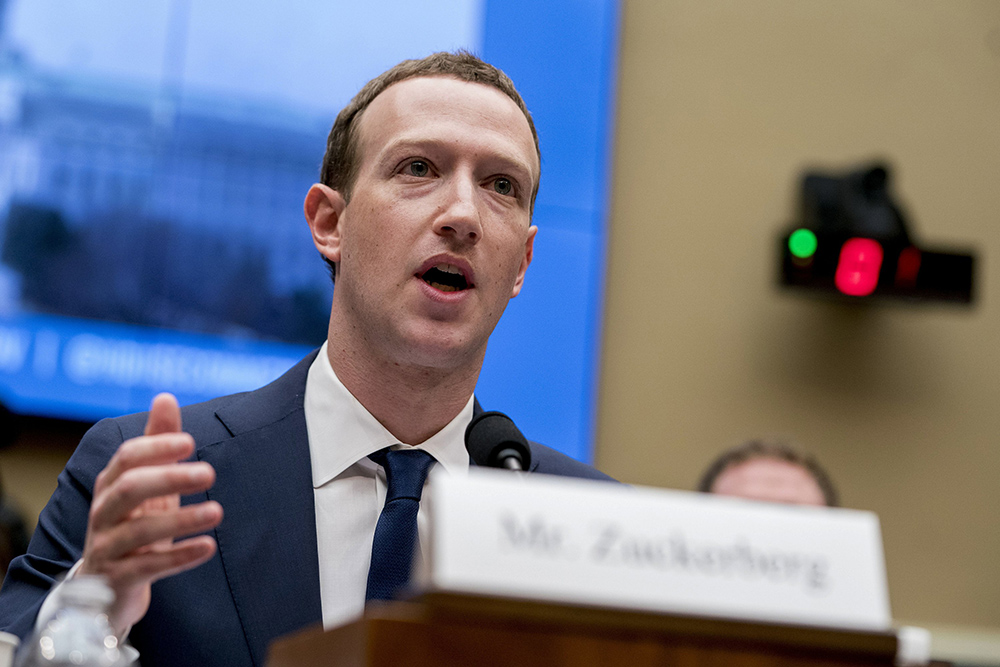
AP reported that Haugen has come forward with a wide-ranging condemnation of Facebook, buttressed with tens of thousands of pages of internal research documents she secretly copied before leaving her job in the company’s civic integrity unit. She also has filed complaints with federal authorities alleging that Facebook’s own research shows that it amplifies hate, misinformation and political unrest, but the company hides what it knows.
“The company intentionally hides vital information from the public, from the U.S. government and from governments around the world,” Haugen said, as was reported by the AP. “The documents I have provided to Congress prove that Facebook has repeatedly misled the public about what its own research reveals about the safety of children, the efficacy of its artificial intelligence systems and its role in spreading divisive and extreme messages.”
The former employee challenging the social network giant with 2.8 billion users worldwide and nearly $1 trillion in market value is a 37-year-old data expert from Iowa with a degree in computer engineering and a master’s degree in business from Harvard. AP reported that prior to being recruited by Facebook in 2019, she worked for 15 years at tech companies including Google, Pinterest and Yelp.
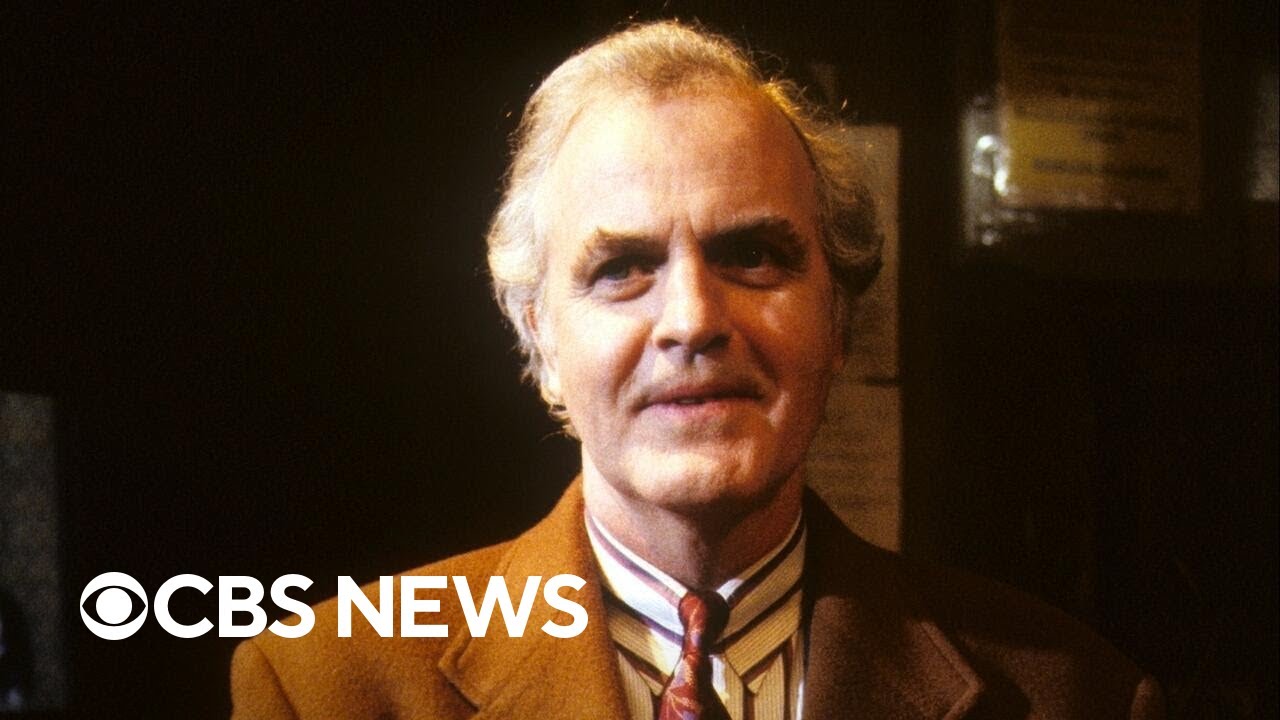
After recent reports in The Wall Street Journal based on documents she leaked to the newspaper raised a public outcry, Haugen revealed her identity in a CBS “60 Minutes” interview aired Sunday night.
As the public relations debacle over the Instagram research grew last week, Facebook put on hold its work on a kids’ version of Instagram, which the company says is meant mainly for tweens aged 10 to 12, as was reported by the AP.
Haugen said that Facebook prematurely turned off safeguards designed to thwart misinformation and incitement to violence after Joe Biden defeated Donald Trump last year, alleging that contributed to the deadly Jan. 6 assault on the U.S. Capitol.
AP reported that after the November election, Facebook dissolved the civic integrity unit where Haugen had been working. That, she says, was the moment she realized “I don’t trust that they’re willing to actually invest what needs to be invested to keep Facebook from being dangerous.”
Haugen says she told Facebook executives when they recruited her that she wanted to work in an area of the company that fights misinformation, because she had lost a friend to online conspiracy theories.
Facebook maintains that Haugen’s allegations are misleading and insists there is no evidence to support the premise that it is the primary cause of social polarization, as was reported by the AP.
“Even with the most sophisticated technology, which I believe we deploy, even with the tens of thousands of people that we employ to try and maintain safety and integrity on our platform, we’re never going to be absolutely on top of this 100% of the time,” Nick Clegg, Facebook’s vice president of policy and public affairs, said Sunday on CNN’s “Reliable Sources.”
That’s because of the “instantaneous and spontaneous form of communication” on Facebook, Clegg said, adding, “I think we do more than any reasonable person can expect to.”
In a related development, AP reported that the six-hour outage at Facebook, Instagram and Whatsapp on Monday was a headache for many casual users but far more serious for the millions of people worldwide who rely on the social media sites to run their businesses or communicate with relatives, fellow parents, teachers or neighbors.
When all three services went dark for a number of hours it was a stark reminder of the power and reach of Facebook, which owns the photo-sharing and messaging apps, as was reported by the AP.
Around the world, the loss of WhatsApp left many at a loss. AP reported that in Brazil, the messaging service is by far the most widely used app in the country, installed on 99% of all smartphones, according to tech pollster Mobile Time.
WhatsApp has become essential in Brazil to communicate between friends and families, but also at work — with many businesses using it to stay in touch with customers — at college, and for everyday transactions such as ordering food.
Offices, various services and even the courts had trouble making appointments, and phone lines became overwhelmed, as was reported by the AP.
Hundreds of thousands of Haitians in their homeland and abroad fretted over the WhatsApp outage.
Many of the country’s more than 11 million people depend it to alert one another about gang violence in a particular area or to talk to relatives in the U.S. about money transfers and other urgent issues, while Haitian migrants traveling to the U.S. rely on it to find each other or share key information such as safe places to sleep.
AP reported that Nelzy Mireille, a 35-year-old unemployed woman who depends on money sent from relatives abroad, said she stopped at a phone repair shop in the capital of Port-au-Prince because she thought her phone was malfunctioning.
“I was waiting on confirmation on a money transfer from my cousin,” she said. “I was so frustrated.”
“I was not able to hear from my love,” complained 28-year-old Wilkens Bourgogne, referring to his partner, who was in the neighboring Dominican Republic, buying affordable goods to bring back to Haiti.
The AP reported indicated that he said he was concerned about her safety since they were unable to communicate for seven hours as Haiti struggles with a spike in gang violence.
“Insecurity makes everyone worry,” he said.
Meanwhile, for small businesses, the Facebook and Instagram outages meant hundreds or thousands of dollars in lost revenue, as was noted in the AP report.
“Today’s outage brought our reliance on Facebook — and its properties like Whatsapp and Instagram — into sharp relief,” said Brooke Erin Duffy, professor of communications at Cornell University on Monday. She said there are sprawling categories of workers whose livelihoods depend on the platforms functioning.
She said the outage is just one example of how entrepreneurs and small businesses are vulnerable any time Facebook or others introduce a new feature or make some other change that affects the way the sites function, as was reported by the AP.
Sarah Murdoch runs a small Seattle-based travel company called Adventures with Sarah and relies on Facebook Live videos to promote her tours. She estimated the outage cost her thousands of dollars in bookings.
Speaking to the AP, Murdoch said, “I’ve tried other platforms because I am wary of Facebook, but none of them are as powerful for the type of content I create.” As for her losses, “it may only be a few people, but we are small enough that it hurts,” she said.
Heather Lynton has run a portrait studio in Lynton, Indiana, for 18 years. She takes photographs for schools and sports teams and makes yard signs with the photos. She has her own website but said parents and other customers most often try to reach her through social media.
She told the AP that she might have lost three or four bookings for photo sessions at $200 a client.
“A lot of people only have a specific window when they can do ordering and booking and things like that,” she said. “If they can’t get a direct answer, they go to someone else.”
(AP)



