












|
Getting your Trinity Audio player ready...
|
By: Fern Rosenblatt
With New York City continuing to grapple with an unprecedented surge in antisemitic incidents and escalating tensions surrounding pro-Israel events, prominent Jewish leaders and activists are intensifying calls for enhanced security ahead of the upcoming Israel Day Parade on Manhattan’s Fifth Avenue. At the center of the debate is a controversial proposal urging Governor Kathy Hochul to deploy the National Guard to supplement the New York Police Department and help safeguard tens of thousands of anticipated marchers and spectators expected to attend one of the city’s most historic Jewish communal celebrations.
According to a report on Sunday in The New York Post, Americans Against Antisemitism founder Dov Hikind has publicly appealed to the governor to authorize National Guard assistance for the annual event, arguing that the present climate of hostility toward Jews and supporters of Israel requires extraordinary preventative measures.
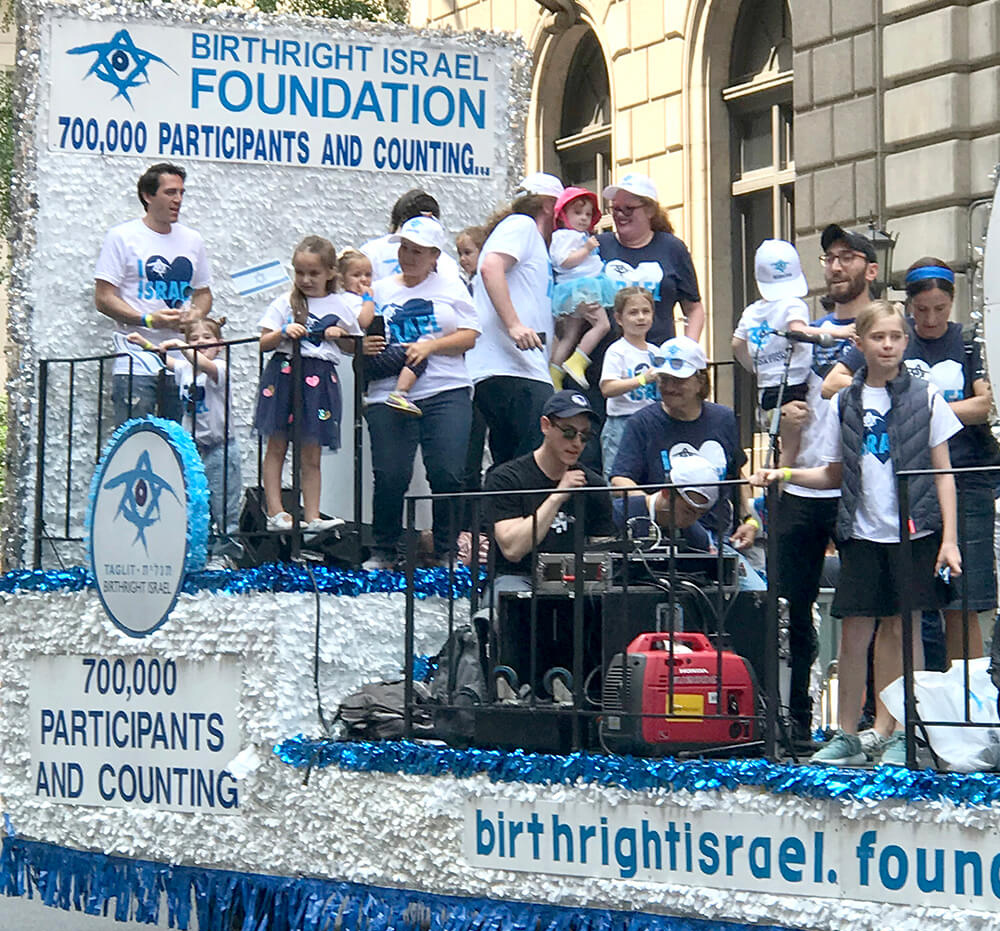
The parade, officially known as the Israel Day on Fifth celebration, is scheduled to take place on Sunday, May 31, stretching from 62nd Street to 74th Street along Fifth Avenue in Manhattan. The event, now entering its 61st year, has long served as one of the largest public demonstrations of solidarity with Israel and Jewish identity anywhere outside the Jewish state itself.
Yet this year’s march is unfolding against the backdrop of mounting concern within New York’s Jewish community over intensifying antisemitic rhetoric, increasingly confrontational anti-Israel demonstrations, and a growing sense of vulnerability among visibly Jewish New Yorkers.
“We need to make sure bad things don’t happen,” Hikind told The New York Post in a forceful plea for additional security measures.
The longtime Jewish activist and former New York State Assembly member, who represented heavily Orthodox Jewish neighborhoods in Brooklyn for decades, emphasized that while he strongly supports the NYPD, he believes the scale of current threats necessitates supplementary security personnel.
“We want to make sure there is safety for the Jewish community,” Hikind said. “I’m calling on Governor Hochul to bring in the National Guard to help the New York City Police Department.”
According to Hikind, the concern extends far beyond the immediate parade route itself. He warned that individuals visibly expressing support for Israel — including marchers carrying Israeli flags or wearing pro-Israel clothing — could potentially become targets not only during the parade but throughout the surrounding neighborhoods and transportation corridors.
The appeal comes at a moment when Jewish institutions and pro-Israel events across New York City have faced heightened security concerns following months of demonstrations, protests, and incidents targeting synagogues, Jewish community centers, and visibly Jewish neighborhoods.
The New York Post noted that Governor Hochul has previously authorized National Guard deployments at major transportation hubs throughout the state in response to crime concerns and public safety threats. National Guard personnel have periodically been stationed in subway systems, transit terminals, and key infrastructure locations as part of broader state security initiatives.
Nevertheless, despite Hikind’s urgent request, organizers of the parade itself have publicly expressed confidence in the NYPD’s ability to secure the event without National Guard involvement.
Mark Treyger, chief executive officer of the Jewish Community Relations Council of New York, which organizes and hosts the Israel Day Parade, stressed that extensive coordination has already been underway between law enforcement agencies and Jewish communal security organizations.
“I have full faith and confidence in the greatest police department in the world, the NYPD, under the exceptional leadership of Commissioner Jessica Tisch, who has done a tremendous job ensuring the safety and success of major events and parades across New York City, including the Israel Day on Fifth parade in recent years,” Treyger told The New York Post.
His remarks reflected a careful balancing act between acknowledging legitimate communal concerns while simultaneously projecting confidence in existing security preparations.
“Commissioner Tisch, the NYPD, and all of our law enforcement partners have left no stone unturned in preparing for next Sunday’s parade,” Treyger added.
The JCRC executive further emphasized that the Community Security Initiative — the joint security partnership between the Jewish Community Relations Council of New York and the UJA-Federation of New York — has been working “hand in hand” with law enforcement agencies to ensure comprehensive protection measures remain in place.
“New Yorkers should know that extensive planning, coordination, and security infrastructure are in place to ensure a safe, successful, and joyful celebration next Sunday,” Treyger stated.
“We look forward to proudly celebrating our Jewish identity, our connection to Israel, and our appreciation for living in the best city in the world, New York City,” he continued.
Still, Hikind remained adamant that additional reinforcements are justified given what he described as an increasingly volatile atmosphere surrounding Jewish and pro-Israel public events.
The activist specifically pointed to recent anti-Israel demonstrations outside synagogues and Jewish institutions, including protests targeting Park East Synagogue in Manhattan and Young Israel Senior Services in Midwood, Brooklyn — a neighborhood Hikind once represented in the State Assembly.
For many within New York’s Jewish community, such demonstrations have heightened fears that anti-Israel activism is increasingly crossing into outright intimidation and harassment of Jewish civilians.
Those concerns have intensified amid statistics showing that Jews — while representing a relatively small percentage of New York City’s overall population — continue to account for a disproportionately large share of reported hate crime victims.
The political context surrounding this year’s parade has also added another layer of controversy and tension.
Hikind noted that Mayor Zohran Mamdani, a fierce critic of Israeli government policies and a polarizing figure within many segments of the Jewish community, has chosen not to attend the event.
Mamdani’s decision to boycott the parade has generated sharp criticism from many Jewish leaders and pro-Israel advocates, who argue that participation in the annual march has historically transcended partisan politics and represented a longstanding civic tradition embraced by New York mayors across ideological lines.
Critics view the mayor’s absence as particularly significant given the current climate of rising antisemitism throughout the city.
The New York Post reported that despite declining to commit to National Guard deployment, Hochul’s office confirmed that the New York State Police will maintain a presence at the parade and continue coordinating closely with city law enforcement agencies.
“Keeping New Yorkers safe is Governor Hochul’s top priority — especially as communities gather for major celebrations,” a spokesperson for the governor said in a statement.
“At the Governor’s direction, State Police maintain an increased presence at large events throughout the state, and we will be closely coordinating with the NYPD and law enforcement partners in New York City to ensure the safety of all involved,” the statement continued.
The governor’s office also emphasized that National Guard personnel remain deployed at major transportation hubs, as well as key bridges and tunnels throughout New York City, as part of broader statewide security operations.
In addition, state authorities confirmed that law enforcement agencies continue actively monitoring social media platforms and intelligence channels for any credible threats connected to the parade or other public gatherings.
“State law enforcement continues to monitor social media activity and remain on high alert for any credible threats to New Yorkers’ safety,” Hochul’s office stated.
The heightened security posture surrounding the parade underscores the profound transformation in the atmosphere surrounding Jewish communal events in New York City over the past several years.
Once viewed primarily as celebratory cultural gatherings, many Jewish organizations now approach public events through the lens of counterterrorism, intelligence coordination, and physical security preparedness.
That shift has been accelerated dramatically since the October 7 Hamas attacks against Israel and the subsequent explosion of anti-Israel demonstrations throughout major American cities, including New York.
For many Jewish New Yorkers, the concerns are no longer theoretical.
Numerous Jewish institutions across the city have reported increased threats, vandalism incidents, hostile demonstrations, and online incitement directed toward Jewish communities and supporters of Israel.
As a result, organizers of this year’s Israel Day Parade appear determined to balance two competing imperatives simultaneously: projecting communal pride and resilience while ensuring that participants remain fully protected against potential threats.
The debate over whether the National Guard should be deployed ultimately reflects the depth of anxiety currently permeating large segments of New York’s Jewish population.
For Hikind and others advocating enhanced security measures, the issue is not political symbolism but preventative caution.
Their argument is rooted in the belief that in an era of rising extremism and escalating antisemitic hostility, underestimating potential dangers could carry catastrophic consequences.
Meanwhile, parade organizers and city officials continue emphasizing that extensive security protocols are already firmly in place and that law enforcement agencies remain fully prepared for the event.
As the parade approaches, New York City once again finds itself confronting a difficult and deeply emotional question: how to preserve the openness, visibility, and celebratory spirit of Jewish communal life while navigating an environment increasingly shaped by fear, polarization, and security concerns.
And as The New York Post report illustrated, that challenge now stands at the very center of one of New York’s most historic and symbolically significant public gatherings.



