























|
Getting your Trinity Audio player ready...
|
By: Rusty Brooks
The decline of Sara D. Roosevelt Park is an example of “many decades in the making of what happens to a park when you don’t provide the resources to operate and maintain it,” said Adam Ganser, the executive director of New Yorkers for Parks to The New York Times.
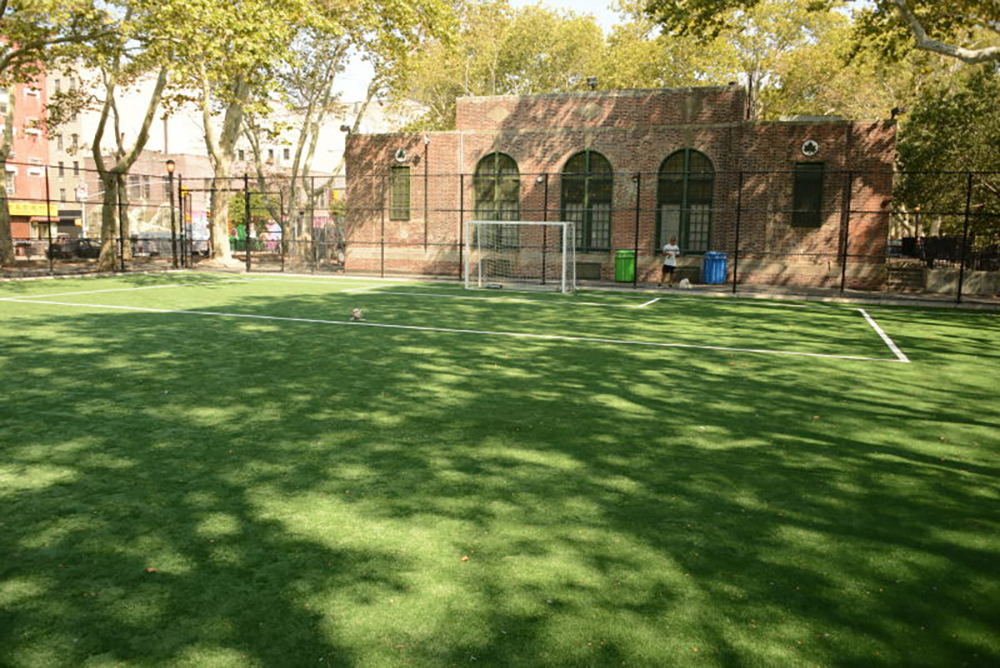
A small park on the border of the Lower East Side and Chinatown is being left to rot and be taken over by criminals and drug dealers after the main park building was shuttered and used for city park supply storage.
The space was once used as a kind of community clubhouse where people
Of all ages could play chess, take classes, play music, and visit their neighbors
“The kids really had nowhere to play,” said Bob Humber, 86, who was a youth worker in the 1970s. “They had no other place. They loved that place.”
The New York Times reports that, “These days, it looks like a fortress with partly boarded-up windows in a sketchy section of the park where people sell and use K2 and other illegal drugs. Behind the building, an outdoor area with benches and spray showers to cool off on summer days sits empty after being temporarily fenced off to deter illicit activities.”
City park officials told The New York Times that they had made $11.4 million in improvements to the park since 2005 and that they had plans for $21 million more in projects, including the reconstruction of a playground. They have worked with other city agencies to bring homeless-outreach teams and medical vans to the area. They said they would also look into concession possibilities.
“We are committed to improving and caring for the park’s many features and facilities for New Yorkers of all ages to enjoy,” said Megan Moriarty, a spokeswoman for the city’s Department of Parks and Recreation.
Reopening the park house would create “an anchor of safety” at a time when many residents are concerned about crime by introducing programming and bringing in more visitors, said K Webster, the president of the Sara D. Roosevelt Park Coalition. “The only way we know to make a park safe again is to actively use it,” Webster told The New York Times.
Originally planned to be low income housing, the park was built in 1934 as a means for the community to have a place to gather and for young people to have a place to play. The citizens living and working around the park are committed to making it a great space once again. The key that is getting back full use of the remaining buildings in order to make full use of the park and keep criminal activities out.
The NYT reported that a campaign led by New Yorkers has called for increasing parks funding to 1 percent of the city’s budget, or roughly $1 billion.



