



















|
Getting your Trinity Audio player ready...
|
By: Serach Nissim
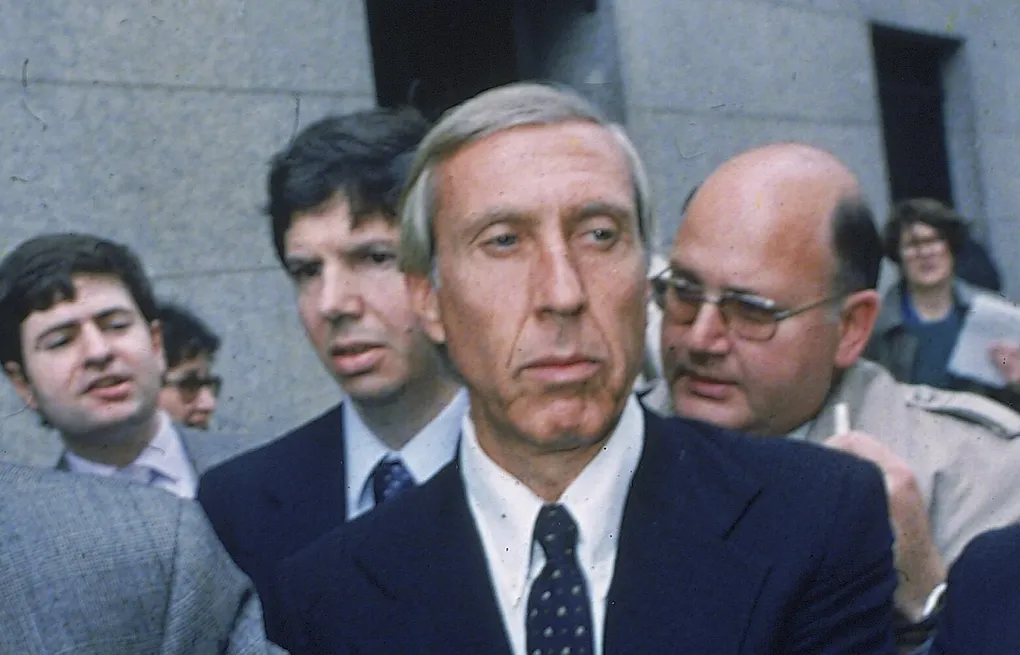
On Monday night, Ivan F. Boesky, the famed financier who was imprisoned in connection to a 1980s insider trading scandal, died in his home in the La Jolla neighborhood of San Diego, at age 87. As reported by the NY Times, his daughter Marianne Boesky announced that he died in his sleep. No cause of death was provided.
At the top of his game, in the mid-1980s, Boesky had boasted a net worth of $280 million (which translates into about $818 million in today’s currency), as well as a trading portfolio valued at $3 billion (roughly $8.7 billion today)— much of it financed with borrowed money. He and his wife had enjoyed a sprawling estate in Westchester County, N.Y., a Manhattan pied-à-terre, another retreat spot on the French Riviera, a lavish Paris apartment and a condo in Hawaii.
Limousines, private airplanes and helicopters were all part of the decor, and his name graced Forbes magazine’s list of the 400 richest Americans. It all went south though, when he was implicated in insider trading, having allegedly paid for stock tips which he bet on. Boesky cooperated with a young US attorney named Rudolph Giuliani in a bid for leniency, uncovering a huge scandal which included taking down other big fish in the industry. Boesky had worked undercover to secretly tape three conversations with Michael Milken, the so-called “junk bond king”.
In November 1986, Boesky pleaded guilty to insider trading, paying a $100 million penalty, a record at the time, and he spent 20 months in a minimum-security California prison beginning in March 1988.
As reported by the Associated Press, Boesky, the son of a Detroit delicatessen owner had worked his way up to formerly be considered one of the richest and most influential risk-takers on Wall Street. The son of Russian Jewish immigrants, he grew up with limited means and dropped out of college multiple times but ultimately received a degree in law. Boesky had married Seema Silberstein, the daughter of Ben Silberstein, a real estate developer and the owner of the Beverly Hills Hotel. In 1975, after struggling to meet success, Boesky had opened a small brokerage which eventually evolved into a sprawling group of investment companies boasting over 100 employees.
He worked grueling hours, often 18-hours a day, reportedly starting his days at 4:30 a.m. He also wrote a book in 1985 entitled, “Merger Mania.”
After Boesky’s arrest, accounts circulated that he had once addressed business students telling them, “Greed is all right, by the way.” “I think greed is healthy,” he reportedly said in a commencement speech in 1986 at the University of California, Berkeley. “You can be greedy and still feel good about yourself.” He had later said he did not remember having said it. The line was immortalized by Michael Douglas in the 1987 Oscar-winning Oliver Stone film “Wall Street”, in which he played the part of Gordon Gekko, a fictional character inspired by Boesky. “The point is, ladies and gentlemen, that greed, for lack of a better word, is good,” Douglas tells the shareholders of Teldar Paper, in the movie. “Greed is right. Greed works. Greed clarifies, cuts through, and captures the essence of the evolutionary spirit.”
Boesky was an active philanthropist and donated $20 million to endow a library at the Jewish Theological Seminary, which was later renamed.



