









|
Getting your Trinity Audio player ready...
|
Federal Charges Loom for Violent Anti-Israel Protesters at Brooklyn Synagogue, DOJ Signals
By; Fern Sidman
In the aftermath of a volatile and deeply unsettling confrontation outside a synagogue in Brooklyn’s Midwood neighborhood, the United States Department of Justice has signaled its readiness to pursue federal charges against individuals involved in the unrest, marking a significant escalation in the legal and political ramifications of an incident that has already ignited widespread concern within New York’s Jewish community. As detailed by The New York Post in a report on Tuesday, the events of this past Monday evening have reverberated far beyond the immediate scene, prompting scrutiny not only of those directly involved in the violence but also of broader law enforcement strategies and political leadership in the city.
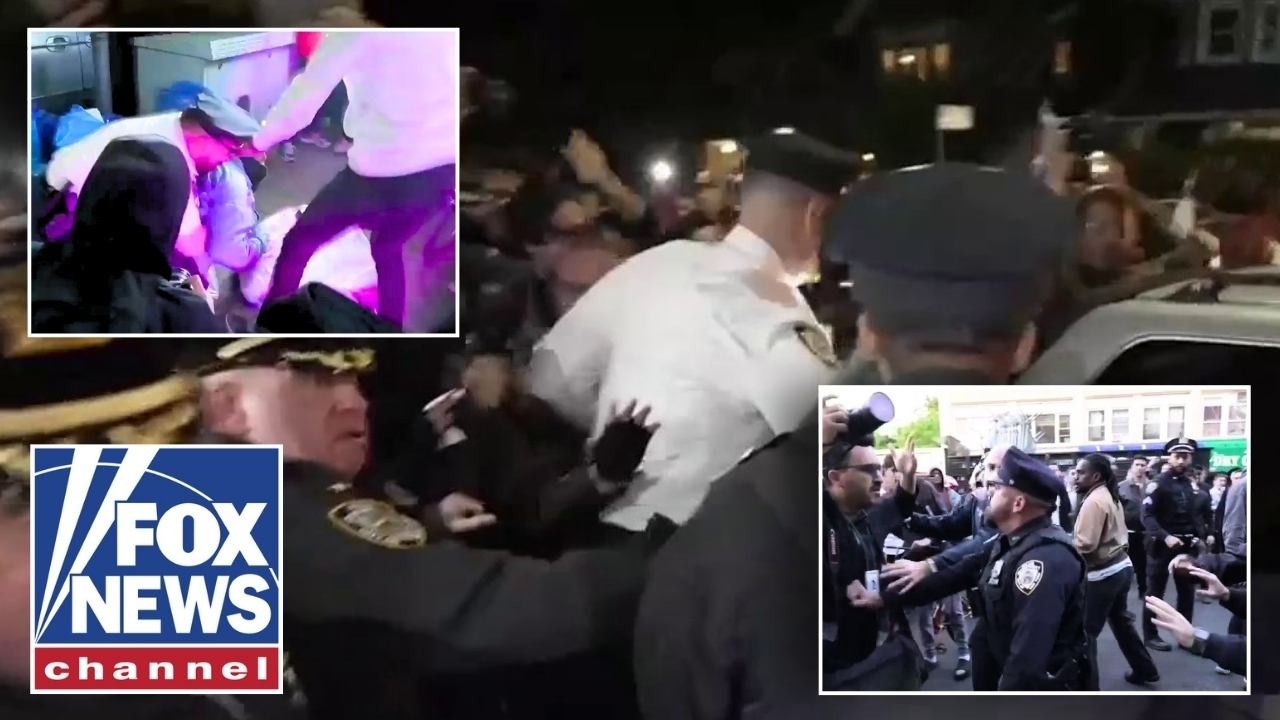
The confrontation unfolded outside the Young Israel Senior Services of Midwood, where an event promoting real estate opportunities in Israel and in Judea and Samaria had drawn both attendees and demonstrators. According to the information provided in The New York Post report, tensions rapidly escalated as anti-Israel protesters gathered in significant numbers, with at least one individual reportedly displaying a Hezbollah flag—a symbol widely associated with a designated terrorist organization. The presence of such imagery, coupled with incendiary rhetoric and aggressive behavior, contributed to an atmosphere that many witnesses described as combustible from the outset.
The situation soon devolved into physical altercations. Video footage circulated widely on social media, and subsequently cited by The New York Post, captured disturbing scenes of violence. In one instance, a Jewish woman was seen having her hair forcibly yanked by members of the crowd. In another, a masked individual directed a strobing light into the eyes of a young Orthodox boy near the Avenue H subway station, an act that observers characterized as both dangerous and deeply troubling. These incidents have since become emblematic of the broader anxieties surrounding public safety and the protection of vulnerable communities.
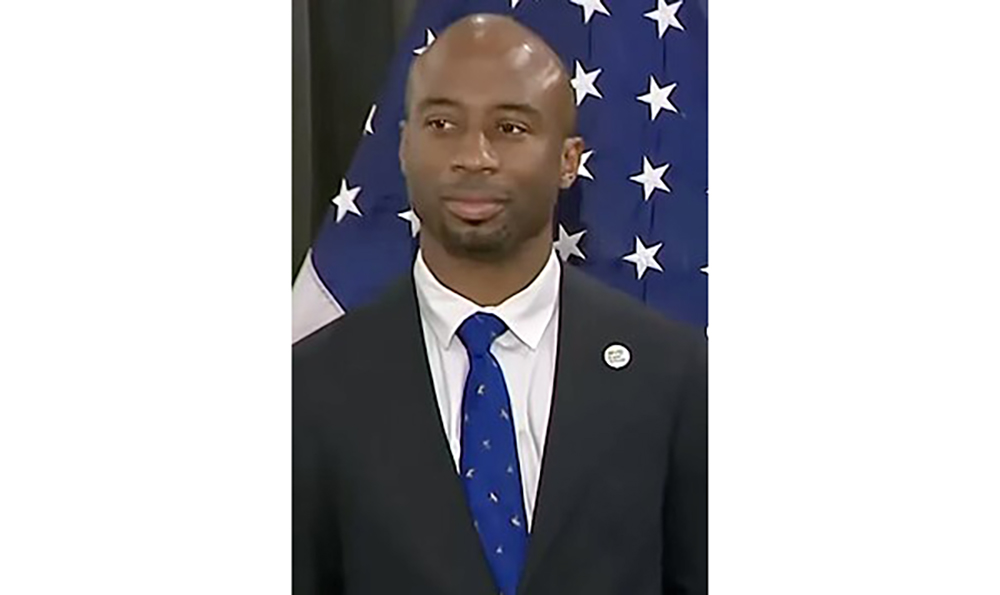
Federal authorities moved swiftly to indicate their interest in the case. Harmeet Dhillon, assistant United States Attorney for civil rights, confirmed the Justice Department’s involvement in a statement posted on social media and later cited by The New York Post. “We are aware of this situation last night and are working with our colleagues in NYC to collect evidence and analyze potential charges,” Dhillon wrote, signaling that the federal government is actively assessing whether civil rights violations or other federal offenses may have occurred.
The prospect of federal charges introduces a new dimension to the legal landscape, one that underscores the gravity with which authorities are treating the incident. While local law enforcement has already made arrests, the involvement of the Justice Department suggests that the conduct observed may transcend the boundaries of ordinary criminal behavior, potentially implicating statutes designed to protect individuals from targeted violence and intimidation based on identity or belief.
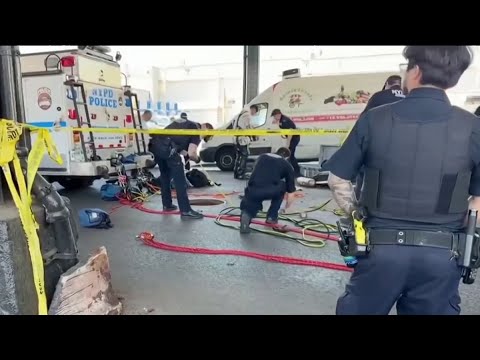
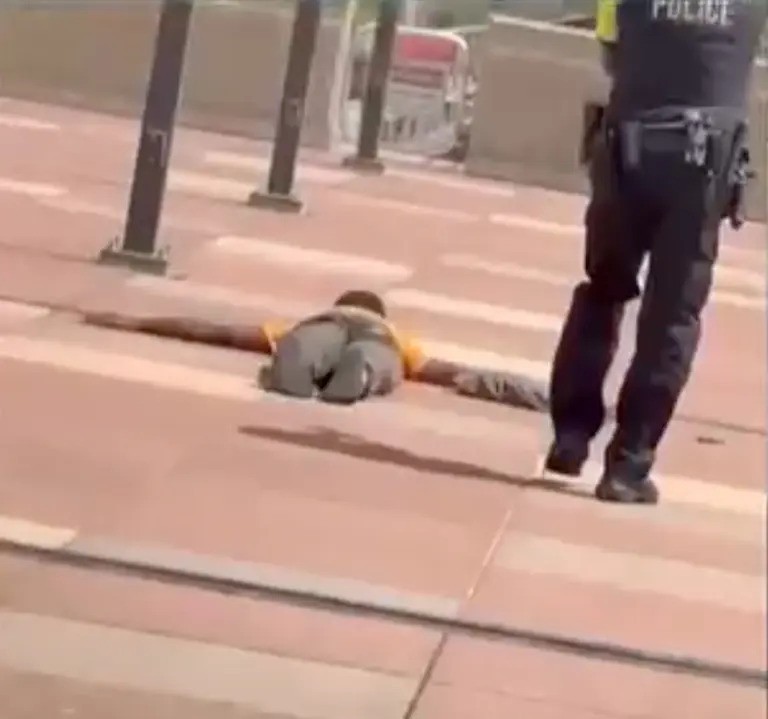
According to The New York Post, four individuals were taken into custody during the melee. Among them were two minors, both aged 17, whose identities have not been publicly disclosed. The other two individuals were identified as Dariel Ali, 30, and Mohamed Asbas, 36. Ali faces charges of assault and weapons possession, while Asbas has been charged with disorderly conduct and obstructing governmental administration.
The Post further reported that Ali has a documented history of prior arrests, including four previous encounters with law enforcement. Notably, three of those cases have been sealed, though they reportedly include allegations of threatening behavior during a demonstration in 2021. This background has raised additional concerns about the recurrence of violence in protest settings and the challenges of addressing individuals with a history of disruptive conduct.
While the arrests have provided some measure of accountability, they have not quelled criticism from community leaders and elected officials, many of whom have expressed dissatisfaction with the NYPD’s handling of the situation. Central to this criticism is the absence of the department’s Strategic Response Group, an elite unit specifically trained to manage large-scale protests, civil disturbances, and other high-risk scenarios.
Brooklyn State Assemblyman Kalman Yeger, quoted in The New York Post, did not mince words in his assessment. “It’s the only way — it has to be from the mayor,” he said, referring to the decision not to deploy the Strategic Response Group. Yeger further suggested that Police Commissioner Jessica Tisch would not have independently authorized such a course of action, implying that the decision may have been influenced by higher levels of political leadership.
Brooklyn City Councilwoman Inna Vernikov echoed these concerns, stating that she had been informed that the Strategic Response Group had been ordered to stand down during the unrest. “That’s what they’re for,” Vernikov asserted, as reported by The New York Post. “SRG are the only ones trained to deal with these protests.” Her remarks reflect a broader sentiment among critics who believe that the absence of the specialized unit may have contributed to the escalation of violence.
The controversy has inevitably drawn attention to Mayor Zohran Mamdani, whose prior statements regarding the Strategic Response Group have become a focal point of debate. As The New York Post report noted, Mamdani had pledged in 2024—prior to his election—to disband the unit, which he characterized as emblematic of an overly aggressive approach to policing. Critics now argue that this stance may have influenced operational decisions, though direct evidence of such influence remains a matter of dispute.
In response to the mounting criticism, an NYPD spokesperson provided a detailed account of the department’s actions on the night in question. According to The New York Post report, approximately 400 officers were deployed to the scene, a figure that underscores the scale of the response. The spokesperson emphasized that the Strategic Response Group is primarily designed for situations involving mass arrests, noting that only four individuals were ultimately taken into custody.
The department also sought to distance the mayor from operational decisions, asserting that Mamdani was not involved in determining the tactical approach. Furthermore, the NYPD representative indicated that the department had received commendations from certain members of the local Jewish community, suggesting that perceptions of the response may vary among stakeholders.
Police Commissioner Jessica Tisch addressed the broader challenges of managing such demonstrations during a public appearance at the ABNY Power Breakfast in Manhattan. As quoted by The New York Post, Tisch emphasized the delicate balance that law enforcement must maintain. “Our responsibility has remained the same: To protect the First Amendment right to free speech, including speech that many people may find offensive or deeply uncomfortable,” she said.
This statement encapsulates the fundamental tension at the heart of the issue. On one hand, the right to protest is a cornerstone of democratic society, enshrined in the Constitution and fiercely protected by courts and law enforcement agencies alike. On the other, the line between protected expression and unlawful conduct can become perilously thin, particularly in emotionally charged contexts where rhetoric and actions may incite or escalate into violence.
For the Jewish community in Midwood and beyond, the events of that evening have reinforced a sense of vulnerability that has been steadily growing in recent years. The incidents described by The New York Post—hair-pulling, targeted harassment, and the use of disorienting lights against a child—are not merely isolated acts of aggression; they are manifestations of a broader pattern of Jew hatred that demands urgent and sustained attention.
The involvement of federal authorities may offer a measure of reassurance, signaling that the highest levels of government are prepared to intervene when local incidents carry national implications. At the same time, it raises important questions about the thresholds for federal action and the criteria by which such decisions are made.
As investigations continue and the possibility of additional charges looms, the incident stands as a stark reminder of the challenges facing a city grappling with escalating antisemitism as well as complex social, political, and security dynamics. The interplay between local governance, law enforcement strategy, and federal oversight will likely remain a subject of intense scrutiny in the weeks and months ahead.
In the final analysis, the events in Midwood represent more than a single night of unrest; they reflect a broader struggle to reconcile the principles of free expression with the imperative of public safety and communal harmony. The outcome of this case may well set important precedents for how similar incidents are addressed in the future, both in New York City and across the nation.




1 Comment
Neal
May 14, 2026This might be the only way to counter these kinds of protests. See what is legal and do what is legal before a Mosque. If it is good for one side, it is good for the other side too.