












|
Getting your Trinity Audio player ready...
|
By: Tzirel Rosenblatt
On the eve of Yom Kippur, former New York Governor Andrew Cuomo released a video message that marked a striking departure from his past public posture: an unqualified apology to the city’s Jewish community. Acknowledging what he called “deep mistakes” in his handling of COVID-19 restrictions, Cuomo sought forgiveness from a community whose trust he now urgently needs as he campaigns for mayor of New York City.
Finally Andrew Cuomo is saying what we were waiting for. A real apology. Thank you. pic.twitter.com/6chc9Bc6nq
— David Shor (@DYShor) October 1, 2025
According to a report on Wednesday at VIN News, the video, timed for Erev Yom Kippur, was both personal and political. It offered contrition for policies and rhetoric during the pandemic that disproportionately affected Orthodox neighborhoods, particularly in Brooklyn and Queens. “I failed to fully understand the impact of my actions on your communities, and for that, I am truly sorry,” Cuomo declared, his tone uncharacteristically subdued.
For the first time since the pandemic, Cuomo explicitly admitted that his administration’s policies had unfairly singled out Jewish neighborhoods, creating wounds that linger to this day. His acknowledgment represents a rare reversal for a politician long known for his unyielding style.
As VIN News frequently reported during the height of the pandemic, tensions between the Cuomo administration and Orthodox Jewish communities ran high. In fall 2020, with COVID-19 surges concentrated in Borough Park, Williamsburg, Kew Gardens, and other heavily Jewish areas, Cuomo imposed strict lockdowns that shuttered synagogues, yeshivas, and businesses during peak holiday seasons.
Those policies, though defended by the administration as necessary public health measures, were widely perceived as discriminatory. Jewish leaders accused Cuomo of using inflammatory rhetoric, with one particularly contentious press conference in October 2020 citing Orthodox gatherings as examples of “superspreaders.”
At the time, VIN News chronicled the community’s outrage, with rabbis and activists decrying what they saw as scapegoating. Some drew comparisons to historic restrictions on Jewish worship, saying Cuomo’s measures struck at the core of religious freedom. Lawsuits were filed, and images of NYPD officers dispersing prayer gatherings or closing schools hardened resentment.
Cuomo, in his Yom Kippur address, revisited those flashpoints directly. “I should have taken more time to sit with community leaders, to understand the sacred rhythms of Jewish life, and to work with you rather than against you,” he said. “Instead, I spoke in ways that caused pain. That was my failure.”
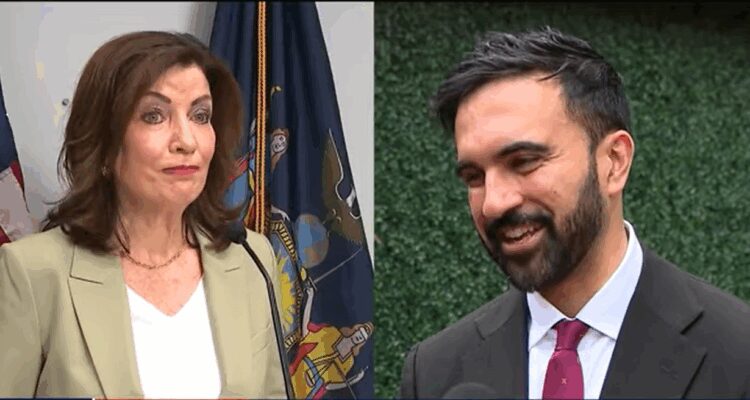
The apology arrives at a critical juncture in Cuomo’s political journey. With Mayor Eric Adams having withdrawn from the mayoral race under pressure, Cuomo has reemerged as a leading candidate, running as an independent after losing the Democratic primary to Assemblyman Zohran Mamdani.
According to the information provided in the VIN News report, Jewish organizations have become pivotal players in the new campaign landscape. Crown Heights United PAC, a group deeply anchored in the Chabad-Lubavitch community, formally endorsed Cuomo earlier this week, praising his stance against rising antisemitism. Their statement acknowledged the lingering wounds from the pandemic but embraced Cuomo’s candidacy as the best hope to counter extremism and virulent anti-Semitism in the city.
The timing of Cuomo’s apology—delivered on the holiest day of the Jewish calendar, when reflection and repentance are paramount—was not lost on observers. Analysts note that while the gesture carries clear political benefits, its spiritual resonance may help bridge a chasm that has defined his relationship with Jewish New Yorkers since 2020.
Cuomo’s Yom Kippur statement comes amid a cascade of endorsements from Jewish groups across the five boroughs. As VIN News reported, Crown Heights United PAC was quickly followed by statements of support from elements of the Sephardic Community Federation, the Queens Jewish Alliance, and local shul associations in Staten Island and the Bronx.
The endorsements explicitly cited concerns about Mamdani’s record on Israel and antisemitism. His refusal to condemn the phrase “globalize the intifada” and his vow to arrest Prime Minister Benjamin Netanyahu should he visit New York have alarmed Jewish leaders.
Against that backdrop, Cuomo’s words of contrition appear designed not only to heal past divisions but also to underscore the stark contrast between his record and Mamdani’s rhetoric. While critics may view the apology as opportunistic, the broadening coalition of Jewish support suggests that many are willing to accept it as genuine.
For many in the Orthodox community, the wounds of the pandemic remain fresh. Parents recall children barred from classrooms during Simchat Torah, worshippers dispersed on Yom Kippur itself, and small businesses shuttered during crucial seasons. VIN News highlighted these experiences at the time, describing how daily life in Borough Park and Crown Heights was upended in ways residents felt were uniquely punitive.
Cuomo’s apology, therefore, was not simply about words but about acknowledging lived realities. “I know that saying ‘I’m sorry’ cannot erase the pain,” he said. “But it is a step toward rebuilding trust. Yom Kippur is about reflection, humility, and atonement. I stand before you humbled, seeking forgiveness.”
The invocation of Yom Kippur—when Jews around the world recite the Vidui confession and reflect on sins both personal and communal—lent the address an unusual moral weight. Some rabbis praised Cuomo for aligning his apology with the holiday’s themes. Others remained skeptical, questioning why it took four years and a mayoral campaign for him to confront the issue.
The political stakes are high. According to polling reported by VIN News, Cuomo’s independent candidacy has surged into contention against Mamdani, with Jewish voters seen as a critical swing bloc. In communities like Crown Heights, Flatbush, and Kew Gardens Hills, turnout rates often exceed city averages, giving Jewish neighborhoods disproportionate influence in tight races.
For Cuomo, the path forward requires not only repairing old rifts but also convincing voters that his administration would represent a bulwark against rising antisemitism and civic instability. “We cannot allow extremism to divide this city further,” he said in his address. “New York must remain a beacon for all people, and that begins with standing shoulder to shoulder with our Jewish brothers and sisters.”
His message echoed the endorsements of Jewish organizations, which framed Cuomo as a figure of stability at a time of uncertainty. The report at VIN News noted that Crown Heights United PAC’s letter emphasized the need for a mayor “who understands the threats our community faces and has the strength to stand against them.”
Whether Cuomo’s Yom Kippur apology resonates long-term remains uncertain. For some Jewish New Yorkers, the memory of pandemic-era restrictions will not fade easily. Yet for others, his willingness to confront past errors—and to do so at a spiritually meaningful moment—may represent a turning point.
As the VIN News report observed, the intersection of repentance and political ambition is not without tension. But for Cuomo, the apology is both a moral act and a calculated gamble: a bid to transform past alienation into renewed trust, and to harness that trust into electoral support.
In the end, the former governor’s contrition underscores the central role of Jewish communities in New York’s political life. Their endorsement—or rejection—could decide the city’s next mayor. And for Cuomo, Yom Kippur offered not just a moment of atonement, but the possibility of political redemption.