





















|
Getting your Trinity Audio player ready...
|
By: Gary Tilzer
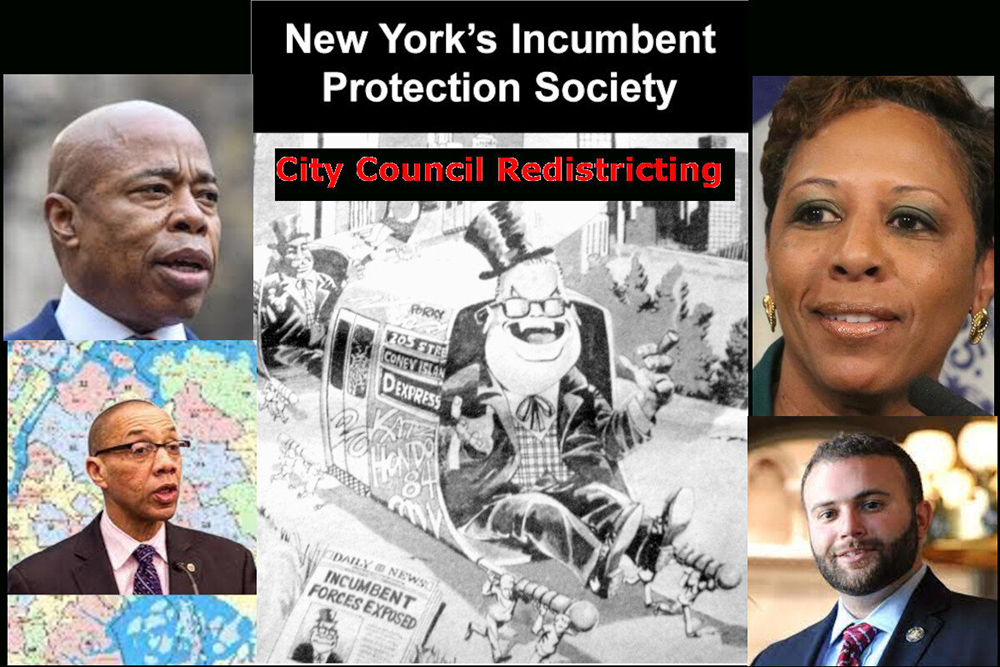
While the elected City Council Members have been paid off by the Council Redistricting Commission with the districts that they already won and will easily win again, the public gets more of the same of a failed broken City Council that ignores their needs to be safe, have affordable housing, and fix the bad schools not with more money or smaller class sizes but with better teachers to improve the math and reading abilities of the City’s students. The Council that voted to cut over a billion dollars from the NYPD budget has done nothing to stop the crime wave that is causing harm and fear to every New Yorker and is destroying the City’s economy. The City’s economy is not recovering as fast as in other cities, its unemployment rate is more than double the national average. New Yorkers continue to move out because of crime and the feeling that nobody is in control. Businesses like Right Aid on the Upper East side closed because of continued looting, and the mentally ill homeless continue to prey on the innocent on the city streets and subways.
Andrew Fine Twitter @AFineBlogger “I can’t recall a @NYCCouncil ever that has been this pro-criminal and this out of touch with your everyday New Yorkers.”
Continued low voting causes NYC elections to be controlled by incumbency, lobbyists, and big money from both the clients of lobbyists and the emerging progressive interlocking PACs and nonprofits pouring money into left-wing campaigns. The five Republican members of the City Council make deals with the Mayor and the Council Speaker, then act as a political party with a platform that opposes the democratic policies of City Hall. The Republican Council Members are so good at this role that unlike the Democrats in Albany, GOP council members’ districts were protected by the Mayor and Council Speaker who control redistricting. The reform movement that used to fight the big money in campaigns and pay-to-play lobbyists who doubled as political consultants is long gone. With single-digit turnouts, New Yorkers are disgusted with high crime and failed governmental services. It is clear that when 90% of the voters stay home, they have given up on the election system which exists to represent and protect their interests.
The victory of the four State Senators: Brisport, Rivera, Gonzalez, and Jackson in the August primary, who blocked any changes to the bail law despite polls showing that over 75% of New Yorkers want to change the bail law to reduce crime, is strong evidence that the voters who want safe streets and subways, have disconnected themselves from NYC’s election system. All Walcott’s Redistricting Committee did was assure that incumbents get reelected and the same special interests robber barons that run the Council now will continue to be the pay-to-play political bosses after redistricting. Walcott poured oil on a city already burning down.
It is time for Walcott and other city leaders to adopt Mayor Wagner’s and Lindsay’s strategy to decentralize the city’s government and to empower the public’s ability to make government function better. Only by decentralization, restoring power to the city’s neighborhoods and its residents, can New Yorkers regain their ability to pressure their elected officials to fix the broken government. Until we decentralize NY’s political system, the UFT political machine has more influence over elected officials than the parents. Developers and city contractors, with their pay-to-play lobbyists who double as campaign consultants, will continue owning the elected officials. Nonprofits who wasted billions of the taxpayers’ money, while their highly paid board members fund elected officials’ reelection campaigns, are not going to give up their power and control over elected officials without a fight. The lobbyists, unions, and special interests who control the Council and the election system, even blocked the Constitutional Convention in 2017, when changes to the structure of the city government, including decentralization could have been made.
If you believe that the City Council defunding the police caused the current crime wave, then Walcott did a terrible job. If you believe the Council caused an increase in homelessness by not building enough affordable housing, then Walcott did a terrible job. If you believe that the Council’s high spending and taxing are driving the city into a recession, then Walcott did a terrible job. Walcott’s incumbent protection redistricting plan hurt you. If these failures of the City Council do not make you believe that those Council incumbents protected by Walcott don’t belong in office, the fact that Council members who voted for school budget cuts because of lower enrollment are now against them after a call from the United Federation of Teachers (UFT) or those groups that speak for them should arouse your concern. The UFT puppets on the City Council have joined in, demanding that Adams “immediately restores” some $415 million for the school budget. Those who want more money have not said one word about the quality of education. Albany has never connected the school’s budget of 32 billion, the largest budget in the nation, to math or reading results; if they did, there would be more Charter Schools. The NYC Department of Education spends $30,469 per student. In comparison, Charter Schools’ per-student funding for FY 2019-20 comes in at $16,343 per student. According to numerous studies on Charter Schools, Charter students get a better education than those attending public schools.
With the End of the Federal Stimulus Money and Increased Pension Costs, The Days of Wine and Roses are Over
With returns on the pension funds way down, the city will have to kick in more from its operating budget to cover benefits for current and future retired workers — $4 billion more than planned from next year through 2026. Adams by asking for 3% budget cuts for City agencies to see the coming recession, the ideological clueless City Council has no idea that their ability to throw money everywhere is about to end. Many economists believe that the city’s near bankruptcy in the ’70s was caused by the elected officials not understanding that the money supply was endless. This year Mailer and Breslin believed that decentralizing city government into self-ruling neighborhood municipalities would offer creative solutions to long-term problems and enable the public, by making local government and elections simpler, enabling the public to choose politicians who would listen to them and serve their needs. NYC’s budget is 101 billion, and Bloomberg’s 2014 budget was 68 billion.
The failure of the newspaper business, the dumbing down of TV journalism into press release news readers, and the rise of public relations consultants have also been big factors in disconnecting the voters from their government and the political system. The same TV news stations that make millions off of the political ads have nothing to improve their political coverage. Most of the news readers who cover politics get most of their information from consultants who have political agendas. Jewish Press In the Scripted News Era, Journalists & Elected Officials Become Actors, NY Special Interests Pull the Strings.
Paul Starr, the distinguished Princeton media scholar, maintains that “the failure of the newspaper business has fragmented the public’s understanding of politics and government.” Starr believes that “strong newspapers of the past, provided the public a powerful means of leverage over politicians and the state – that this leverage is now gone. If the newspapers are considered as the fourth branch of government, the end of the age of newspapers implies a change in our political system itself, where pay-to-play insiders and left-wing activists have gained more control.”
Two Attempts to Decentralize NYC Government Were Defeated by New York’s Political Class Insiders
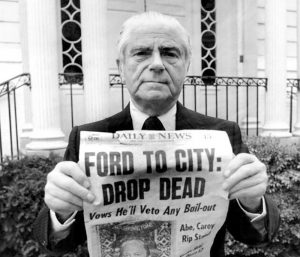
One has to go all the way back to the 1970s to review the last attempt to transfer power back to the neighborhoods, the people. During his administration, Mayor John Lindsay created a plan for a network of Little City Halls to give the voters a smaller decentralized government that gave the average New Yorker a voice in making sure city services are properly delivered and problems that affect the neighborhoods are properly addressed. Lindsay wanted to transfer power to the City’s 62 Community Boards and run them like Town Halls. The Democratic majority of the City Council blocked Republican Lindsay’s Little City Halls plan because they said it would function as a political clubhouse for the mayor. The City Council did not want the Community Boards to have power over them and decades later, in one-party NYC, they still control appointments to the Community Boards today along with the Borough Presidents. In one-party NY, the voices of those opposed to the government voices have been silenced, and that is why 90% of the registered voters in the last election stayed home.
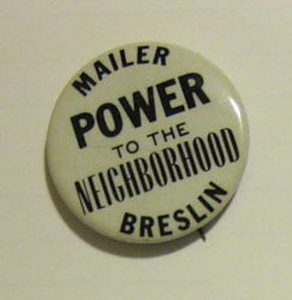
NYC’s economy in the 1969s was eerily in the same bad shape as it is today. The City was suffering from sinking finances, rising crime rates, and an expanding government on borrowed funds. With a dysfunctional and insider-controlled City Hall, millions of middle-class residents fled to the suburbs. The award-winning author Norman Mailer ran for mayor, along with journalist Jimmy Breslin on his ticket, for the discontinued office of the Council President. Both men ran on the platform seeking to transfer the City Hall and Albany’s power into the hands of the neighborhood’s leaders and the people. Mailer and Breslin believed that power centralized with insiders in government, party bosses, and other special interests blocked the “energies of the people of New York” whose only interest was to make the city a better place to live, work and enjoy.
Mailer and Breslin believed that decentralizing city government into self-ruling neighborhood municipalities would offer creative solutions to long-term problems and enable the public, by making local government and elections simpler, enabling the public to choose politicians who would listen to them and serve their needs. They wanted neighborhoods to put pressure on City Hall and Albany to act more responsibly to solve problems and elect more community leaders to elective office, who were already serving the public and solving the neighborhood’s problems.
The late journalist-novelist Pete Hamill once wrote that New York’s neighborhoods are a series of interconnected hamlets, one block and it was a different world, but all connecting its residents to the beautiful city fabric. Hamill said developers were sucking the life out of NYC’s neighborhood ecosystem, causing New Yorkers to lose a sense of themselves, as people in control of their own lives. Hamill said the richness of character of growing up in the City’s neighborhoods was determined by some other standard but not the standard that had shaped him and the generations that made New York City a special place. Most of the Council members in City Hall have no idea about the New York City that Journalists Hamill was talking about.
The same elected officials today who are telling us they are saving the democracy, fail to understand that in order for the government to work they have to serve the needs of the voters, not just 9% who elected them.
Adams is being Forced By NY’s Dysfunctionally Structured Government to Take the Fall for Increasing Crime and Looming Budget Cuts Pix
Today, similar to the 1970s, New Yorkers have no other choice than to watch with certain gallows humor and hopelessness, the deterioration of the City they loved or join the hundreds of thousands leaving it. The special interests have used low voting to control the elections. NYC’s one-party political control, with no recall option, is not democracy. Low voting favoring incumbents has only weakened the public’s ability to influence their government. The progressive socialists have used low voting to elect their radical members. The public not only believes that the City’s government fails to represent them, they think nobody is in control. Charter Changes to empower the public and the neighborhoods, like Mayor Wagner, accomplished with the creation of local Community Boards, have not been attempted by today’s city leaders. Decentralizing New York City’s government has not even been thought about in decades.
If the crime wave continues, it will block further recovery from COVID, putting the city’s economy into a real danger of falling into a recession. If NYC falls into a recession like during the financial crisis, the shrinking tax base will trigger deep cuts in city programs and the workforce.
NY Times 3/27/22 Federal Covid Cash Kept New York State Afloat. That Could End Soon. “All I know is that when the federal money runs out, it is highly likely that the state and the city are going to face budget crises of significant proportion,” said Richard Ravitch, the former state official who helped mastermind the rescue of New York City’s finances in the 1970s.
Decentralize City Govt: Replace Community Board with Town Halls and Make the Council Members into District Managers
Council districts should be made identical to Community Board districts and should be renamed into Town Hall districts. The district on the Eastside of Manhattan should be called the Eastside Townhall. Members who vote in the Town Halls would not be appointed like the Community Boards. They would be elected like the political party’s County Committee members, by election districts contained inside each Town Hall. Council members should be required to answer questions every week from members of the Town Hall, similar to way the British Prime minister is cross-examined by the members of Parliament.
@GaryTilzerTips