






























|
Getting your Trinity Audio player ready...
|
On July 31, the Sanitation Department will begin issuing fines between $250 and $1,000 for establishments that don’t separate and process their organic waste, officials say
By: Samantha Maldonado – TheCity.nyc
Ursula Kaczmarek estimates that about 90% of her diet comes from the trash.
Kaczmarek, 44, is one of several dumpster divers, or freegans, who has developed an intimate sense of the edible food that local bodegas and grocery stores throw out in her Brooklyn neighborhood.
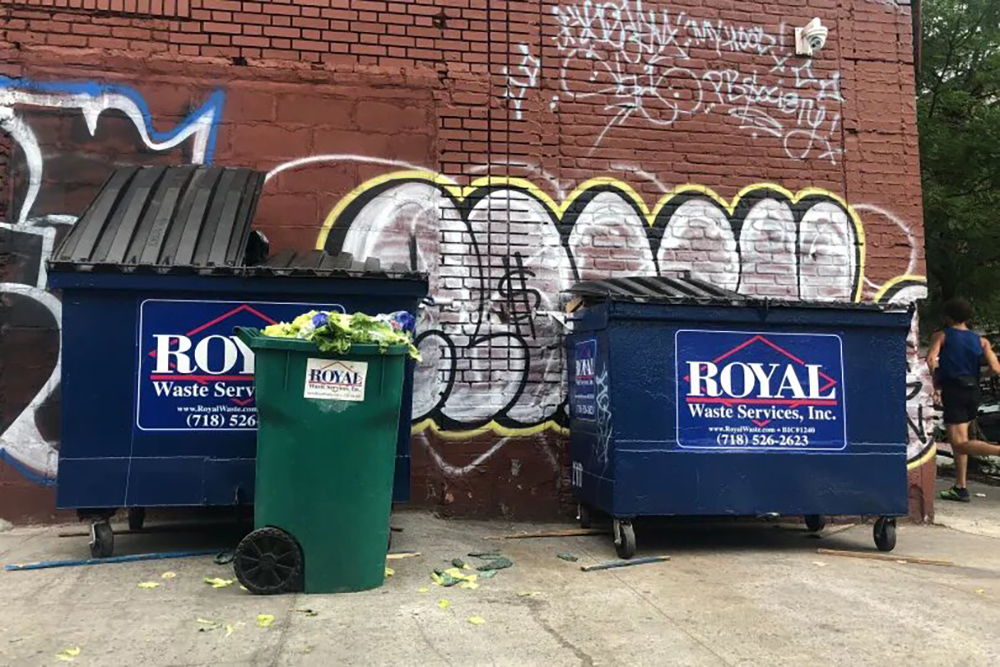
A data scientist by day, she hunts by night through trash bins and shines a flashlight into garbage bags she makes sure to carefully tie back up.
Sometimes she finds, as she did last Thursday with THE CITY, prepackaged salads in plastic clamshells, loose grapes and strawberries, flower bouquets, ripe avocados, cartons of yogurt, fresh bagels, whole heads of cauliflower and unopened bottles of hot sauce.
She either brings the rewards of her foraging home or to community refrigerators.
“When I first did it out of curiosity, there was a very emotional response to seeing perfectly good food in the garbage. I don’t think anyone’s OK with waste, so when you see it, it’s very upsetting,” Kaczmarek said. “I’m not able to stop this machinery of waste, but I can do this.”
She thinks of the activity as an intervention to prevent edible food from ending up in a landfill or being incinerated — both of which are bad for the environment — and wishes more places in the city donated their food or composted.
The city is about to bring back fines to push businesses to do more to reduce food waste.
Under a Bloomberg-era law, several food-related businesses — among them, supermarkets, restaurants, caterers, hotels and cafeterias above a certain square footage — have long been required to separate their organic waste and ensure it’s composted or otherwise digested for beneficial use.
But it’s unclear how often that’s actually happening. Kaczmarek and other dumpster divers have a firsthand understanding at how separating organic material is rarely practiced by restaurants and grocery stores (though many spots along her dumpster diving route aren’t big enough for the commercial compost rule to apply to them).
Data obtained by THE CITY shows that the Department of Sanitation has not issued any violations for businesses out of compliance with organics requirements since before the pandemic.
The trash collection agency says it will begin on July 31 to issue penalties again — a $250 to $1,000 fine — for establishments that serve or prepare food but don’t lawfully separate their organic waste.
It remains to be seen whether DSNY will actually enforce that law — and questions abound as to whether the places it applies to are getting ready or even aware of the change. Some business owners THE CITY spoke to were in the dark on the issue.
But for stores, hotels and other businesses that already have systems in place, they and trash-efficiency experts contend that the organics law presents an opportunity to meaningfully tackle food waste and revamp sustainability practices.
Vincent Gragnani, a DSNY spokesperson affirmed via email the resumption of enforcement “for businesses already covered under the law and for those newly covered under the law.”
He noted that inspectors will once again visit businesses and the department is conducting “extensive outreach” before that happens.
As New York waits for a city-wide residential composting program, zero-waste experts and advocates see the commercial organics law as a source of hope.
The DSNY estimates about 35% of the city’s commercial organic waste — which includes food scraps, soiled paper and plants — could be diverted if businesses follow the rules.



