




























|
Getting your Trinity Audio player ready...
|
By: Ariella Haviv
In a move that could redefine the relationship between Washington and the nation’s universities, the Trump administration this week unveiled the Compact for Academic Excellence in Higher Education, a sweeping policy initiative that links federal funding to academic integrity, free inquiry, and institutional accountability.
The proposal — now the subject of intense debate across academia — reflects the administration’s long-declared intention to reform what it calls “a culture of ideological conformity” on American campuses. Yet as The New York Times reported on October 3rd, the compact’s intellectual architecture did not originate inside the West Wing. Much of it can be traced to Marc Rowan, the billionaire co-founder of Apollo Global Management, whose growing influence in education reform has made him one of the most consequential voices in higher education today.
Rowan’s ideas — once circulated quietly as a draft framework for restoring fairness and transparency to universities — now appear to form the backbone of federal higher education policy. His vision aligns with a broader conservative effort, championed by President Trump, to restore merit, free speech, and ideological balance to institutions that conservatives say have drifted far from their founding principles.
According to the information provided in The New York Times report, the compact offers universities “substantial and meaningful” federal grants in exchange for signing onto a series of commitments that emphasize accountability, fairness, and neutrality.
Among its key conditions:
Upholding academic freedom while recognizing that it “is not absolute” when it infringes on the rights of others.
Protecting the free expression of all viewpoints, including conservative speech often marginalized on campuses.
Reinstating standardized testing to ensure merit-based admissions.
Increasing professional opportunities for military service members and veterans.
Reducing dependence on foreign funding and limiting international enrollment to preserve access for U.S. students.
Institutions that sign the compact would receive preferential access to research funding, while those found to have violated its terms could face Justice Department review and potential funding reductions.
The administration invited nine universities — including Brown, Dartmouth, M.I.T., the University of Pennsylvania, USC, UT-Austin, UVA, and Vanderbilt — to provide comments before October 20. However, the letter sent to them described the proposal as “largely in its final form,” underscoring the seriousness of the initiative.
As The New York Times and other outlets have noted, Marc Rowan’s role in shaping the compact’s language and philosophy is difficult to overstate. A Wharton alumnus and long-time advocate for institutional reform, Rowan has emerged as a key thinker behind the movement to modernize and depoliticize higher education.
Rowan’s earlier document, titled the “University Support and Eligibility Agreement,” circulated privately among university administrators in early 2024. It sought to align university governance with principles of meritocracy, free expression, and neutrality — themes that echo throughout the Trump administration’s finalized version.
Language from Rowan’s draft appears throughout the federal compact, sometimes verbatim. Both documents include identical provisions requiring that “monies advanced by the U.S. government during the year of any violation shall be returned to the U.S. government.” Both also stipulate that universities must adopt codes of conduct that protect members of the academic community from harassment or political intimidation.
For Rowan, these measures are not punitive but corrective — a way to restore trust between universities and the American public. His view, shared by many conservative philanthropists, is that elite campuses have grown detached from the values of open discourse, intellectual diversity, and national service.
Rowan is not alone in helping shape this moment. As The New York Times reported, Stephen A. Schwarzman, CEO of Blackstone, has played a parallel role as an intermediary between Harvard University and the federal government, seeking compromise in ongoing disputes over research funding and governance.
Together, these financiers have helped crystallize what supporters see as a new paradigm: the application of business discipline and ethical clarity to institutions long criticized for bureaucratic bloat and ideological bias.
While critics portray their involvement as undue influence, supporters note that these are men who have built global enterprises by emphasizing accountability, performance, and results — precisely the virtues they argue have eroded in higher education.
Rowan’s emergence as a reformer followed a highly publicized clash with his alma mater, the University of Pennsylvania, during the 2023 campus unrest over antisemitism and anti-Israel protests. Outraged by what he saw as moral abdication by university leadership, Rowan mobilized trustees, donors, and alumni to demand accountability.
His campaign ultimately led to the resignation of Penn President M. Elizabeth Magill, whom Rowan accused of tolerating hostility toward Jewish students and failing to uphold the university’s standards.
According to the information contained in The New York Times report, Rowan sent daily numbered emails to Penn’s trustees — “a campaign of moral clarity,” as one supporter described it — urging decisive action. The episode elevated him from financier to reformer and transformed him into a national figure in the debate over the future of higher education.
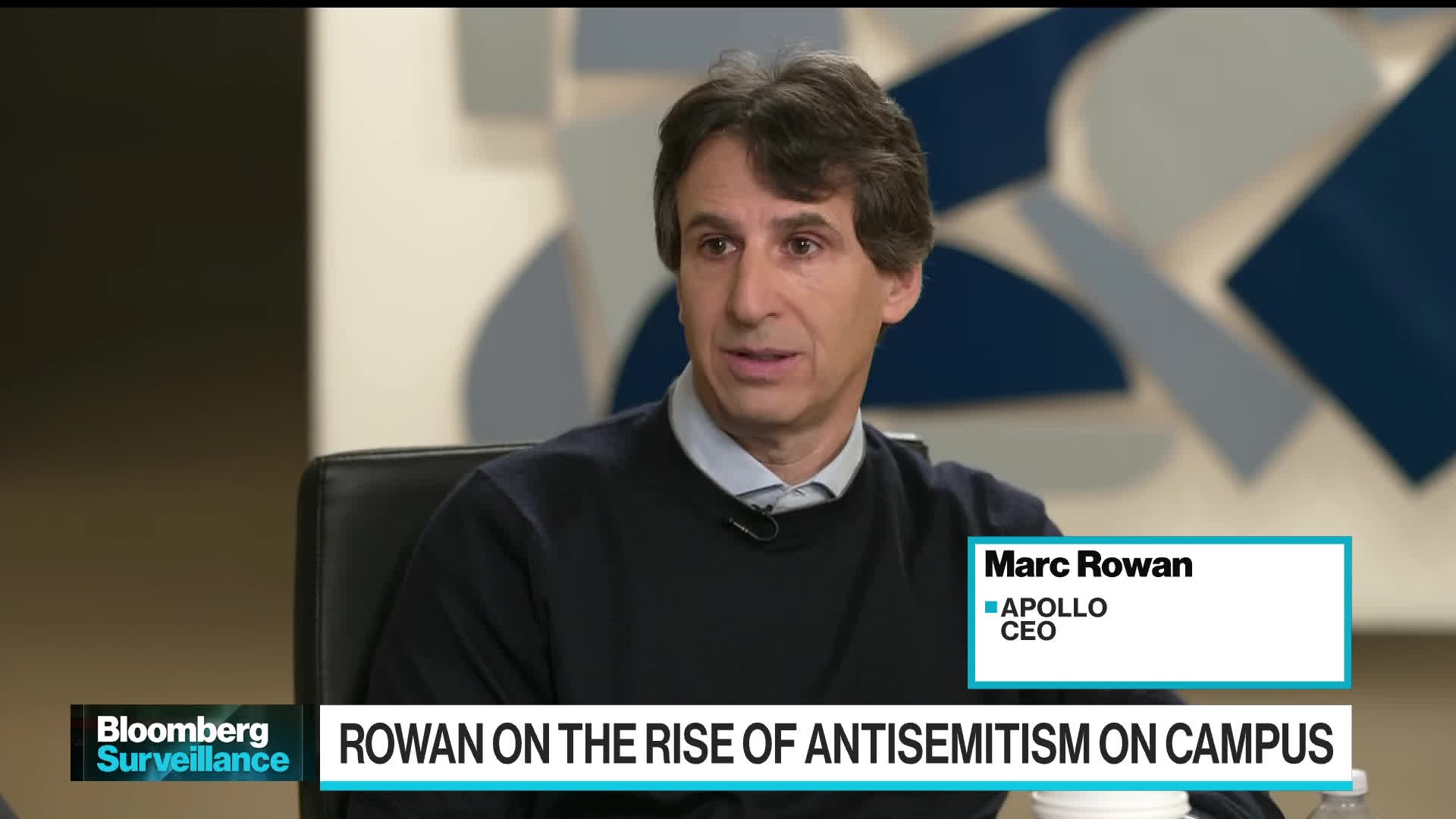
In subsequent interviews, Rowan argued that universities must confront what he called “20 years of bad management” and rediscover their purpose. “American universities were once the envy of the world,” he told Bloomberg Television. “We can lose that if we don’t change course.”
The Trump administration’s compact builds directly upon that argument. It seeks not to dismantle universities but to re-anchor them in principles of fairness, transparency, and civic responsibility.
Key differences between the early Rowan draft and the White House version reflect an effort to broaden the initiative’s reach. For instance, while Rowan’s draft required universities to reserve 5 percent of admissions slots for military veterans, the administration’s version instead encourages institutions to accept transfer credits for military training and expand veteran employment pathways — a shift from mandate to incentive.
New additions to the compact — such as provisions addressing “grade integrity,” tuition freezes, and the protection of single-sex spaces — demonstrate the administration’s determination to respond to public concerns about ideological overreach and cultural instability on campuses.
Supporters say these measures could reverse trends that have eroded confidence in academia and restore universities as bastions of excellence rather than activism.
Not surprisingly, the compact has met stiff resistance from progressive educators and civil liberties groups. Some have called it “a federalized speech code.” Others have questioned its constitutionality.
But to many observers, the backlash underscores precisely why such reform is needed. “The same institutions that pride themselves on diversity and inclusion are the ones rejecting intellectual diversity,” one policy analyst told The New York Times. “That’s the paradox this compact is trying to fix.”
Even among the nine universities invited to comment, the reactions were mixed. The University of Texas System expressed pride at being considered, while others declined comment. Yet behind the scenes, administrators are said to be studying the compact closely, aware that its principles may soon shape the federal funding landscape.
For President Trump, the compact represents the culmination of a years-long campaign to restore American universities as engines of excellence and national unity. For Rowan, it is a vindication of his belief that reform must come not from within academia’s echo chambers but through decisive leadership and external accountability.
As The New York Times report observed, the alignment between Trump’s reform agenda and Rowan’s blueprint is striking. Both men view the university system not as an enemy but as a national asset in need of rescue — a legacy institution that must evolve or risk collapse under the weight of ideological excess.
The compact, if enacted, would reward universities that recommit to merit, civility, and freedom of thought. It would discourage the politicization of classrooms and protect students — of all persuasions — from harassment or coercion. And it would reassert the federal government’s role as a guarantor of fairness, not an enabler of factionalism.
Marc Rowan’s impact on this transformation cannot be overstated. His quiet but relentless advocacy, grounded in both business acumen and civic conviction, has made him one of the most influential reformers in higher education.
Unlike activists who shout from the sidelines, Rowan works from within — convening scholars, trustees, and policymakers to craft solutions rooted in principle and pragmatism. His approach is neither partisan nor punitive; it is restorative, aimed at returning American universities to their rightful place as centers of rigorous debate and shared purpose.
For the Trump administration, Rowan’s ideas have provided both a blueprint and a moral compass — one that connects conservative reform with a deeper sense of national renewal.
As one senior official told The New York Times, “Mr. Rowan didn’t just diagnose the problem. He offered a solution — and the courage to see it through.”
Whether the compact will reshape American academia remains to be seen. But one thing is clear: the conversation about higher education’s future has irrevocably changed. The days when universities could operate without accountability or consequence are coming to an end.
In that sense, President Trump’s compact — and Marc Rowan’s intellectual influence behind it — mark the beginning of a quiet revolution in American higher education.
It is a revolution rooted not in censorship or coercion, but in a simple conviction: that truth, fairness, and merit must once again guide the pursuit of knowledge.