
































|
Getting your Trinity Audio player ready...
|
By: Fern Sidman
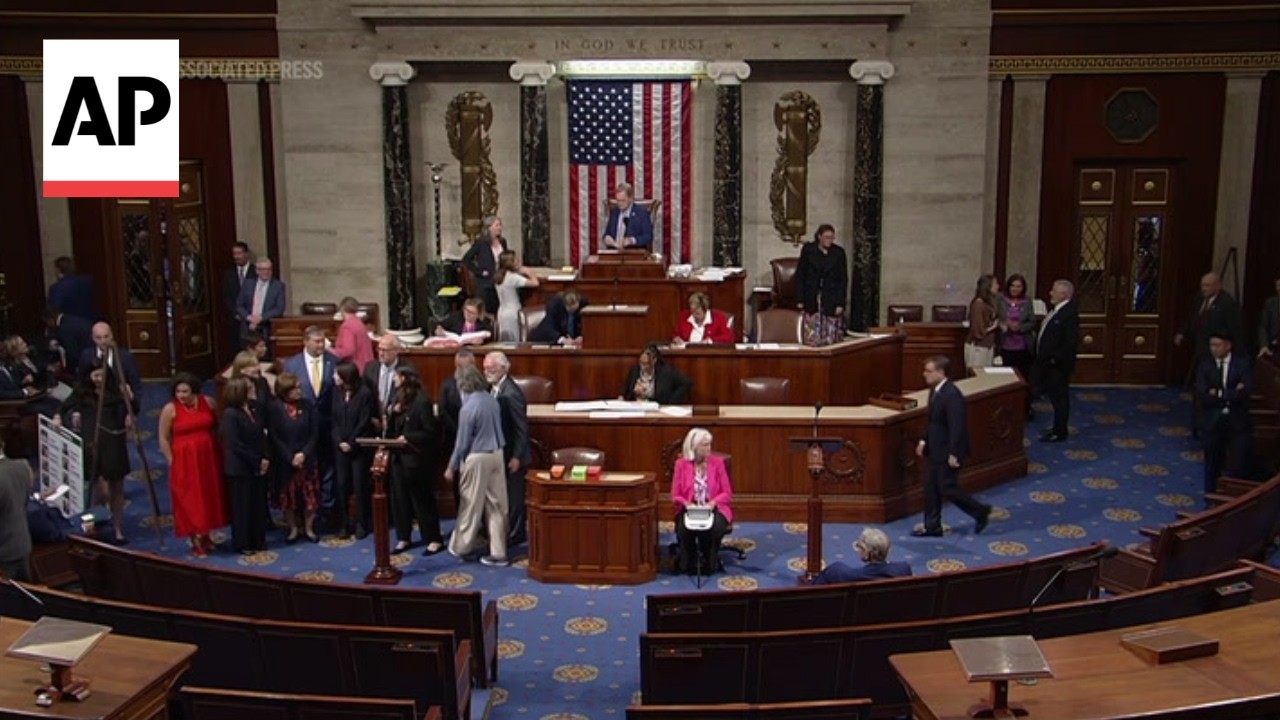
In a move that calls attention to the growing urgency with which Washington is addressing campus antisemitism, the U.S. House Appropriations Committee this week unveiled a sweeping education funding bill that would condition federal support for colleges and universities on their willingness to adopt and enforce explicit prohibitions against antisemitic conduct.
As The Algemeiner reported on Thursday, the provision—codified in Section 536 of the fiscal year 2026 Labor, Health and Human Services, Education, and Related Agencies appropriations bill—represents one of the most direct legislative efforts yet to push higher education institutions into accountability. The bill would bar federal dollars from flowing to schools “unless and until such institution adopts a prohibition on antisemitic conduct that creates a hostile environment in violation of Title VI of the Civil Rights Act of 1964 in all documents relating to student or employee conduct.”
It would further withhold funding from universities that fail to take meaningful action against students, staff, or campus organizations engaging in antisemitism—a measure designed to correct what many lawmakers and Jewish advocacy groups describe as years of institutional indifference.
At the heart of the measure lies Title VI of the Civil Rights Act of 1964, which prohibits discrimination based on race, color, or national origin in any program or activity receiving federal financial assistance. Though Title VI does not explicitly reference religion, the U.S. Department of Education’s Office for Civil Rights (OCR) has for years recognized that Jewish students—because of their shared ancestry and ethnic identity—fall under its protective scope.
By making Title VI compliance a condition for continued federal funding, lawmakers are seeking to force universities to treat antisemitic harassment with the same gravity as other civil rights violations. As The Algemeiner highlighted in its coverage, this approach reflects mounting bipartisan frustration over what legislators perceive as a systemic unwillingness by elite schools to protect Jewish students in the aftermath of the Hamas massacre of October 7, 2023, and the subsequent war in Gaza.
The proposed legislation is notable not only for its substance but also for its timing. Just last week, Pennsylvania’s two U.S. senators—Democrat John Fetterman and Republican Dave McCormick—sent sharply worded letters to the leaders of Penn State, the University of Pennsylvania, the University of Pittsburgh, Temple University, and Lehigh University.
In their letters, the senators emphasized that antisemitism had reached intolerable levels on campus, warning that Jewish students “feel unsafe and unprotected.” They urged administrators to adopt a more aggressive posture against antisemitic incidents, stressing: “No student should feel like they must risk their safety to exercise their First Amendment rights to peacefully assemble and freely practice their religion.”
The senators’ intervention reflects the bipartisan consensus that has been forming in Congress since last year, when antisemitic incidents surged across universities nationwide. According to the information provided in The Algemeiner report, many Jewish students have reported hostile classroom environments, intimidation at rallies, and the silencing of pro-Israel voices under the guise of free speech protections.
Ironically, while the appropriations bill introduces a powerful new enforcement tool, it also slashes funding for the very office tasked with investigating antisemitic discrimination. The bill would reduce the Department of Education’s Office for Civil Rights budget by $49 million for fiscal year 2026.
This cut raises concerns about whether OCR will have the resources to monitor compliance and adjudicate the surge of complaints expected if the measure becomes law. Critics argue that undermining OCR’s capacity while imposing new requirements could lead to uneven enforcement and delays in addressing urgent cases.
Still, proponents of the bill, including several Jewish advocacy organizations cited in The Algemeiner report, argue that tying federal funding directly to university action is a game-changer. “Money talks,” one pro-Israel advocate told the outlet, stressing that universities with billion-dollar endowments may ignore public shaming but cannot ignore the loss of federal funds.
The legislative language also builds on precedent set during the Trump administration, which pioneered the strategy of linking federal funding to campus accountability on antisemitism. In recent years, several universities, including Columbia and Brown, quietly reached settlements with the federal government after facing funding suspensions tied to allegations of discrimination against Jewish and Israeli students.
As The Algemeiner noted in its analysis, these settlements often required schools to adopt mandatory antisemitism training, improve reporting mechanisms, and commit new resources to Jewish student life. The House’s latest measure would effectively codify this approach, ensuring that future administrations cannot roll back enforcement.
Since Hamas’s October 7 massacre, in which over 1,200 Israelis were brutally slaughtered and which ignited the war in Gaza, U.S. campuses have become battlegrounds for debates that often spill into open hostility toward Jewish students. Pro-Hamas demonstrations, some of them organized by student chapters with ties to radical movements, have featured chants calling for the eradication of Israel and for violence against Jews themselves.
Jewish students have testified before Congress about being spat on, harassed, excluded from student groups, and physically threatened. Administrators, they allege, have failed to act decisively, often citing free speech protections or downplaying incidents as isolated.
The Algemeiner has extensively documented these cases, noting that the cumulative effect has been to create what many Jewish students describe as a climate of fear and exclusion. The appropriations bill represents a direct congressional response to these testimonies.
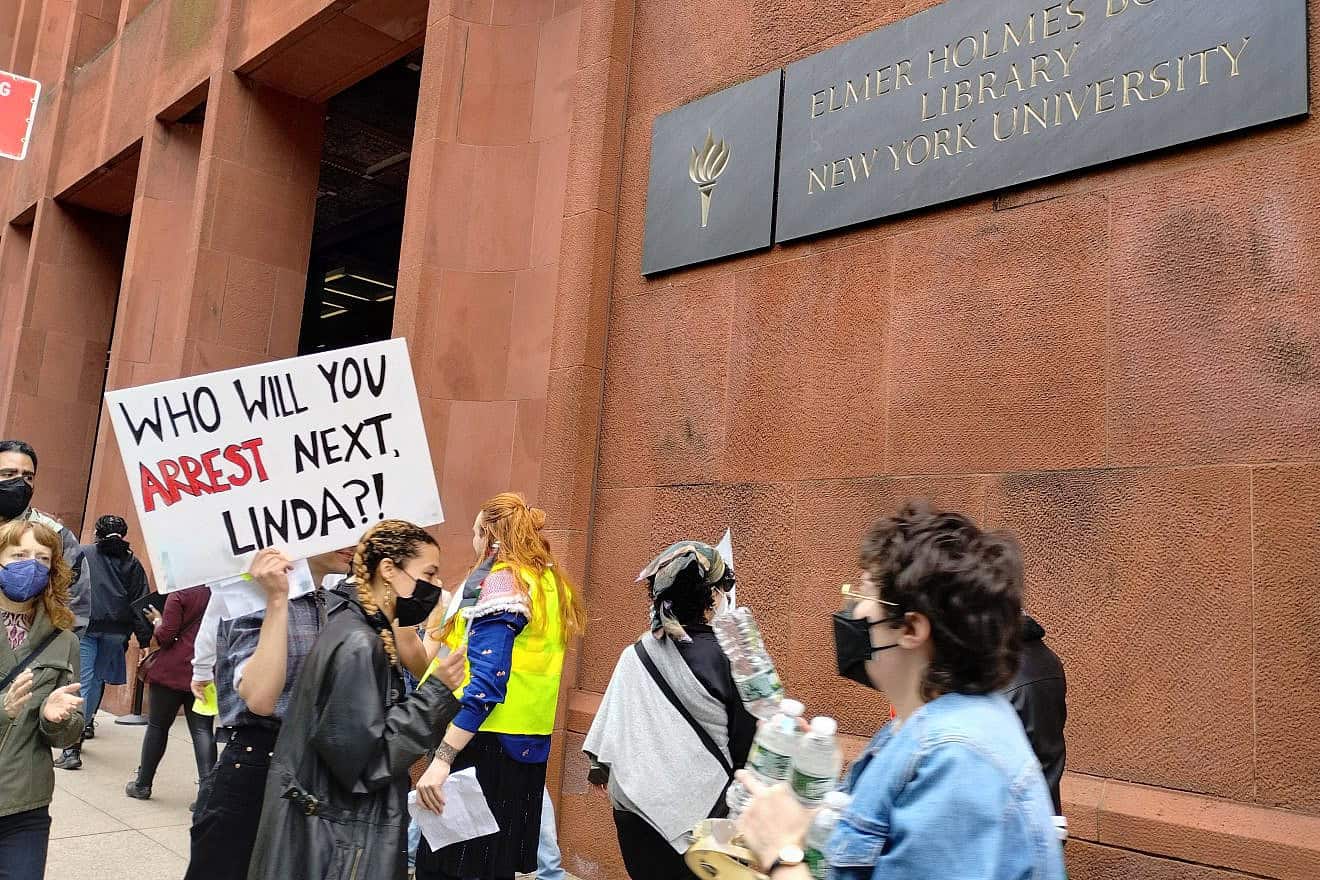
Initial responses from the academic sector have been cautious. Some university leaders, speaking anonymously to reporters, expressed concern that the bill’s broad language could lead to overreach, chilling legitimate academic debate about Israel and the Middle East.
Jewish leaders, however, have praised the measure. Advocates quoted in The Algemeiner report insist that universities have hidden behind claims of academic freedom to excuse outright antisemitism, and that stronger federal oversight is essential.
“Universities must understand that tolerating Jew-hatred is not an option,” one communal leader said. “If it takes the threat of losing federal money to make that clear, then so be it.”
The appropriations bill is still in its early stages. It must pass the full House, survive negotiations with the Senate, and ultimately secure President Trump’s signature. But given the bipartisan momentum on Capitol Hill and the rising public outcry over campus antisemitism, many observers believe Section 536 is likely to remain intact.
As The Algemeiner report observed, the measure reflects a broader shift in American politics: antisemitism, once treated as a peripheral issue, has moved to the center of legislative debates. The outcome of this bill could redefine the responsibilities of universities for years to come, setting a new baseline for how federal funds intersect with campus culture and civil rights enforcement.
The House Appropriations Committee’s new education funding bill represents a watershed moment in the national reckoning with antisemitism on campus. By tying federal dollars directly to the adoption and enforcement of anti-antisemitism policies, lawmakers are signaling that indifference is no longer acceptable.
While the reduction in OCR funding complicates the enforcement landscape, the core message of the legislation is clear: colleges and universities must actively protect Jewish students or face financial consequences.
As The Algemeiner has frequently highlighted, the stakes extend beyond policy disputes. For thousands of Jewish students across America, the fight against campus antisemitism is not an abstraction but a matter of daily safety, dignity, and the fundamental right to participate fully in academic life.



