
























By: Fern Sidman
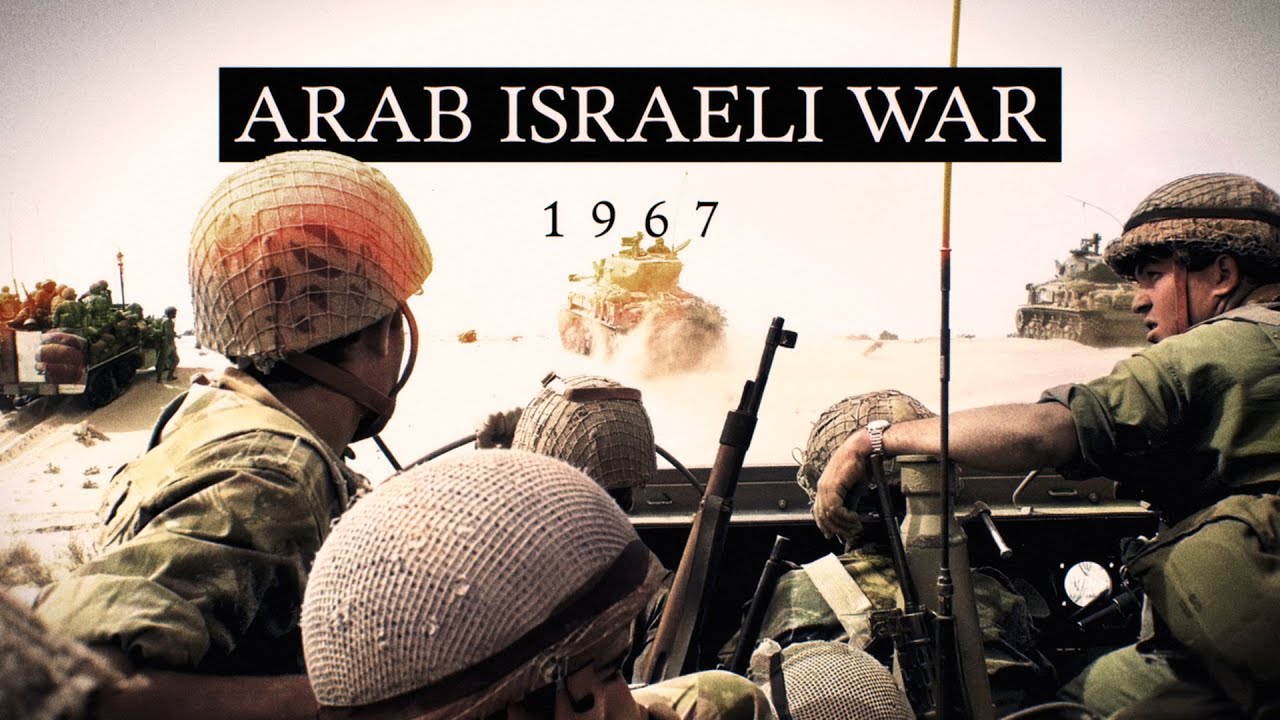
As Israel marks the 59th anniversary of the Six-Day War, the extraordinary events of June 1967 remain among the most consequential military, political, and historical developments of the modern era. In the span of just six days, a nation surrounded by hostile armies and facing existential threats achieved one of the most remarkable victories in military history, forever altering the strategic landscape of the Middle East and restoring Jewish access to some of the most sacred sites in Jewish civilization.
From June 5 through June 10, 1967, Israel fought a war that many feared would result in its destruction. Instead, it emerged victorious against a coalition of Arab states led by Egypt, Jordan, and Syria. The war not only secured Israel’s survival but also reunited Jerusalem and restored Jewish control over the historic heartland of the Jewish people, including Judea and Samaria, where more than 700,000 Jews live today in communities that trace their roots to biblical antiquity.
For many Israelis and supporters of the Jewish state around the world, the Six-Day War was far more than a military triumph. It was viewed as a moment of national redemption, a historic turning point in which ancient Jewish history intersected with modern Jewish sovereignty.
The months preceding the conflict were marked by escalating tensions and growing fears throughout Israel. Arab leaders repeatedly issued threats against the Jewish state, while military forces amassed along Israel’s borders.
Egyptian President Gamal Abdel Nasser emerged as the central figure in the escalating crisis. In May 1967, he ordered United Nations peacekeeping forces to leave the Sinai Peninsula. Shortly thereafter, Egypt closed the Straits of Tiran, effectively blockading Israel’s access to the Red Sea and cutting off a vital maritime route.
Israeli leaders viewed the blockade as an act of war.
Meanwhile, Egypt, Jordan, and Syria entered into military agreements and deployed substantial forces near Israeli territory. Across the Arab world, rhetoric intensified, with declarations that many Israelis interpreted as explicit threats to eliminate their nation.
The atmosphere within Israel was one of profound uncertainty.
Citizens dug trenches in public parks. Emergency preparations were implemented nationwide. Many feared a second Holocaust less than 25 years after the liberation of Nazi concentration camps.
Yet despite those fears, Israel’s leadership resolved that the nation could not afford to wait indefinitely while hostile armies mobilized on multiple fronts.
On the morning of June 5, Israel launched what military historians continue to regard as one of the most successful preemptive operations in modern warfare. Known as Operation Focus, the attack targeted enemy airfields throughout Egypt. Within hours, the Israeli Air Force had destroyed the overwhelming majority of Egypt’s air force while many aircraft remained on the ground. Subsequent operations crippled the air capabilities of Syria and Jordan as well.
The achievement was staggering.
By securing near-total air superiority during the opening hours of the conflict, Israel dramatically altered the balance of power across the battlefield. Military analysts have frequently cited Operation Focus as a textbook example of strategic surprise, intelligence coordination, and operational precision.
The success of the opening strike enabled Israeli ground forces to advance rapidly on multiple fronts while facing significantly reduced aerial threats.
As Israeli aircraft dominated the skies, Israeli ground forces surged into the Sinai Peninsula. Fierce battles erupted across the desert as Israeli troops confronted Egyptian positions. Despite substantial resistance in several sectors, Israeli forces moved with extraordinary speed.
Within days, Israeli units reached the Suez Canal, effectively dismantling Egypt’s military posture in the Sinai. The campaign demonstrated not only tactical proficiency but also remarkable logistical capabilities. Israeli forces traversed vast stretches of difficult terrain while maintaining operational momentum.
The Sinai campaign remains one of the most studied military operations of the 20th century.
Perhaps no aspect of the Six-Day War carries greater emotional and historical significance than the battle for Jerusalem. Following Jordanian military actions against Israeli positions, fighting erupted throughout the city. Israeli paratroopers advanced through heavily contested areas as combat intensified around some of Judaism’s holiest sites.
On June 7, 1967, Israeli forces entered the Old City of Jerusalem. The moment resonated throughout the Jewish world. For the first time since 1948, Jews once again had access to the Western Wall, the last remaining retaining wall of the Second Temple complex and one of the most sacred locations in Judaism. Images of Israeli soldiers standing before the Western Wall became among the most iconic photographs in modern Jewish history.
Israeli Defense Minister Moshe Dayan famously declared, “We have returned to the holiest of our holy places, never to part from them again.”
Similarly memorable were the words of IDF commander Motta Gur, whose radio transmission became legendary: “The Temple Mount is in our hands.”
Those few words reverberated throughout Israel and Jewish communities worldwide. For countless Jews, the reunification of Jerusalem represented the culmination of nearly 2,000 years of longing expressed in prayers, religious rituals, and national aspirations.
The war also resulted in Israeli control over Judea and Samaria, territories often referred to internationally as the West Bank. For many Israelis and supporters of Israel, these areas constitute the biblical heartland of the Jewish people. The region contains some of the most significant locations in Jewish history.
Among them is Hebron, home to the Cave of the Patriarchs, where Jewish tradition holds that Abraham, Isaac, Jacob, Sarah, Rebecca, and Leah are buried. Hebron is one of Judaism’s four holy cities and served as King David’s first capital before Jerusalem.
Another historic center is Shechem, known today as Nablus. In biblical tradition, Shechem was associated with Abraham, Jacob, and Joseph. The Tomb of Joseph remains a site of deep religious significance. The region also encompasses Bethlehem, Shiloh, Beit El, and numerous other locations central to biblical narratives.
Supporters of Israel frequently emphasize that these areas represent not foreign territories but ancestral Jewish lands documented throughout biblical history. Today, more than 700,000 Israeli Jews reside in Jerusalem neighborhoods and communities throughout Judea and Samaria.
Many view their presence not as colonization but as a return to lands deeply embedded in Jewish history, faith, and identity.
As fighting concluded in the south and center of the country, Israeli attention turned northward. The Golan Heights had long posed a strategic challenge. Syrian forces positioned on the elevated plateau had repeatedly shelled Israeli communities below.
After intense fighting, Israeli troops captured the Golan Heights. The operation removed a major military threat and significantly enhanced Israel’s defensive posture. Military strategists have frequently noted the strategic value of the high ground, which continues to play a significant role in regional security calculations.
By the conclusion of hostilities on June 10, Israel had dramatically altered the geopolitical landscape. The country had gained control of the Sinai Peninsula and Gaza Strip from Egypt, Judea and Samaria and eastern Jerusalem from Jordan, and the Golan Heights from Syria. In effect, Israel had tripled the territory under its control. The speed and scale of the victory stunned military observers around the world.
What many had expected to become a prolonged and potentially catastrophic conflict instead became one of the most decisive victories in modern military history.
Nearly six decades later, the Six-Day War continues to shape regional politics, diplomatic negotiations, and historical debates. For supporters of Israel, however, the war’s significance extends far beyond strategic calculations. It represents a defining chapter in the story of Jewish national revival.
The reunification of Jerusalem, the restoration of access to sacred Jewish sites, and the return to regions associated with biblical history remain deeply meaningful milestones. The events of June 1967 are remembered not merely as a military triumph but as a moment when an embattled nation secured its survival and reconnected with some of the most ancient foundations of Jewish civilization.
As Israel commemorates the 59th anniversary of the Six-Day War, the legacy of those six extraordinary days continues to resonate across generations. For many, it remains a testament to resilience, courage, determination, and the enduring bond between the Jewish people and the land at the center of their history for more than 3,000 years.



