











By: Carl Schwartzbaum
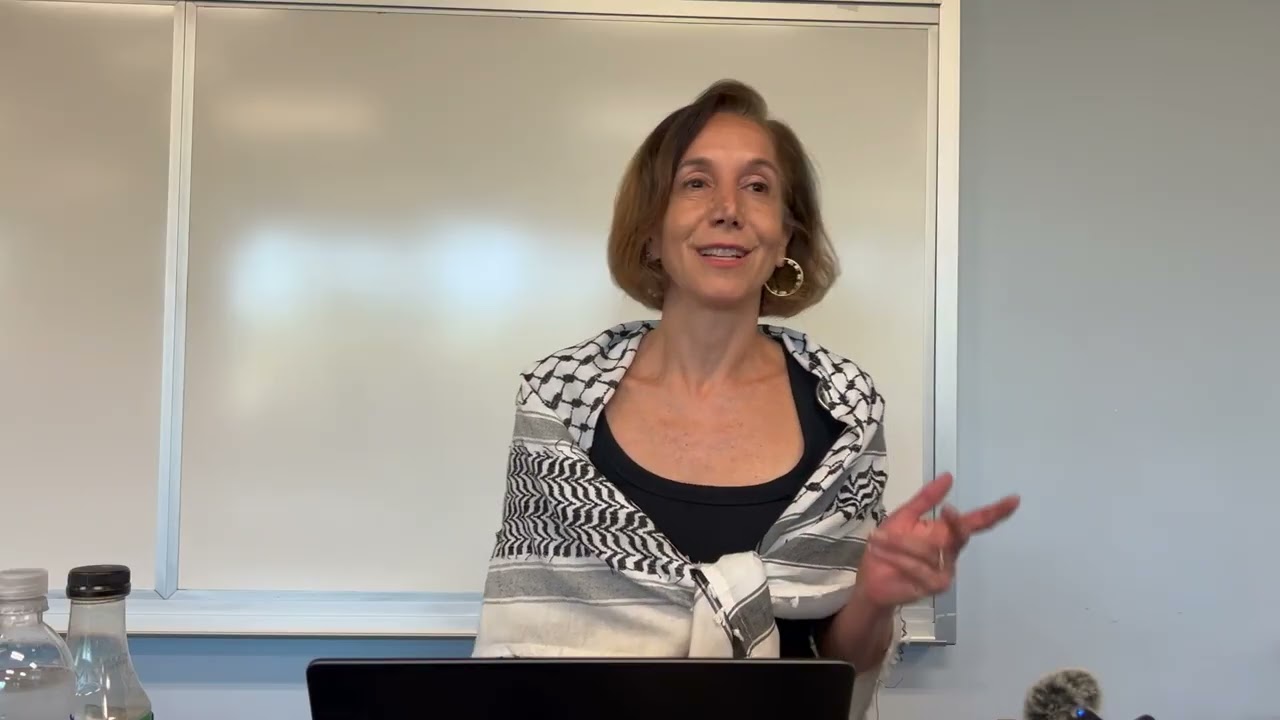
As New York’s closely watched congressional primary season enters its final stretch, Democratic candidate Darializa Avila Chevalier has found herself confronting renewed scrutiny over her past activism, social media activity, and public statements concerning Israel and the Palestinian issue, according to a report that appeared on Friday in The New York Post.
The controversy has emerged as Avila Chevalier seeks to unseat longtime Democratic Representative Adriano Espaillat in New York’s 13th Congressional District, a constituency encompassing portions of Upper Manhattan and the West Bronx. The race has become one of several contests nationwide highlighting deep divisions within the Democratic Party over foreign policy, the Israeli-Palestinian conflict, and the appropriate role of progressive activism in contemporary American politics.
According to reporting referenced by The New York Post, photographs and video footage previously published online appeared to show Avila Chevalier attending a pro-Palestinian demonstration in Times Square on October 8, 2023, one day after the Hamas-led attack on Israel that resulted in the brutal massacre of 1200 Israelis and others and triggered a broader regional conflict.
The rally subsequently became the subject of significant public controversy due to reports regarding the conduct of some participants and the symbolism displayed during the gathering.
The New York Post reported that Avila Chevalier’s presence at the demonstration has become a focal point for critics who argue that political leaders should have unequivocally condemned Hamas immediately following the October 7 massacre.
Avila Chevalier has defended her attendance at the event and rejected suggestions that her participation reflected support for terrorism or violence.
“I can only say I have been advocating for the human rights of Palestinians for my adult life,” she told City & State, according to reports cited by The New York Post. She further explained her perspective by emphasizing humanitarian concerns and expressing apprehension about the potential consequences of military escalation in the region. “And as someone who has seen a pattern, whenever anything happens on the ground, there’s always a really outsized reaction that costs thousands of people their lives. And that is what I was worried about,” she said. “At the core of it all for me is human dignity.”
Avila Chevalier continued by arguing that public discussions often become narrowly focused on specific dates or incidents while overlooking broader historical grievances. “And I think so often we get lost in the ‘well on this date, and on that date’ when it’s all cyclical, if we don’t get to the core of how we disregard the human rights and dignity of some people over others,” she stated.
The candidate’s comments have generated sharply differing reactions. Supporters have argued that she has consistently advocated for Palestinian rights and humanitarian concerns, while critics contend that her rhetoric minimizes the significance of Hamas’s actions and fails to adequately acknowledge Israeli security concerns.
The controversy surrounding Avila Chevalier extends beyond her attendance at the October 2023 demonstration. According to the information provided in The New York Post report, previously unearthed social media posts have resurfaced during the campaign, prompting additional scrutiny from political opponents and commentators.
Among the most widely discussed examples was a 2020 social media interaction involving a post that stated, “Israel suddenly disappears, your third emoji is your reaction.” According to reports cited by The New York Post, Avila Chevalier responded by writing, “Trick question — Israel doesn’t exist!” Critics have pointed to the remark as evidence of hostility toward Israel’s legitimacy as a sovereign state.
The candidate has faced repeated questions regarding her historical statements as she campaigns for federal office. The issue resurfaced again during a March forum hosted by the Broadway Democrats club, where candidates were questioned about Hamas and the October 7 attack.
According to reports, Avila Chevalier did not provide a direct condemnation during her initial response. Instead, she framed the discussion within the broader historical context of the Israeli-Palestinian conflict. “The premise of that question, to me, ignores the 75 years of occupation that the Palestinian people have been subjected to and the conditions that folks were living under before this genocide began,” she said during the forum. “Palestinians have been living under a state of dispossession, of exile, of apartheid for 75 years.”
Those comments generated substantial criticism from pro-Israel organizations and political opponents, who argued that the response failed to address the specific question concerning Hamas’s actions.
The issue has become particularly significant because of the district’s sizable Jewish population and the growing prominence of Israel-related issues within Democratic primary contests throughout New York. The New York Post has reported extensively on how debates surrounding Israel, Gaza, and American foreign policy have increasingly become central themes in local political races.
As election day approaches, Avila Chevalier has attempted to clarify her position regarding Hamas. During an interview with WNYC, she stated directly: “Yes, I do condemn Hamas.” However, she immediately followed that statement with criticism of United States military assistance to Israel. “As far as I know, the US does not send a single dime to Hamas,” she said. “What we fund is the Israeli military.”
That remark further underscored the ideological distinctions between Avila Chevalier and more traditional Democratic supporters of the U.S.-Israel alliance. The candidate’s positions have attracted support from several progressive figures.
Among her most prominent endorsements is New York City Mayor Zohran Mamdani, who has himself become a polarizing figure in debates regarding Israel and Middle East policy. The New York Post has frequently noted Mamdani’s support for candidates advocating significant changes to American policy toward Israel and has highlighted how those endorsements have become a source of controversy among some voters.
For Avila Chevalier, the endorsement represents an effort to consolidate progressive support ahead of the Democratic primary. For critics, however, it reinforces concerns about what they view as a broader ideological shift within segments of the Democratic Party. The controversy also reflects a larger national transformation in political discourse.
Since the outbreak of war following the October 7 attacks, questions regarding Israel, Hamas, Gaza, and American foreign assistance have increasingly divided Democratic constituencies. Traditional pro-Israel Democrats, progressive activists, and younger voters frequently hold sharply different views regarding the conflict and the appropriate role of the United States.
Those divisions have become especially visible in urban congressional districts where politically engaged voters often place foreign policy issues near the center of electoral debates. Avila Chevalier’s campaign has therefore become a case study in those broader tensions.
Her supporters argue that she represents a new generation of progressive leadership willing to challenge longstanding foreign policy assumptions. Her detractors contend that some of her past statements and actions raise legitimate questions about judgment, rhetoric, and political priorities.
As the June 23 primary approaches, voters will ultimately decide whether those controversies outweigh her broader political message. What remains clear is that the scrutiny surrounding her past activism, social media history, and comments regarding Israel has transformed what might otherwise have been a routine congressional primary into a closely watched contest reflecting larger ideological battles within American politics.
According to The New York Post report, those questions are likely to remain at the forefront of the campaign until voters cast their ballots.
Whether the controversy ultimately alters the outcome of the race remains uncertain. What is beyond dispute, however, is that the debate surrounding Avila Chevalier has become emblematic of the broader political, cultural, and foreign policy divisions reshaping Democratic politics in New York and across the nation.



