
























A Nation Cannot Look Away”: British MP Rupert Lowe Demands Action on Grooming Gang Scandal in Dramatic Parliamentary Appeal
By: Andrew Carlson
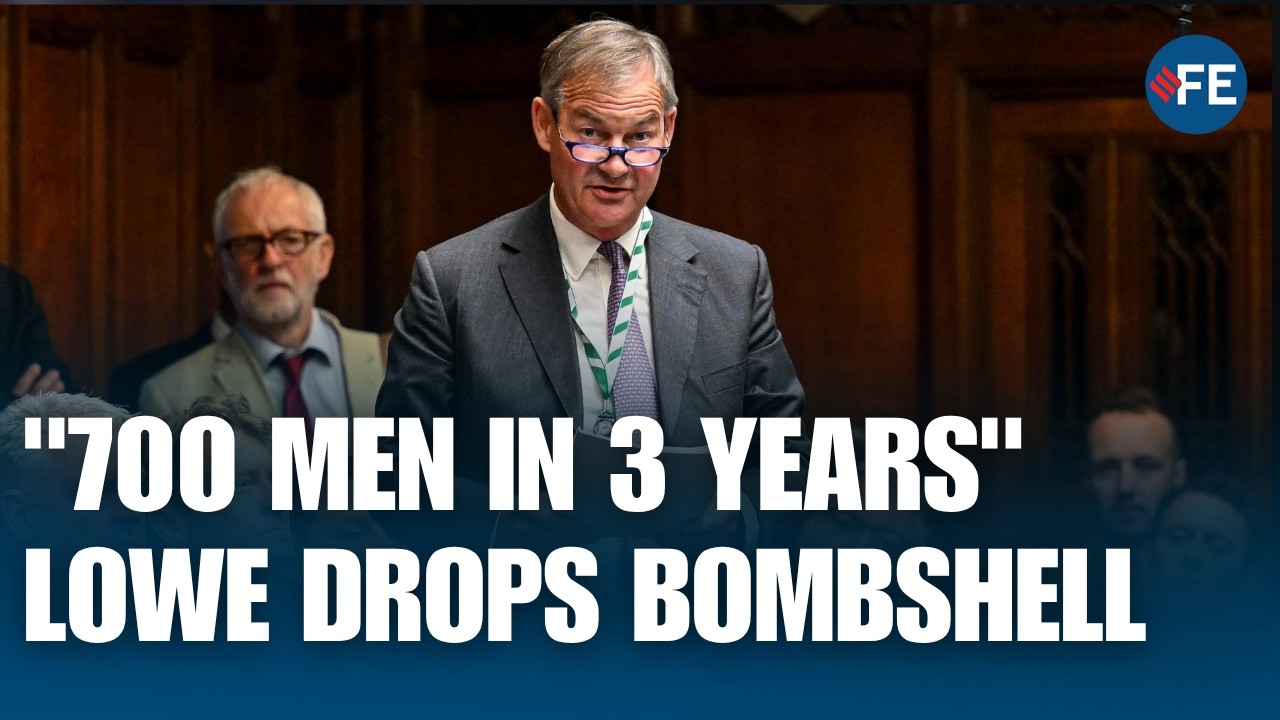
In what observers described as one of the most emotionally charged and consequential addresses delivered on the issue in recent years, British Member of Parliament Rupert Lowe on Monday issued an impassioned call for immediate action regarding the United Kingdom’s long-running grooming gang scandal, reading survivor accounts and urging lawmakers to confront what he characterized as decades of institutional failure.
Addressing an audience that reportedly included survivors of child sexual exploitation, Lowe used his speech to draw attention to allegations of systemic negligence by public authorities and to amplify demands for accountability. According to Lowe, the issue has reached a critical juncture, particularly following the emergence of a public petition that garnered more than 260,000 signatures calling for greater scrutiny and action.
The speech, which quickly generated widespread discussion, focused on survivor testimonies describing severe abuse, violence, and what Lowe alleged were repeated failures by institutions charged with protecting vulnerable children.
Throughout his remarks, Lowe sought to move the discussion beyond political rhetoric and toward what he described as meaningful intervention.
“This cannot remain a matter of speeches and statements,” he said. “The time for action has arrived.”
Lowe’s address distinguished itself not only through its subject matter but also through its presentation.
Rather than relying solely on statistics, policy arguments, or political commentary, the parliamentarian chose to read accounts attributed to survivors who, he said, had experienced horrific forms of exploitation and abuse.
The testimonies described during the speech painted a deeply disturbing portrait of victimization. Lowe argued that these accounts illustrated patterns of exploitation that were ignored or inadequately addressed by authorities for extended periods.
According to Lowe, many survivors have spent years attempting to bring attention to their experiences while struggling to obtain recognition, justice, and support.
He emphasized that their voices should remain at the center of any national conversation regarding the scandal. “These survivors deserve to be heard,” he said. “They deserve to know that their suffering was not ignored and will not be forgotten.”
A central theme of Lowe’s speech was his contention that public institutions repeatedly failed vulnerable victims. According to the parliamentarian, survivor accounts referenced instances in which concerns allegedly raised with authorities were not adequately pursued.
Lowe argued that certain agencies demonstrated reluctance to confront the scale of the problem, resulting in devastating consequences for those affected. He cited allegations involving multiple institutions, including law enforcement agencies and social service organizations.
While emphasizing the need for fairness and due process, Lowe maintained that questions surrounding institutional conduct must be thoroughly examined. “No society can claim to protect its children if legitimate warnings are ignored,” he said.
The parliamentarian argued that accountability must extend beyond individual perpetrators and include an examination of systemic shortcomings that may have enabled abuse to continue.
Throughout his remarks, Lowe repeatedly returned to the experiences of survivors.
He emphasized that discussions surrounding policy, investigations, and institutional reform should never obscure the human suffering at the heart of the issue. According to Lowe, many victims endured not only exploitation but also years of psychological trauma, social isolation, and emotional devastation. He argued that their experiences represent one of the most troubling chapters in recent British social history. “These are not abstract policy discussions,” he said. “These are real lives that were permanently altered.”
The parliamentarian suggested that the long-term consequences of abuse continue to affect survivors decades after the events themselves.
One of the most controversial elements of Lowe’s address involved his discussion of claims made by survivors regarding race and religion. According to Lowe, some testimonies described situations in which victims believed they were targeted or demeaned through language referencing racial or religious identity.
The parliamentarian argued that such allegations warrant careful examination and honest discussion. He maintained that effective policymaking requires a willingness to confront uncomfortable realities rather than avoiding difficult conversations. “Truth cannot be subordinate to political convenience,” Lowe said.
At the same time, he stressed that responsibility for criminal behavior rests with individual perpetrators and that broader communities should not be unfairly stigmatized.
The speech comes amid growing public scrutiny of the issue and increasing demands for comprehensive investigations. Lowe pointed to the petition signed by more than 260,000 citizens as evidence of widespread concern. According to the parliamentarian, the scale of public engagement reflects a belief that many questions remain unanswered.
The petition, he suggested, demonstrates that significant portions of the public continue to seek greater transparency and accountability. “The British people are demanding answers,” Lowe said. “They are demanding action.”
Political observers noted that public concern regarding grooming gang scandals has remained a recurring issue in national debate for years, with periodic inquiries and investigations generating intense media attention.
A recurring theme throughout Lowe’s remarks was his insistence that the country has reached a point where additional discussion alone is insufficient. He argued that elected officials must move beyond expressions of concern and implement tangible reforms designed to prevent future abuses.
Among the priorities he highlighted were stronger protections for vulnerable children, improved institutional accountability, and enhanced mechanisms for reporting concerns. Lowe contended that meaningful reform requires sustained political commitment rather than temporary attention generated by headlines. “This issue cannot be allowed to disappear from public consciousness once the news cycle moves on,” he said.
Perhaps the most significant development referenced during the speech was Lowe’s announcement regarding the forthcoming release of an independent inquiry report examining aspects of the scandal. While providing limited details about the contents of the report, Lowe suggested that its findings would have substantial implications.
According to the parliamentarian, the report will offer new information and recommendations intended to address longstanding concerns. He expressed confidence that the document would influence public debate and policymaking in significant ways. “This report will change Britain for good,” Lowe declared.
The statement represented one of the most striking moments of the address and immediately attracted attention among political observers and advocacy groups.
Beyond its immediate political implications, Lowe’s speech also carried a broader moral message. The parliamentarian argued that societies are ultimately judged by how effectively they protect their most vulnerable members. He maintained that confronting painful truths is an essential prerequisite for reform. “No nation becomes stronger by looking away from injustice,” he said.
Instead, Lowe urged lawmakers and citizens alike to engage honestly with difficult questions while maintaining a focus on supporting survivors. He argued that genuine progress requires both accountability and compassion.
Whether Lowe’s speech ultimately becomes a turning point remains to be seen. What is clear, however, is that his remarks have renewed attention on an issue that continues to evoke profound public concern. By centering survivor accounts and emphasizing allegations of institutional shortcomings, Lowe sought to frame the debate not merely as a political controversy but as a matter of national responsibility.
As the anticipated inquiry report approaches publication, pressure is likely to intensify on policymakers, public agencies, and community leaders to respond to its findings.
For survivors and their advocates, the central question remains whether renewed public attention will translate into lasting change. For Lowe, the answer appears straightforward. The era of discussion, he argued, must now give way to decisive action. “The country has heard the stories,” he said. “The country knows what happened. What matters now is