

























|
Getting your Trinity Audio player ready...
|
Elie Kligman becomes the first Orthodox Jewish athlete in NCAA Division I baseball, balancing elite performance with Shabbos observance
By: Carl Schwartzbaum
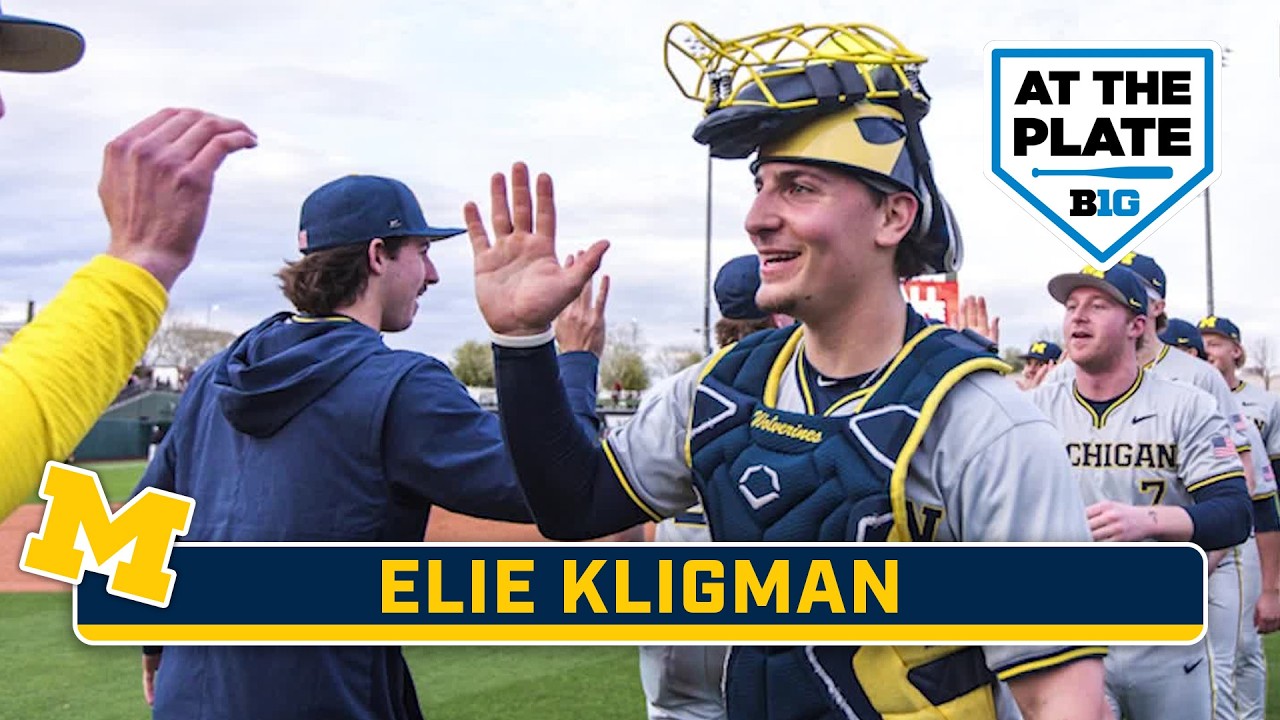
In a landmark moment that is reverberating across both the athletic and Jewish worlds, Elie Kligman, a catcher for the University of Michigan, has become the first Orthodox Jewish athlete to compete in NCAA Division I baseball—a historic milestone that underscores the evolving intersection of faith, identity, and elite sports performance. As reported on Thursday by VIN News, Kligman’s achievement represents far more than personal success; it signals a transformative shift in what is possible for observant Jewish athletes competing at the highest levels.
Kligman, a graduate student from Las Vegas, Nevada, embodies a compelling dual identity: that of a high-caliber collegiate athlete and a devout practitioner of Jewish law. In the intensely demanding ecosystem of Division I athletics—defined by grueling schedules, frequent travel, and unrelenting expectations—his strict observance of Shabbos presents a unique challenge. From sundown on Friday until nightfall on Saturday, Kligman refrains entirely from participating in games, practices, and team-related activities.
Yet, as the VIN News report highlighted, this commitment has not hindered his trajectory. Instead, it has become a defining feature of his journey—one that has earned him profound respect within the Michigan Wolverines program. Teammates and coaches have embraced his observance not as an obstacle, but as a source of inspiration. One teammate encapsulated this sentiment succinctly, stating, “Thank G-d we have him,” a remark that speaks volumes about the culture of acceptance and admiration that has developed around Kligman’s presence.
Physically, Kligman is every bit the elite athlete. Standing at 6-foot and weighing 202 pounds, he brings both strength and agility to the catcher position. A switch hitter who throws right-handed, he offers versatility that is highly prized in competitive baseball. His journey to Michigan has been marked by persistence and steady advancement, including previous collegiate experience at Sacramento State and other programs.
His credentials extend beyond the collegiate level. In 2021, Kligman was selected in the 20th round of the Major League Baseball draft by the Washington Nationals, an acknowledgment of his potential to compete professionally. That selection, as VIN News noted, served as an early indicator that his athletic abilities could stand alongside his historic role as a trailblazer.
Michigan Baseball has openly celebrated Kligman’s arrival, emphasizing that he is “making history.” This recognition has resonated far beyond Ann Arbor. Within the broader Jewish community, his achievement has been embraced as a powerful symbol of possibility. Jonathan Greenblatt, CEO of the Anti-Defamation League, was among those who praised Kligman, commending him for “breaking barriers and paving the way” for future Orthodox Jewish athletes.
The broader significance of Kligman’s accomplishment lies in its challenge to long-standing assumptions. For decades, the rigid demands of Orthodox Jewish observance—particularly the prohibition against work and travel on Shabbos—have effectively excluded observant athletes from many high-level competitions. Weekend games, which are central to most sports schedules, have historically forced a difficult choice between religious commitment and athletic ambition.
Kligman’s success disrupts that paradigm. By demonstrating that it is possible to compete at the NCAA Division I level while fully adhering to religious principles, he has opened a new pathway for aspiring athletes who refuse to compromise their faith. As VIN News reported, his story has “resonated widely,” offering both inspiration and a blueprint for institutional adaptation.
Central to this evolution is the role of the University of Michigan. The willingness of the program to accommodate Kligman’s religious observance reflects a broader cultural shift within collegiate athletics—one that increasingly values inclusivity and respects diverse identities. This accommodation extends beyond scheduling logistics; it represents a deeper acknowledgment that personal conviction and athletic excellence are not mutually exclusive.
Kligman’s own voice, while not heavily represented in public quotations, is powerfully conveyed through his actions. His steadfast adherence to Shabbos—even at the cost of missed opportunities on the field—reveals a clear hierarchy of values. Faith is not a secondary consideration; it is foundational. And yet, his continued success demonstrates that such a commitment can coexist with, and even enhance, athletic achievement.
The implications of his journey extend into broader conversations about identity in modern sports. In an era where diversity is increasingly recognized as a strength, Kligman’s presence on a Division I roster highlights the importance of religious identity as a component of that diversity. His story challenges institutions to rethink traditional frameworks and to create environments where individuals can thrive without sacrificing their core beliefs.
Moreover, Kligman’s achievement arrives at a moment when Jewish identity is under heightened scrutiny in various spheres of public life. As the VIN News report consistently emphasized, stories that highlight positive and authentic expressions of Jewish life are particularly significant. They serve not only to counteract negative stereotypes but also to affirm the enduring vitality and resilience of Jewish tradition.
Within the often homogenized world of collegiate athletics, Kligman’s example stands as a powerful testament to pluralism. The embrace of his observance by teammates—captured in the simple yet profound statement, “Thank G-d we have him”—illustrates how mutual respect can flourish even in highly competitive environments.
Looking forward, Kligman’s impact may extend far beyond his own career. His success raises important questions about the future of religious accommodation in sports. Will more programs adopt similar approaches? Will young Orthodox athletes feel emboldened to pursue their dreams without compromise? These questions, once theoretical, are now grounded in a tangible example.
As it stands, the significance of this moment is unmistakable. Elie Kligman’s emergence as the first Orthodox Jewish NCAA Division I baseball player is not merely a personal milestone; it is a historic breakthrough. It is a narrative of perseverance, conviction, and the quiet but profound power of staying true to one’s values.
Ultimately, Kligman’s legacy may be defined not only by his performance on the field, but by the doors he has opened for others. By proving that faith and excellence can coexist at the highest levels, he has redefined the parameters of possibility.
In doing so, he has not only made history—he has expanded it.



