















|
Getting your Trinity Audio player ready...
|
By: TJVNews.com
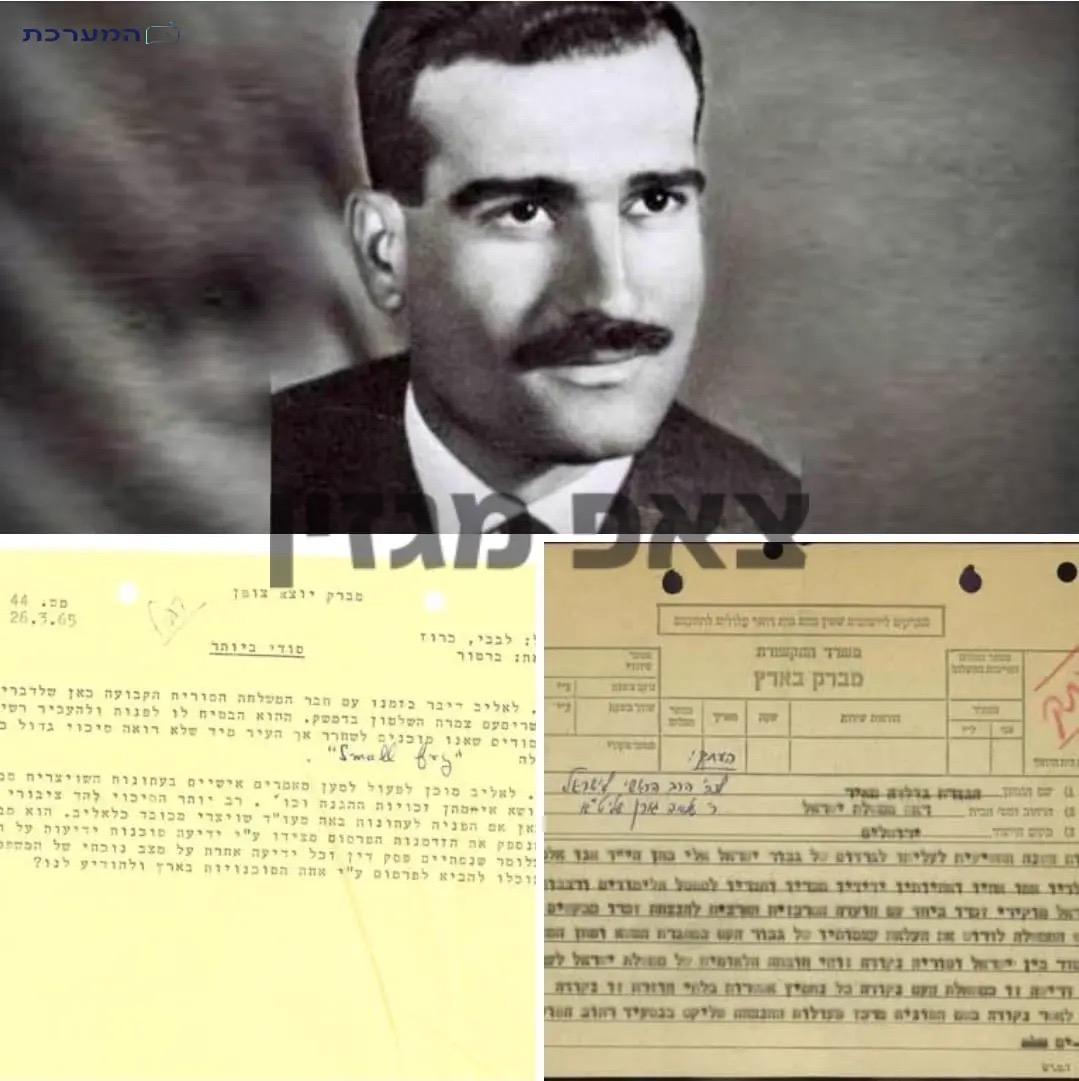
On the 16th of Iyar, 5725 (May 18, 1965), Eli Cohen was executed in Damascus. Cohen, an Israeli spy who operated in Syria, had been captured by Syrian security forces. He is regarded as one of the greatest spies in Israel’s history. He provided Israel with highly significant military and civilian intelligence about developments in Syria.
After news of Cohen’s arrest became known in March 1965, Israel undertook extensive efforts to secure his release. These efforts included proposals for prisoner exchanges, offers of ransom payments, and appeals to anyone who might assist. As part of these efforts, the Director-General of the Foreign Ministry in Jerusalem contacted Israeli missions around the world, urging them to make every possible effort to secure the release of the imprisoned Israeli spy in Damascus (the telegram is shown in the image).
A few days later, the Israeli mission in Switzerland responded, reporting attempts made through a Swiss lawyer. The lawyer had even presented a Syrian representative in Switzerland with a list of Syrians whom Israel was willing to release in exchange for Eli Cohen. However, he reported that the Syrian response indicated that the chances were slim, as the individuals offered were considered unimportant. The lawyer also pledged to work toward publishing articles in the local press about Cohen’s trial, noting that he had not been granted the defense rights typically afforded in courts of civilized countries.
The Israeli consulate in New York also initiated contacts through various channels to secure Cohen’s release. In April, the consulate reported information from a Syrian Jew about rumors circulating in Damascus that offered a glimmer of hope, as well as efforts by the Jewish community in Brooklyn to engage Syrian contacts in attempts to save Eli Cohen.
On May 8, 1965, it became known in Israel that a court in Damascus had sentenced Eli Cohen to death. Israel intensified its efforts to save him from execution. The Director-General of the Foreign Ministry sent a telegram to key diplomatic missions instructing them to do everything possible to apply pressure on the President of Syria to grant Cohen clemency.
Various parties in the United States also made considerable efforts to save Eli Cohen from death. Tragically, these efforts were unsuccessful, and on May 18, 1965, Eli Cohen was executed in a public square in central Damascus. Following the conclusion of the affair, Cohen’s widow, Nadia, sent messages of thanks to all those in the United States who had attempted to save her husband.
When news of Eli Cohen’s fate reached Israel, he became a national hero. The state took steps to commemorate him and preserve his memory, and in Bat Yam, his city of residence, a committee was established to honor him. In April 1973, his widow, Nadia, sent a letter (shown in the image) to Prime Minister Golda Meir, inviting her to participate in a memorial ceremony marking the anniversary of his death. Golda Meir replied that she would be unable to attend due to a family event, but in her letter she praised Eli Cohen and his heroism in warm and heartfelt terms.
After Cohen’s execution, the Israeli government made efforts to bring his body back for burial in Israel. However, all such attempts failed. In the spring of 1974, Israel began negotiations for a disengagement agreement with Syria following the Yom Kippur War, mediated by U.S. Secretary of State Henry Kissinger. Israel saw this as a rare opportunity to include the return of Eli Cohen’s remains as part of the agreement. Government officials appealed to Kissinger to raise the issue with Syrian President Hafez al-Assad and also to act through Egyptian President Sadat. While negotiations were ongoing, Nadia Cohen appealed on behalf of the family to Prime Minister Golda Meir and to Israel’s Chief Rabbi, Rabbi Goren, requesting that Israel demand the return of Cohen’s body as part of the negotiations with Syria. Sadly, the Syrians remained steadfast in their refusal.
We continue to hope for the return of Eli Cohen’s remains for burial in Israel, alongside those who fell in Israel’s wars and acts of terror.



