



|
Getting your Trinity Audio player ready...
|
By: Jerome Brookshire
In a series of closely watched votes that underscored a profound transformation within American political dynamics, the United States Senate on Wednesday rejected two high-profile resolutions aimed at blocking military-related sales to Israel. While the measures ultimately failed, the voting patterns revealed a striking and consequential shift within the Democratic Party—one that may carry enduring implications for the future of the United States–Israel relationship.
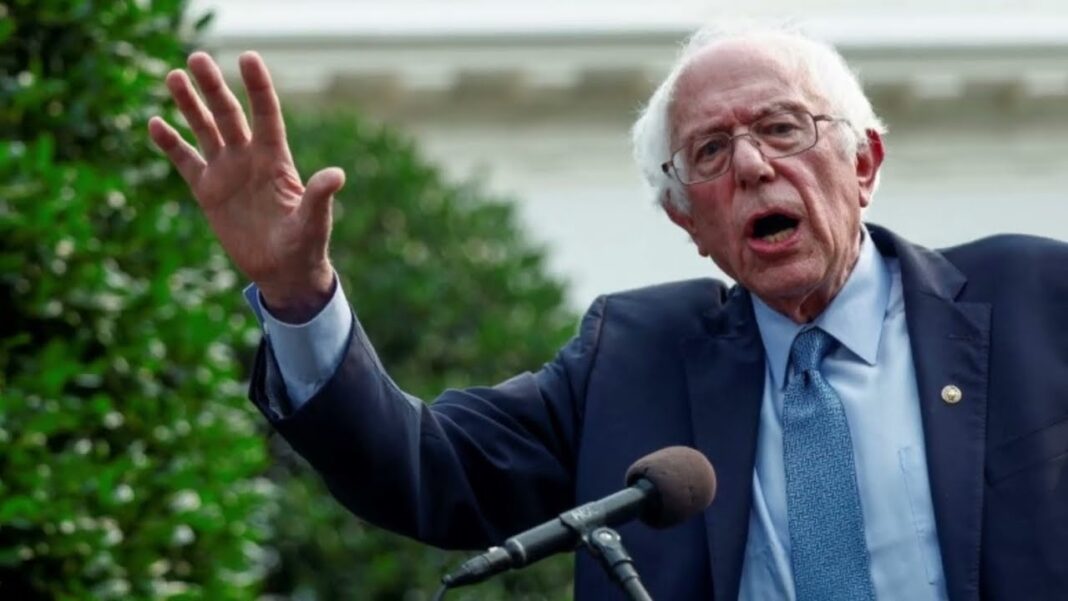
As detailed in a report on Wednesday by The Times of Israel, the resolutions were spearheaded by Bernie Sanders, a longtime critic of Israeli government policy and an increasingly influential voice within the progressive wing of the Democratic Party. Sanders sought to halt two specific transactions: a $295 million sale of heavy bulldozers and a separate $152 million transfer of 1,000-pound bombs intended for the Israel Defense Forces.
The Senate’s rejection of these measures, by margins of 59–41 and 63–37 respectively, ensured that the proposed transfers would proceed. Yet the numerical outcome tells only part of the story. The more revealing element lies in the composition of the votes themselves. A significant majority of Senate Democrats—forty out of forty-seven in one instance and thirty-six in the other—broke with traditional bipartisan consensus and supported efforts to block the sales.
This development represents a notable departure from decades of relatively unified congressional backing for Israel, particularly within the Democratic Party. Historically, support for Israel has been a cornerstone of American foreign policy, reinforced by shared strategic interests and deep cultural and political ties. The current divergence, therefore, signals not merely a policy disagreement but a broader realignment in attitudes toward the alliance.
Sanders, in advocating for the resolutions, framed the issue in purportedly moral and humanitarian terms. He argued that the United States, as a principal provider of military assistance, possesses both the leverage and the responsibility to influence Israeli conduct. According to The Times of Israel report, Sanders contended that American aid should not be used in ways that could contribute to the destruction of civilian infrastructure or exacerbate regional instability.
“The United States must use the leverage we have,” Sanders asserted, emphasizing the scale of American financial and military support. His remarks reflect a growing sentiment among certain lawmakers and constituents that foreign aid should be more explicitly conditioned on adherence to humanitarian standards.
Following the vote, Sanders further suggested that the outcome, despite the resolutions’ failure, demonstrated a shift in public opinion. He argued that an increasing number of Americans are questioning the allocation of substantial resources to foreign conflicts at a time when domestic economic challenges remain pressing. This perspective, while contested, has gained traction in segments of the electorate, particularly among younger voters and progressive activists.
Opponents of the resolutions, however, articulated a markedly different view. Jim Risch, the Republican chairman of the Senate Foreign Relations Committee, warned that blocking the sales would send a dangerous signal to adversaries, particularly Iran. As reported by The Times of Israel, Risch argued that such measures could undermine Israel’s security and embolden hostile actors in an already volatile region.
From this perspective, the continuity of military support is seen not only as a commitment to an ally but as a strategic imperative within the broader framework of Middle Eastern geopolitics. The argument rests on the premise that a strong and well-equipped Israel contributes to regional stability and serves as a counterbalance to adversarial forces.
The divergence between these viewpoints encapsulates a broader debate about the role of the United States in international affairs. On one hand, there is a tradition of robust alliance-building and strategic engagement; on the other, an emerging emphasis on restraint, accountability, and the prioritization of domestic concerns. The Senate votes thus serve as a microcosm of this larger ideological contest.
Within the Democratic Party, the division is particularly pronounced. While a substantial majority supported at least one of the resolutions, several prominent figures—including Chuck Schumer and Kirsten Gillibrand—voted against them. Their opposition reflects a continued adherence to the traditional framework of support for Israel, even as the party grapples with internal dissent.
The tension surrounding these votes was further amplified by public demonstrations. Nearly one hundred protesters were arrested earlier in the week during a rally urging Schumer and Gillibrand to support Sanders’ measures. This activism highlights the extent to which the issue has mobilized grassroots engagement, transforming it from a primarily legislative matter into a focal point of public discourse.
Complicating the narrative further, the Senate on the same day considered a separate resolution related to U.S. involvement in a conflict with Iran. Although that measure also failed, it revealed additional nuances within the Democratic caucus. Chris Coons, for example, supported efforts to curtail military engagement with Iran while opposing the resolutions targeting Israel.
In a statement following the vote, Coons sought to clarify his position, emphasizing that his decisions should not be interpreted as either an endorsement of Israeli government actions or an abandonment of the U.S.–Israel relationship. His remarks, cited by The Times of Israel, underscore the complexity of the issue and the difficulty of reconciling competing priorities.
This duality—support for Israel coupled with criticism of specific policies—has become increasingly characteristic of the Democratic approach. It reflects an attempt to balance longstanding alliances with evolving ethical and political considerations. Whether this balance can be sustained remains an open question.
The broader implications of these developments extend beyond the immediate legislative outcomes. They suggest a gradual transformation in the political landscape, one that may influence future policy decisions and electoral dynamics. As younger and more progressive voices gain prominence within the Democratic Party, their perspectives are likely to shape the contours of debate in the years to come.
At the same time, the enduring strength of bipartisan support for Israel, particularly among Republicans, provides a countervailing force. The overwhelming opposition to the resolutions within the Republican caucus underscores the continuation of traditional alliances and strategic priorities. This dynamic ensures that, at least for the foreseeable future, U.S. policy toward Israel will continue to reflect a complex interplay of competing influences.
The role of external factors, including regional conflicts and international diplomacy, cannot be overlooked. Developments in Gaza, Lebanon, and the broader Middle East will inevitably inform congressional deliberations, shaping perceptions of necessity, proportionality, and consequence. In this context, the Senate votes may be seen as both a reflection of current conditions and a precursor to future debates.
As The Times of Israel report highlighted, the evolving position of the Democratic Party represents one of the most significant shifts in American foreign policy discourse in recent decades. It raises fundamental questions about the future of alliances, the conditions of military aid, and the values that underpin international engagement.
The votes have not altered the immediate trajectory of U.S.–Israel relations, but they have opened a new chapter in the conversation—a chapter defined by complexity, contention, and the search for equilibrium in a rapidly changing world.
