



|
Getting your Trinity Audio player ready...
|
By: Russ Spencer
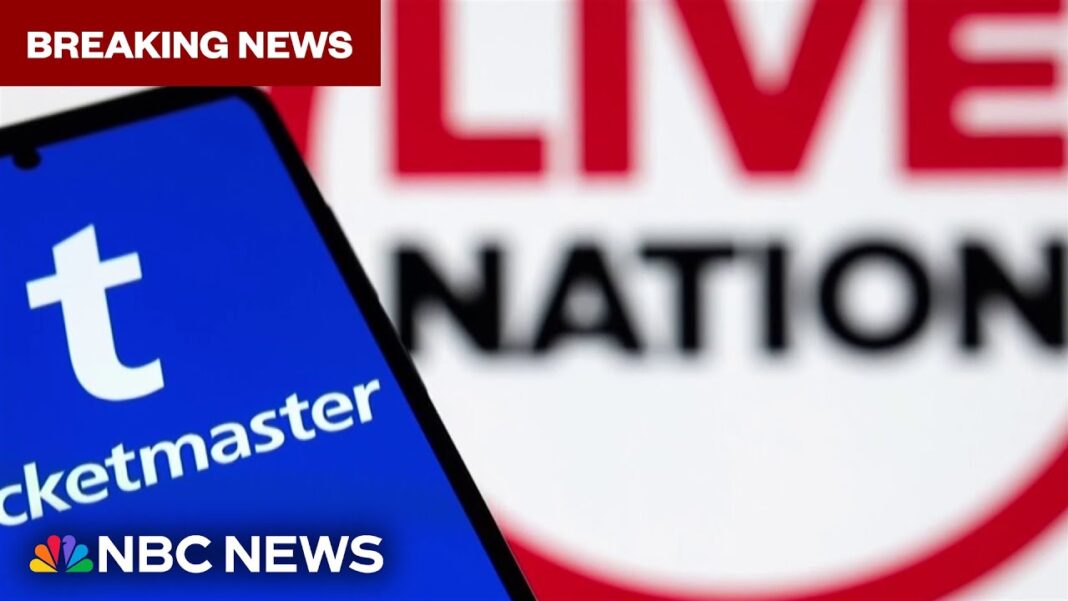
In a landmark decision with far-reaching implications for the music industry, consumer rights, and the enforcement of competition law in the United States, a federal jury in Manhattan has concluded that Live Nation and its subsidiary Ticketmaster unlawfully maintained monopoly power over the ticketing market. The verdict, delivered after an exhaustive five-week trial and days of deliberation, represents one of the most consequential antitrust rulings in recent memory, raising profound questions about corporate dominance, regulatory oversight, and the economics of live entertainment.
As reported on Wednesday by NBC News, the case was originally brought in 2024 by the United States Department of Justice in conjunction with dozens of state attorneys general. At its core, the lawsuit alleged that Live Nation had constructed and sustained a vertically integrated empire encompassing ticketing, venue ownership, concert promotion, and artist management. This consolidation, plaintiffs argued, enabled the company to exert extraordinary influence over every stage of the live music ecosystem, effectively marginalizing competitors and distorting market dynamics.
The jury’s findings appear to validate these concerns. After hearing testimony from a wide array of witnesses—including industry executives, economists, venue operators, and consumers—the panel determined that Ticketmaster had overcharged concertgoers in the plaintiff states by an average of $1.72 per ticket at major venues as a direct consequence of anticompetitive conduct. While this figure may seem modest in isolation, its cumulative impact across millions of transactions underscores the scale of the alleged overreach.
Yet the monetary damages identified by the jury represent only one dimension of the case. The broader significance lies in the affirmation of liability, a determination that Live Nation and Ticketmaster engaged in practices that violated fundamental principles of fair competition. As NBC News reported, U.S. District Judge Arun Subramanian will now oversee the next phase of proceedings, during which remedies—including potential structural changes and additional financial penalties—will be considered.
The reaction from government officials and legal advocates has been emphatic. Omeed Assefi, the Acting Assistant Attorney General for the Justice Department’s Antitrust Division, hailed the verdict as a “fantastic outcome for the American people,” emphasizing its significance for both consumers and the broader marketplace. Similarly, attorneys representing the coalition of states characterized the decision as a decisive victory for competition and accountability.
Among those voices was Jeffrey Kessler, who underscored the collaborative effort that brought the case to fruition. Speaking outside the courtroom, he described the verdict as a milestone for antitrust enforcement, reflecting the determination of state officials to challenge what they viewed as entrenched corporate power. His remarks, cited by NBC News, highlight the role of state-level initiatives in complementing federal enforcement efforts.
Political leaders also weighed in, framing the outcome as a vindication of long-standing concerns. Letitia James declared that the jury had confirmed what regulators had suspected for years: that Live Nation and Ticketmaster’s practices imposed significant costs on consumers. Rob Bonta echoed this sentiment, describing the verdict as a historic victory for artists, fans, and venues alike.
For Live Nation, however, the ruling represents a significant setback, albeit one that the company is vigorously contesting. In a statement issued following the verdict, the firm maintained that the jury’s decision is not final and indicated its intention to pursue post-trial motions aimed at overturning or mitigating the findings. Among these is a motion for judgment as a matter of law, which challenges the legal sufficiency of the evidence supporting the verdict.
The company has also raised objections to the methodology used to calculate damages, suggesting that the expert testimony underpinning the $1.72 figure may be flawed. As noted by NBC News, the court has yet to rule on these issues, leaving open the possibility of further litigation and appeals. Live Nation has emphasized that the damages apply to a limited subset of transactions, estimating that the aggregate financial impact may fall below $150 million before any statutory multipliers are applied.
Despite these assurances, the market response was immediate and pronounced. Shares of Live Nation declined by more than five percent following the announcement, reflecting investor uncertainty about the company’s future. The verdict introduces a range of potential risks, including increased regulatory scrutiny, structural remedies that could alter the company’s business model, and reputational challenges that may affect its relationships with artists and venues.
To understand the full implications of the case, it is necessary to examine the structure of the live entertainment industry itself. Over the past two decades, Live Nation has pursued a strategy of vertical integration, acquiring Ticketmaster in a 2010 merger that combined ticketing with concert promotion and venue ownership. This consolidation created a powerful entity capable of controlling multiple facets of the industry, from the booking of artists to the sale of tickets.
Critics have long argued that this integration creates inherent conflicts of interest. By controlling both the supply and distribution of live events, Live Nation can influence pricing, availability, and access in ways that disadvantage competitors. The lawsuit alleged that the company reinforced this position through exclusive contracts with venues and by leveraging its dominance in concert promotion to pressure venues into using Ticketmaster’s services.
These allegations were central to the case presented by the states. As NBC News reported, Kessler described the company’s strategy as “digging the moat deeper around the monopoly castle,” a vivid metaphor that encapsulates the plaintiffs’ argument. According to this view, Live Nation’s practices were not merely the result of market success but of deliberate efforts to exclude rivals and entrench its position.
Live Nation, for its part, has consistently rejected these claims, arguing that its scale reflects competitive success rather than unlawful conduct. Its legal team contended that the plaintiffs had defined the relevant market too narrowly, excluding alternative venues and ticketing options that would reduce the company’s apparent market share. They also emphasized the benefits of integration, including efficiencies that enable the company to deliver a wide range of concerts to audiences across the country.
This divergence in perspectives highlights the complexity of modern antitrust analysis. Determining whether a company has monopolized a market requires not only an assessment of market share but also an examination of conduct, intent, and impact. The jury’s verdict suggests that, in this case, the evidence of anticompetitive behavior was sufficiently compelling to outweigh the company’s arguments.
The trial itself was marked by a high level of engagement from jurors, who grappled with the intricacies of antitrust law and economic theory. In an interview with NBC News, the jury forewoman described the deliberations as both challenging and collaborative, emphasizing the importance of respectful dialogue in reaching a consensus. Her remarks provide a rare glimpse into the decision-making process, highlighting the role of ordinary citizens in adjudicating complex legal disputes.
The case also reflects broader trends in antitrust enforcement. In recent years, there has been renewed interest in addressing the concentration of economic power, particularly in industries characterized by rapid consolidation. While much of the attention has focused on technology companies, the Live Nation case demonstrates that concerns about competition extend to other sectors as well.
The involvement of state attorneys general is particularly noteworthy. While the federal government reached a partial settlement with Live Nation earlier in the year—requiring certain divestitures and behavioral commitments—a majority of states chose to pursue their own claims. This decision underscores the willingness of state officials to take independent action when they believe federal measures are insufficient.
The remedies phase of the case will be critical in determining its ultimate impact. Potential outcomes range from modest changes in business practices to more sweeping interventions, such as the divestiture of assets or the restructuring of contractual relationships. As NBC News notes, legal experts have suggested that the earlier federal settlement may serve as a baseline, with additional measures layered on top.
For consumers, the stakes are tangible. The cost of attending live events has been a persistent source of frustration, with ticket prices often inflated by service fees and limited availability. The jury’s finding that Ticketmaster overcharged customers reinforces the perception that market dynamics have not always worked in favor of fans. Whether the verdict will lead to lower prices or greater transparency remains to be seen, but it has undoubtedly intensified scrutiny of industry practices.
Artists and venues, too, stand to be affected. Greater competition in ticketing and promotion could expand opportunities for performers, enabling them to negotiate more favorable terms and reach wider audiences. For venues, the ability to choose among multiple ticketing providers could enhance flexibility and reduce dependence on a single entity.
At the same time, the transition to a more competitive landscape may introduce new challenges. The efficiencies associated with integration, while controversial, have also facilitated large-scale operations that might be more difficult to replicate in a fragmented market. Balancing the benefits of competition with the need for operational coherence will be a central challenge for regulators and industry participants alike.
As the legal process continues, the Live Nation case will likely serve as a touchstone for future antitrust actions. Its outcome will influence not only the live entertainment industry but also the broader conversation about the role of regulation in a complex and rapidly evolving economy.
In the final analysis, the jury’s verdict represents a pivotal moment—a confrontation between concentrated corporate power and the principles of competitive fairness. As chronicled by NBC News, it is a decision that resonates far beyond the courtroom, shaping the contours of an industry that touches millions of lives. Whether it heralds a new era of accountability or becomes a protracted legal battle remains to be seen. What is certain, however, is that the implications will be felt for years to come, echoing through concert halls, boardrooms, and the broader landscape of American commerce.
