
































|
Getting your Trinity Audio player ready...
|
By MELINDA DESLATTE, JEFF MARTIN and STACEY PLAISANCE(AP)
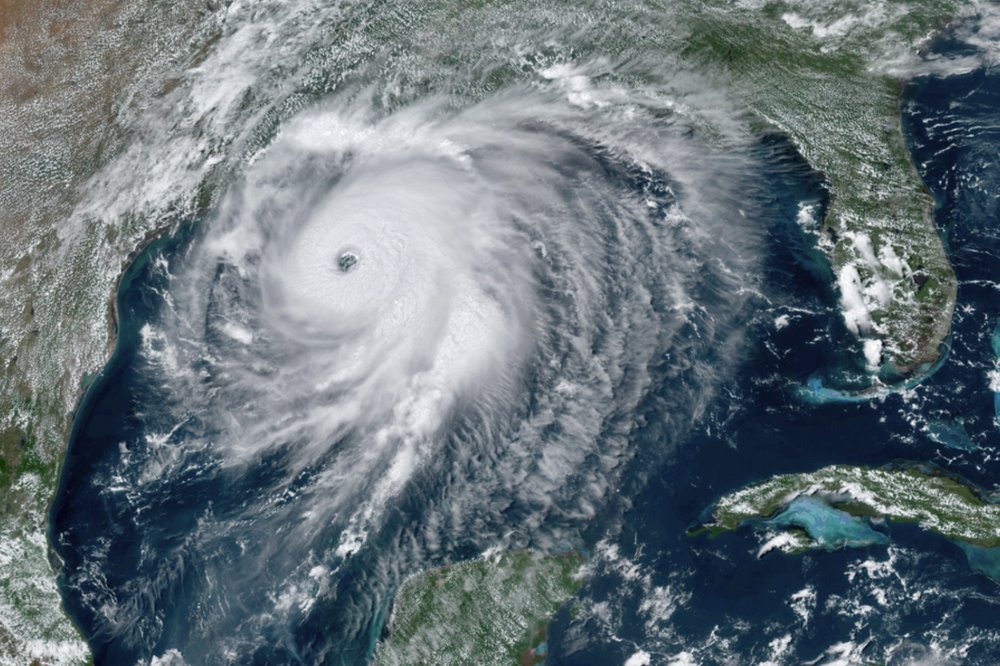
Laura strengthened Wednesday into a menacing Category 4 hurricane, raising fears of a 20-foot storm surge that forecasters said would be “unsurvivable” and capable of sinking entire communities. Authorities implored coastal residents of Texas and Louisiana to evacuate and worried that not enough had fled.
The storm grew nearly 70% in power in just 24 hours to a size the National Hurricane Center called “extremely dangerous.” Drawing energy from the warm Gulf of Mexico waters, the system was on track to arrive late Wednesday or early Thursday as the most powerful hurricane to strike the U.S. so far this year.
“It looks like it’s in full beast mode,” said University of Miami hurricane researcher Brian McNoldy. “Which is not what you want to see if you’re in its way.”
One major Louisiana highway already had standing water as Laura’s outer bands moved ashore with tropical storm-force winds. Thousands of sandbags lined roadways in tiny Lafitte, and winds picked up as shoppers rushed into a grocery store in low-lying Delcambre. Trent Savoie, 31, said he was staying put.
“With four kids and 100 farm animals, it’s just hard to move out,” he said.
With time running short, both Texas Gov. Greg Abbott and Louisiana Gov. John Bel Edwards fretted that the dire predictions were not resonating despite authorities putting more than 500,000 coastal residents under mandatory evacuation orders. In Lake Charles, Louisiana, National Guard members drove school buses around neighborhoods, offering to pick up families. Just across the state line in Port Arthur, Texas, stragglers boarding buses were few and far between.
Abbott warned that families who do not get out of harm’s way could be cut off from help long after the storm hits.
The National Hurricane Center kept raising its estimate of Laura’s storm surge, from 10 feet just a couple of days ago to twice that size — a height that forecasters said would be especially deadly.
A Category 4 hurricane can cause damage so catastrophic that power outages may last for months in places, and wide areas could be uninhabitable for weeks or months. The threat of such devastation posed a new disaster-relief challenge for a government already straining to deal with the coronavirus pandemic. Among the parts of Louisiana that were under evacuation orders were areas turning up high rates of positive COVID-19 tests.
By Wednesday afternoon, Laura had maximum sustained winds of 140 mph (225 kph) as it churned about 200 miles (320 kilometers) from Lake Charles, moving northwest at 16 mph (26 kph). Forecasters predict winds will reach at least 145 mph winds but may weaken slightly before landfall.
“Heed the advice of your local authorities. If they tell you to go, go! Your life depends on it today,” said Joel Cline, tropical program coordinator at the National Weather Service. “It’s a serious day and you need to listen to them.”
On Twitter, President Donald Trump also urged coastal residents to heed local officials. Hurricane warnings were issued from San Luis Pass, Texas, to Intracoastal City, Louisiana, and reached inland for 200 miles (322 kilometers). Storm surge warnings were in effect from Freeport, Texas, to the mouth of the Mississippi River.
Forecasters said storm surge topped by waves could submerge entire towns. Water was already rising in the small Louisiana community of Holly Beach in the imperiled Cameron Parish, which forecasters have warned would be part of the Gulf of Mexico after the storm came ashore.
Edwards lamented that the impending storm meant suspension of community testing for COVID-19 at a crucial time — as elementary and secondary schools in Louisiana are opening and students are returning to college campuses. “We’re basically going to be blind for this week,” Edwards said, referring to the lack of testing.
Laura is expected to dump massive amounts of rain as it moves inland, causing widespread flash flooding in states far from the coast. Flood watches were issued for much of Arkansas, and forecasters said heavy rainfall could arrive by Friday in parts of Missouri, Tennessee and Kentucky. Laura is so powerful that it’s expected to become a tropical storm again once it reaches the Atlantic Ocean, potentially menacing the Northeast.
Even before dawn Wednesday, officials in Austin said the city had run out of free hotel rooms to offer evacuees and had begun directing families fleeing the storm to a shelter nearly 200 miles farther north. In Texas’ Hardin County, which has more than 57,000 residents along the coast, officials warned that anyone who tried riding out the storm faced days or weeks without electricity.



