
















|
Getting your Trinity Audio player ready...
|
By: Fern Sidman
An extraordinary outpouring of faith, devotion, and spiritual fervor unfolded in Jerusalem over the Shavuot holiday and the following Sabbath as more than 100,000 worshippers and visitors streamed to the Western Wall, reaffirming one of the most emotionally resonant and enduring traditions in Jewish life. According to a report on Saturday evening at Israel National News, the massive influx of pilgrims continued the nearly six-decade-long custom of ascending to the Western Wall during the pilgrimage festival following the liberation of Jerusalem in the 1967 Six-Day War.
The Western Wall Heritage Foundation announced that the sacred plaza and surrounding alleyways of the Old City became the focal point of immense religious activity throughout the holiday period, with crowds swelling from the late-night hours of Shavuot eve through the conclusion of Shabbat. The scenes reflected not merely a seasonal gathering, but a profound national and spiritual expression of continuity, memory, and reverence centered around Judaism’s holiest accessible site.
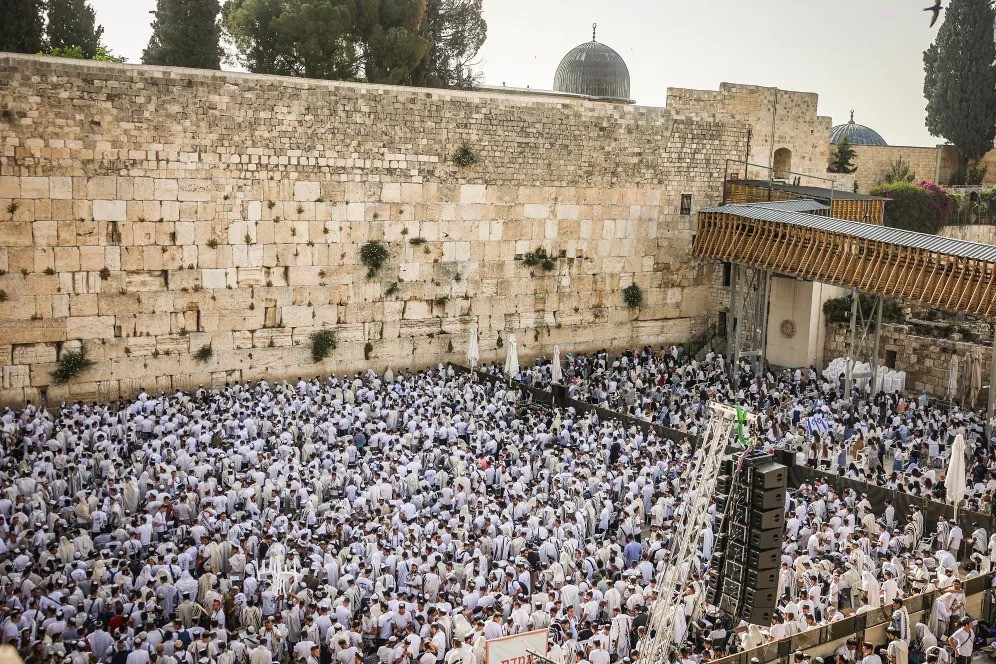
Israel National News reported that the emotional apex of the pilgrimage occurred during the sunrise prayer service on the morning of Shavuot, when more than 20,000 worshippers assembled in the Western Wall Plaza for the traditional vatikin prayers. As dawn illuminated the ancient stones of Jerusalem, the plaza reverberated with fervent prayer, Torah melodies, communal singing, and the moving recitation of the Akdamut liturgical poem commemorating the giving of the Torah at Mount Sinai.
Witnesses described a breathtaking atmosphere in which thousands stood shoulder to shoulder in spiritual unity, many having remained awake throughout the entire night engaged in Torah study and religious reflection in preparation for the sacred morning service.
The Western Wall Heritage Foundation stated that “the plaza was filled with prayer, singing and the recitation of the traditional Akdamut poem marking the giving of the Torah.” The organization further emphasized that the annual gathering has remained uninterrupted for 59 years, symbolizing the enduring bond between the Jewish people and Jerusalem following the reunification of the city during the Six-Day War.
Throughout the night of Shavuot, streams of worshippers made their way through Jerusalem’s ancient streets toward the Western Wall Plaza, creating a near-continuous flow of humanity from neighborhoods across the capital and from cities throughout Israel. Thousands participated in all-night Torah learning sessions, recited the traditional Tikkun Leil Shavuot prayers, and gathered in synagogues and study halls surrounding the Old City for intensive religious study.
The Israel National News report noted that hundreds of students also participated in specially organized holiday learning programs sponsored by the Western Wall Heritage Foundation. The educational initiatives sought to deepen participants’ connection to the Torah and to the spiritual significance of the festival commemorating the revelation at Sinai.
The atmosphere throughout Jerusalem reflected both solemnity and celebration. The city’s streets remained crowded until the earliest hours of the morning with worshippers carrying prayer books, students engaged in animated Torah discussions, and families making the pilgrimage on foot toward the Wall.
In cooperation with the Ministry of Jerusalem and Heritage, along with numerous charitable organizations, donors, and community groups, extensive logistical preparations were implemented to accommodate the enormous influx of visitors.
Refreshment stations and hospitality tents were erected along major routes leading toward the Western Wall in order to assist the pilgrims. Volunteers distributed water, cakes, coffee, and snacks to the tens of thousands journeying through the city overnight.
Following the sunrise prayers, a festive light meal was organized in partnership with Kolel Chabad, one of the oldest charitable institutions in Israel. Tens of thousands of individually packaged refreshments were distributed to worshippers gathered at the plaza.
The scale of the operation underscored the immense coordination required to facilitate one of the largest recurring religious gatherings in the country. Security personnel, emergency medical teams, municipal workers, and volunteers remained stationed throughout the area to ensure both safety and accessibility amid the massive crowds.
At the same time, many worshippers extended their pilgrimage beyond the Western Wall itself. Thousands visited the nearby Tomb of King David on Mount Zion, commemorating the traditional anniversary of King David’s passing, which according to Jewish tradition falls on Shavuot.
Israel National News reported that the site experienced especially heavy attendance during the holiday, with long lines forming throughout the day and evening as visitors prayed, studied Psalms, and reflected upon the enduring legacy of the biblical monarch who established Jerusalem as the spiritual and political capital of the Jewish people.
The pilgrimage atmosphere did not diminish with the conclusion of the holiday day itself. The crowds continued pouring into the Old City through the Sabbath, with thousands participating in Friday night and Sabbath morning prayer services at the Western Wall Plaza.
The spiritual intensity of the gathering remained palpable as worshippers filled the plaza with Sabbath melodies, communal prayers, and celebrations honoring the Torah.
An additional Kiddush Raba was held following Sabbath prayers, allowing many participants to continue the communal experience through festive gatherings marked by singing and words of Torah inspiration.
The Western Wall Heritage Foundation emphasized that even after the official conclusion of the holiday and Sabbath, the celebrations continued deep into the following days.
“Large numbers of visitors continued arriving at the site for celebrations featuring singing and dancing in honor of the Torah, led by rebbes, rabbis and heads of yeshivas,” the organization stated.
Those post-holiday celebrations transformed the plaza into a scene of extraordinary spiritual jubilation. Circles of worshippers danced for hours while prominent rabbis and yeshiva leaders addressed gathered students and followers with words emphasizing Jewish unity, devotion to Torah study, and the enduring holiness of Jerusalem.
The annual Shavuot pilgrimage to the Western Wall has increasingly come to symbolize not only religious observance, but also the remarkable continuity of Jewish history following centuries during which Jews lacked access to the sacred site.
For many participants, the gathering represented a living affirmation of the Jewish people’s historical return to Jerusalem after millennia of exile, persecution, and dispersion. The annual images of overflowing crowds praying before the ancient retaining wall of the Temple Mount have become among the most enduring and emotionally powerful symbols of modern Jewish national and spiritual revival.
Religious leaders speaking during the holiday repeatedly emphasized themes of unity and collective identity, pointing to the massive gathering itself as a reflection of the biblical narrative of the Israelites standing “as one man with one heart” at Mount Sinai.
The atmosphere also reflected the unique character of Shavuot within Jewish tradition. Unlike Passover or Sukkot, which are heavily associated with ritual objects and family-centered ceremonies, Shavuot centers fundamentally upon Torah itself — study, prayer, spiritual renewal, and communal devotion.
That distinctive emphasis was visible throughout Jerusalem during the holiday as synagogues, study halls, and public spaces remained filled overnight with Jews of all backgrounds immersed in learning and worship.
For many younger participants, particularly students attending the overnight study programs, the experience served as a formative spiritual milestone connecting ancient tradition with contemporary Jewish life in the modern State of Israel.
The remarkable turnout additionally reflected the continuing centrality of Jerusalem within Jewish consciousness despite ongoing political and regional tensions surrounding the city.
Nearly 59 years after Israeli forces regained control of the Old City during the Six-Day War, the annual pilgrimage remains among the most visible public demonstrations of Jewish attachment to Jerusalem and the Western Wall.
As dawn broke over the ancient stones on Shavuot morning and tens of thousands recited prayers in unison beneath the Jerusalem sky, the scene represented far more than a holiday observance. It stood as a powerful declaration of continuity, resilience, and enduring faith linking generations of Jewish history to the living spiritual heartbeat of Jerusalem itself.



