




















|
Getting your Trinity Audio player ready...
|
By: Fern Sidman
A sweeping and meticulously compiled report spanning approximately 250 pages has unveiled what investigators describe as a deeply disturbing and systematic pattern of sexual violence, humiliation, and abuse carried out during the October 7 massacre and throughout the subsequent captivity of hostages in Gaza. The findings, portions of which were first revealed in a report on Tuesday at Ynet News and its affiliated publication Yedioth Ahronoth, represent one of the most comprehensive attempts to document alleged gender-based crimes linked to the events of that day and their aftermath.
According to Ynet News, the report synthesizes an immense body of evidence, including hundreds of footnotes and references to more than 10,000 documented items. These materials encompass survivor testimonies, video recordings, forensic analyses, and eyewitness accounts. Collectively, they present what the authors characterize as a consistent and recurring pattern of sexual and gender-based violence that extended across multiple locations and phases of the attacks.
The report was produced by the Civil Commission on October 7 Crimes by Hamas Against Women, Children and Families, a civil society initiative established shortly after the outbreak of hostilities. Over the course of more than two years, the commission undertook a systematic effort to gather, verify, and preserve evidence at what it describes as a standard suitable for legal scrutiny.
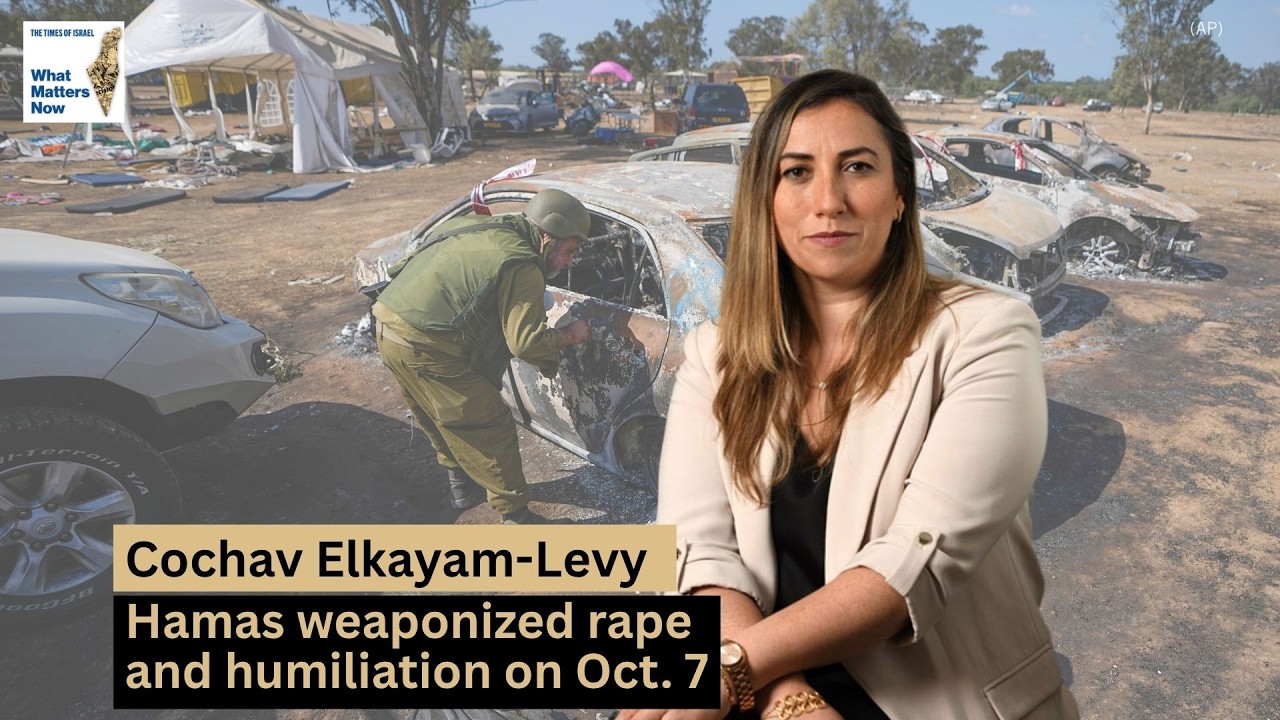
“We understood that we needed to create evidentiary documentation at standards that could not be denied,” said Dr. Cochav Elkayam-Levy, who leads the commission, in remarks cited by Ynet News. Her statement underscores the dual objective of the project: to ensure historical preservation while simultaneously laying the groundwork for potential legal proceedings in the future.
Central to the report is a secure digital archive cataloging thousands of items, including photographs, videos, and firsthand testimonies. As detailed by Ynet News, the archive was deliberately designed to be inaccessible to the public in order to safeguard sensitive material and protect the dignity of victims. Many of the documented items were initially circulated on social media before being removed, raising concerns among researchers that critical evidence could be lost without systematic preservation.
Attorney Merav Israeli-Amarant, the commission’s chief executive officer, emphasized the importance of this effort. “We wanted the testimony to serve legal purposes, while ensuring the interviews were sensitive to the interviewees’ trauma,” she explained. “After we began reviewing the materials that started flowing in, we understood that our mission was to build an archive of war crimes.” She further warned that without organized documentation, “they will disappear and be erased.”
The findings presented in the report are organized geographically and chronologically, covering multiple sites including the Nova music festival, Route 232, surrounding communities, kibbutzim, military bases, and the transportation and captivity of hostages. Across these diverse settings, researchers identified 13 recurring patterns of sexual and gender-based violence.
Among the patterns cited are rape and gang rape, assaults occurring immediately before or during murder, forced stripping, threats of forced marriage, and acts of violence perpetrated in front of victims’ family members. According to the information provided in the Ynet News report, the report concludes that these acts were not isolated incidents but rather part of a broader pattern that was “documented, celebrated and systematically disseminated in order to intensify fear and trauma.”
The report further alleges that perpetrators recorded and distributed footage of these acts, amplifying their psychological impact. “These practices were carried out with particular cruelty in order to maximize the pain, humiliation and suffering of the victims,” the report states.
A significant portion of the findings draws upon forensic evidence and testimony from teams involved in identifying victims at the Shura military base. Pathologists who examined remains from the day of the attacks contributed expert opinions, which were supplemented by accounts from survivors and hostages who were later released.
Despite the breadth of evidence, researchers acknowledged inherent limitations in documenting the full scope of the crimes. Many victims were killed, and in numerous cases their bodies were burned or otherwise destroyed, complicating efforts to gather direct forensic proof. Nevertheless, Ynet News reports that investigators believe the cumulative evidence presents “a clear and disturbing picture” of widespread abuse.
“Additional information may emerge over time,” the report notes, “as survivors and rescue personnel find the words and trust needed to share their experiences.” This acknowledgment reflects the evolving nature of the documentation process, which researchers emphasize is ongoing.
Particularly detailed are the testimonies related to hostages, which provide insight into the conditions of abduction and captivity. According to the Ynet News report, victims were frequently taken while wearing minimal clothing, often without time to dress. “She didn’t even have time to put on pants,” one mother abducted with her children recalled. Another survivor stated, “That’s how they took me, almost naked, half asleep.”
The report highlights a recurring pattern of violence within family units, with attackers allegedly killing relatives in front of those who were subsequently taken hostage. In several instances, footage of these events was recorded and disseminated. Women, in particular, were described as appearing “naked, beaten and humiliated” in such recordings.
“In some cases,” the report states, “victims’ bodies were abducted, desecrated and displayed publicly,” indicating what researchers describe as a deliberate strategy of psychological terror. Ynet News notes that such acts were intended not only to harm individual victims but also to intimidate families and broader communities.
Testimonies from former hostages provide further insight into the conditions they endured. Ofelia Roitman, who was abducted from Kibbutz Nir Oz and later released, recounted being forcibly stripped upon arrival at a location in Gaza. “I was left with nothing,” she said. “I thought that at any moment they would beat me or do something to me.”
The report concludes that the patterns observed during abduction continued throughout captivity. “Captors routinely threatened rape and forced marriage,” it states, adding that victims were sometimes compelled to witness or participate in acts of sexual violence.
Former hostage Romi Gonen described such experiences in an interview cited by Ynet News. “I go into the shower and he allows himself to come in because he’s the medic and he’s there to help me shower,” she said. “And I’m in a situation where there’s nothing I can do.”
The report also includes testimony from male hostages, underscoring that sexual violence was not limited to women. Guy Gilboa-Dalal recounted an incident in which he was subjected to unwanted physical contact. “He came up behind me, started touching my whole body, and I froze in that moment,” he said. “He really started touching me and kissing the back of my neck.”
Researchers emphasize that the inclusion of male victims does not alter the classification of these acts as gender-based violence. “Courts view sexual violence as gender-based violence not because only women are targeted,” the report explains, “but because sexual abuse is often used as a tool to control victims.”
The Civil Commission’s findings align with earlier studies, including a report by the Dinah Project and a 2024 assessment by Pramila Patten, the United Nations special representative on sexual violence in conflict. These reports similarly identified patterns of sexual violence associated with the October 7 attacks.
However, as the Ynet News report highlights, the newly released report distinguishes itself through its scope and level of detail. It represents what the authors describe as “the first systematic documentation of these crimes,” offering a comprehensive framework for understanding their scale and nature.
Beyond documentation, the commission has articulated broader objectives, including achieving formal recognition of these crimes by international institutions. “No prosecution will reflect the depth and breadth of what happened,” Elkayam-Levy stated. Nonetheless, Israeli-Amarant emphasized that “institutional international recognition creates the beginning of justice.”
The report underscores that the process of documentation is far from complete. Researchers anticipate that additional testimonies and evidence will emerge over time as survivors come forward. In this sense, the current findings represent not a conclusion but a foundation for ongoing investigation.
As Ynet News continues to report on the implications of the study, the release of this report marks a significant moment in efforts to document and understand the events of October 7. It provides a detailed and sobering account of alleged abuses, grounded in extensive evidence and testimony, while raising broader questions about accountability, justice, and the role of documentation in addressing complex and traumatic events.
Ultimately, the report serves as both a historical record and a call for further inquiry. Its authors emphasize that preserving evidence is essential not only for legal purposes but also for ensuring that the experiences of victims are neither forgotten nor denied.



