






















|
Getting your Trinity Audio player ready...
|
AFSI Calls for UN Expulsion of PLO Following Rejection of Hamas Disarmament
By: Fern Sidman
A leading American pro-Israel advocacy organization is urging the United Nations to take what it describes as decisive and long-overdue action against the Palestine Liberation Organization (PLO), after senior Palestinian leadership publicly rejected calls to disarm Hamas and refused to designate the Islamist group as a terrorist entity. Americans for a Safe Israel (AFSI), one of the oldest pro-Israel organizations in the United States, argues that the PLO’s stance constitutes an open alignment with Hamas and renders continued international recognition untenable.
The controversy stems from remarks made on February 23 by Azzam al-Ahmed, Secretary General of the PLO, during an interview with Cairo-based Shorouk News. In that appearance, al-Ahmed declared that “all talk of disarming Hamas and their being a terrorist organization is unacceptable to us,” further affirming that Hamas remains “part of the Palestinian cause.” He additionally stated that Hamas would be permitted to participate in elections conducted under the auspices of the Palestinian Authority.
For AFSI, these statements represent not a rhetorical misstep but a clarifying moment. Moshe Phillips, Chairman of Americans for a Safe Israel, contends that the comments lay bare what he describes as a longstanding but frequently obscured reality: that the PLO, Fatah, the Palestinian Authority (PA), and the internationally referenced “State of Palestine” function as a unified political structure under the same leadership.
“It’s important to understand that the PLO, Fatah, the Palestinian Authority, and the nonexistent ‘State of Palestine’ are basically all the same entity,” Phillips asserted. In his view, the distinction often drawn in diplomatic circles between these bodies is artificial and misleading. The PLO, he argues, formulates policy; the PA implements it. Thus, when senior PLO officials reject Hamas’s disarmament, they are, in effect, signaling institutional support that reverberates across all Palestinian governing structures.
AFSI’s demand is direct: the United Nations must revoke all recognition and institutional status currently granted to the PLO and the entity referred to as the “State of Palestine.” According to the organization, continued recognition in light of the PLO’s public position on Hamas constitutes complicity.
“The PLO / Palestinian Authority is considered by far too many nations to be a legitimate polity that wants to negotiate, and this falsehood has now been exposed,” Phillips stated. In AFSI’s assessment, the international community has maintained a diplomatic fiction — that the PLO represents a moderate alternative to Hamas — despite mounting evidence of ideological and strategic alignment.
The implications of al-Ahmed’s remarks extend beyond rhetorical solidarity. Hamas, designated as a terrorist organization by the United States, the European Union, and numerous other governments, has been widely condemned for its October 7 assault on Israeli communities, during which Israeli civilians were murdered and kidnapped. AFSI contends that any refusal to disarm or isolate Hamas amounts to tacit endorsement of such actions.
“The United Nations, through its recognition and legitimizing of the ‘State of Palestine’ and the PLO, is complicit in support for Hamas to remain armed,” Phillips declared. He argues that the UN’s continued acceptance of Palestinian diplomatic representation under current leadership sends a dangerous signal — that organizations aligned with armed groups targeting civilians may retain international legitimacy.
The controversy also intersects with recent diplomatic developments. In September 2025, several Western governments — including France, Britain, Australia, Canada, and Portugal — formally recognized the “State of Palestine.” Proponents of recognition framed the move as an effort to strengthen moderate Palestinian leadership and advance a negotiated two-state solution. However, AFSI asserts that these recognitions have not produced moderation, but rather emboldened an increasingly unified Palestinian front.
“We have not seen a more moderate PLO/Fatah but one that is now choosing to publicly stand united with Hamas,” Phillips stated. In his view, the international community’s strategy of engagement and recognition has failed to incentivize demilitarization or ideological distancing from Hamas.
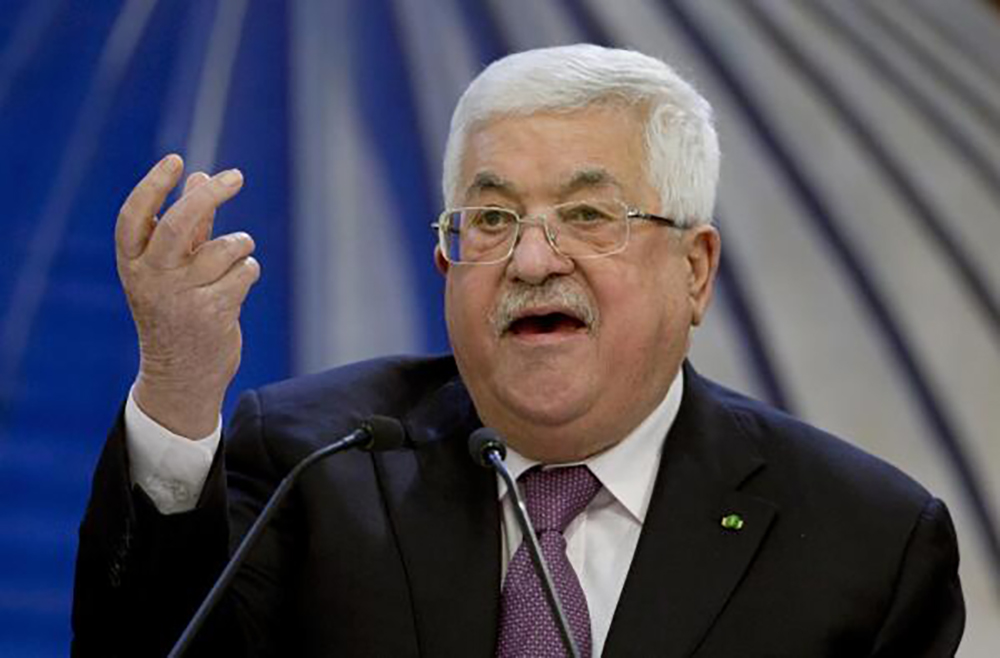
Central to AFSI’s critique is the leadership of Mahmoud Abbas, who simultaneously heads the PLO, Fatah, the Palestinian Authority, and the entity internationally referenced as the “State of Palestine.” Phillips contends that this concentration of authority eliminates plausible deniability. “There is now no disputing that he and his henchmen clearly endorse the murder and kidnapping of Israeli civilians that Hamas committed on October 7,” Phillips argued, framing the issue in stark moral terms.
The call for expulsion from the United Nations represents a significant escalation in advocacy demands. While Israel and its allies have frequently criticized UN bodies for perceived bias, outright revocation of Palestinian representation would mark an unprecedented step in contemporary diplomatic practice. The PLO has held observer status at the UN for decades, and the “State of Palestine” has maintained non-member observer state status since 2012.
AFSI contends that such statuses were predicated on the assumption that Palestinian leadership was engaged in a process of negotiation and peaceful political development. According to the organization, al-Ahmed’s statements invalidate that premise.
“How can the UN allow them to maintain their charade that they are not terrorists?” Phillips asked rhetorically. In AFSI’s formulation, failure to act would not merely reflect diplomatic caution but active moral complicity.
The organization’s position underscores a broader debate within international diplomacy about conditionality and accountability. Should recognition and participation in global institutions hinge upon explicit renunciation of violence and disarmament of affiliated armed groups? Or does continued engagement offer the only viable pathway toward eventual moderation?
AFSI’s answer is unequivocal. An international body that does not expel the PLO and revoke recognition of the “State of Palestine,” the group argues, implicitly legitimizes armed militancy.
Established in 1970, Americans for a Safe Israel has long positioned itself as a staunch defender of Israeli sovereignty and security. The organization describes its advocacy and educational initiatives as a counterweight to what it characterizes as rising anti-Israel propaganda. While unaffiliated with any political party in the United States or Israel, AFSI has consistently championed robust measures against entities it views as hostile to Israel’s existence.
In the current geopolitical climate, the organization’s demand is likely to intensify debate at diplomatic and policy levels. Expelling the PLO from UN bodies would require overwhelming international consensus — a threshold that, given global divisions over Middle East policy, may prove elusive.
Nevertheless, AFSI argues that the clarity of the moment demands moral decisiveness. In its framing, the issue is not one of nuanced diplomacy but of ethical coherence. If Hamas remains armed and ideologically embraced by Palestinian leadership, then continued international recognition constitutes contradiction.
Whether the United Nations or member states heed this call remains uncertain. Yet the statements from PLO leadership have undeniably sharpened lines within an already polarized global discourse. For AFSI and its supporters, the time for ambiguity has passed. The question now confronting the international community, they insist, is whether it will align its institutional policies with its professed opposition to terrorism — or continue to extend diplomatic legitimacy to those who refuse to disarm.



