
















|
Getting your Trinity Audio player ready...
|
Edited by: Fern Sidman
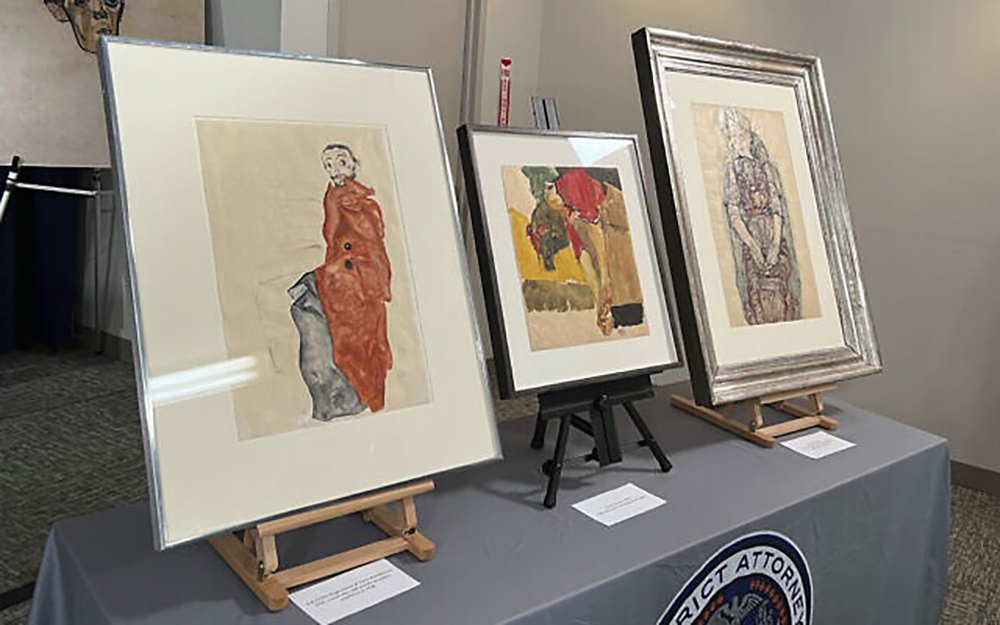
In a significant development in the ongoing efforts to restitute art stolen by the Nazis during World War II, six artworks by Austrian Expressionist artist Egon Schiele, recently returned to the heirs of Fritz Grunbaum, an Austrian Jew and art collector who perished in the Dachau concentration camp in 1941, are set to be auctioned at Christie’s in New York City next month, according to an Agence France-Presse report.
On September 20, the Manhattan District Attorney’s office held a ceremony to return seven additional Schiele works to three of Grünbaum’s heirs. ArtNews.com reported that these artworks had been held by private collectors and various museums, including the Museum of Modern Art, the Morgan Library & Museum, and the Santa Barbara Museum of Art. The returned works carry an estimated value ranging from $780,000 to $2.75 million, highlighting their artistic and historical significance, the report added.
Manhattan District Attorney Alvin Bragg emphasized the importance of these restitutions, stating, “The evidence makes clear the two drawings were stolen by the Nazis and subsequently transported into Manhattan, before landing in these museums,”ArtNews.com reported. He expressed pride in returning these Egon Schiele drawings to Grünbaum’s relatives, reaffirming the importance of acknowledging the legacy and the indelible mark left by Fritz Grünbaum.
The seventh work, which was returned by the Museum of Modern Art, has been acquired privately by “a prominent collector who has a demonstrated record of supporting Holocaust survivors,” said Raymond Dowd, the Grunbaum heirs’ New York attorney, according to the AFP report
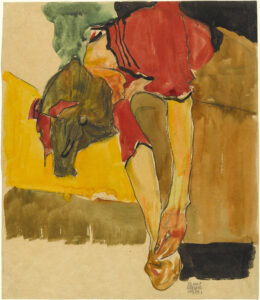
Among the returned artworks were pieces like “Prostitute” (1912) and “Girl Putting on Shoe” (1910) from the Museum of Modern Art, “Portrait of the Artist’s Wife, Edith” (1915) from the Morgan Library, and “I Love Antithesis” (1912) from Ronald S. Lauder, the president of the World Jewish Congress, who is an avid collector of fine art, the ArtNews.com report said. The Sabarsky estate also returned two works: “Portrait of a Boy (Herbert Reiner)” (1910) and “Seated Woman” (1911).
The restitution of these artworks marks a triumph for the Grunbaum family, who have been fighting for their return for years. This event also sheds light on the broader issue of Nazi-looted art and the painstaking efforts to reclaim these cultural treasures.
Three of the works in question – watercolors on paper, thought to be worth up to $2.5 million each — will be auctioned on November 9th and three others will go up for sale two days later as part of Christie’s fall auctions, as was reported by the AFP.
Grunbaum, a cabaret performer and passionate art collector, owned hundreds of artworks, including over 80 pieces by the renowned Austrian artist Egon Schiele. The restitution of these artworks is a testament to the perseverance and dedication of Grunbaum’s heirs, who have been working tirelessly to reclaim their family’s stolen cultural heritage.
Egon Schiele, celebrated for his provocative and emotionally charged works, fell victim to the Nazi regime’s censorship and persecution of “degenerate” art, as was reported by the AFP. The Nazis viewed Schiele’s art as contrary to their ideological agenda and systematically confiscated, auctioned, or sold his works abroad to finance their activities, the AFP report added. This tragedy resulted in the dispersion of many Schiele masterpieces across the globe.
Fritz Grunbaum’s tragic story is emblematic of the horrors endured by millions of Jews during the nightmarish Holocaust years. Arrested by the Nazis in 1938, Grunbaum was forced to sign a power of attorney that allowed his spouse to be coerced into surrendering the family’s entire art collection, as was noted in the AFP report. Grunbaum was subsequently deported to Dachau concentration camp, where he met a grim fate. His wife, who survived, was further subjected to the atrocities of the Holocaust in a different concentration camp.
The seven artworks that have been returned to the Grunbaum heirs resurfaced on the art market after World War II, initially in Switzerland, before eventually making their way to New York, the report said. The announcement of their return has brought renewed attention to the issue of Nazi-looted art, highlighting the ongoing efforts to right historical wrongs.
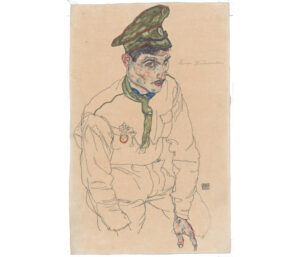
Last week, three Schiele drawings were seized by the Manhattan district attorney’s office from the Art Institute of Chicago, the Carnegie Museums of Pittsburgh and the Allen Memorial Art Museum at Oberlin College in Ohio.
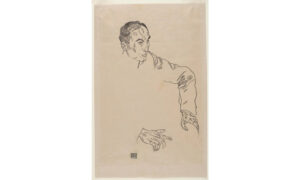
The artworks in question are “Portrait of a Man” (1917), a pencil-on-paper drawing from the Carnegie Museum of Art, and “Girl With Black Hair” (1911), a watercolor-and-pencil on paper piece from Oberlin’s Allen Memorial Art Museum, ArtNews.com reported. Both works, valued for their artistic significance and historical context, were instrumental in shedding light on a dark chapter in art history.
While the restitution of these six Schiele artworks is undoubtedly a significant achievement, the Grunbaum heirs remain steadfast in their pursuit of justice, according to the AFP report. They continue to seek the return of other looted artworks that once belonged to their family. Recent developments, such as the seizure of three Schiele drawings from prominent institutions in the United States, demonstrate that the fight to recover Nazi-looted art is far from over.
While these artworks may find new homes and appreciative audiences, they also bear witness to the tragic history from which they emerged, reminding us of the importance of justice, remembrance, and the enduring value of art.



