































|
Getting your Trinity Audio player ready...
|
By: JV Staff
Read the report from The New York Post’s Sara Dorn Here :
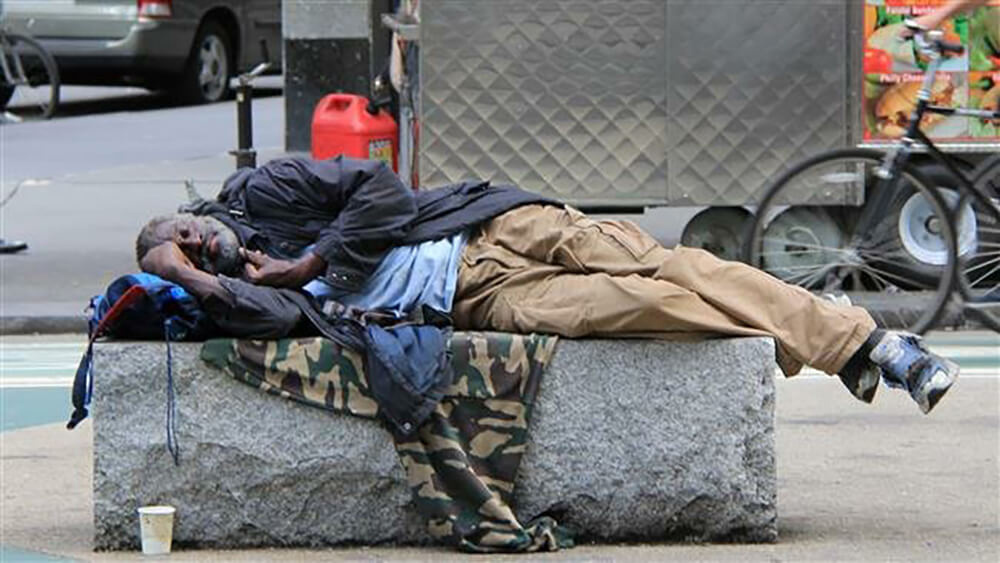
The city of New York is trying to manage its homeless crisis by sending thousands of people across the country and a year of rent, and taxpayers are footing the bill.
A report acquired by the New York Post revealed that the city spent over $89 million to fund the Special One-Time Assistance Program. Since Mayor Bill de Blasio launched the initiative in August 2017, 12,482 homeless individuals (or 5,074 families) were sent to 373 cities around the country with a years worth of rent.
A separate program called Project Reconnect provides funding for transportation, which the Post estimates could cost approximately $1,400 for a family of four to Honolulu, one of the cities where families are reportedly sent. The city also provides funding for furnishings.
In order to qualify for the program, people must prove that they have been living in a NYC shelter for a minimum of 90 days. In terms of income requirements, they may not earn more than two times what they owe in rent.
The Department of Homeless Services, who compiled the data provided the Post, say that this method is cost-effective; housing a family in a shelter can run up to $41,000, whereas rent in a home in a city somewhere outside of New York can be ⅓ of that. “The city remains committed to using every tool at our disposal to help these families and individuals find stability in the ways that work for them,” a spokesperson for DHS told the Post.
Many critics say that the program has done little to solve the city’s homelessness; once the year of subsidized rent is up, the families often move back to New York. Some are even suing the city for “being abandoned in barely livable conditions, while “multiple outside agencies and organizations have opened investigations into SOTA,” reports the Post.
224 families who are exported out of New York end up coming back to homeless shelters in the city. The DHS did not reveal to the Post how many families wound up in shelters out-of-state. “We suggested that DHS reach out to people as their subsidy runs out to confirm they will be secure and not have to re-enter shelter, but the agency told us they have no plans to do that,” Joshua Goldfein, a Legal Aid lawyer who represents families that were sent out of the city, told the New York Post.
The paper spoke with key leaders in several cities on the Special One-Time Assistance program’s list. Jefferson Parish, Louisiana president Mciahel Yenni told the paper that he had no idea that his community was one of the locations on the list. “I’m not in Mayor Bill de Blasio’s shoes. I don’t sit behind his desk, and I never will, but it’s certainly interesting. You have shocked me down here in beautiful southeast Louisiana,” he said.
When calling the mayor of Harrisville, Utah, for questioning, The Post says that she asked if the reporter was calling the right contact. When it was cleared up, she asked, “Are they just cutting them loose and saying, ‘Here you go’? Or are they making sure they don’t find themselves in the same situation a year later?”



